#1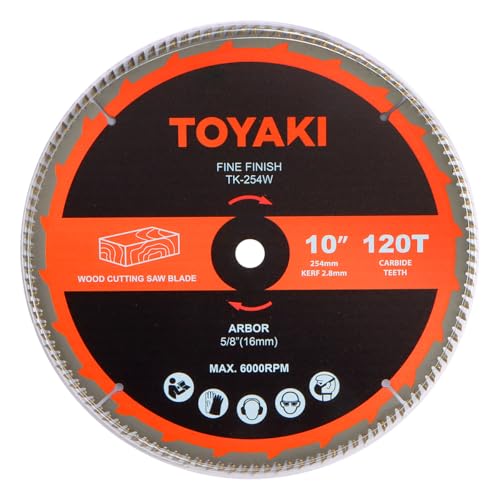
TOYAKI TK-254WTOYAKI 10-Inch 120-Tooth Fine-Finish Blade
Ranks first on our spec score, but 120 teeth suits fine crosscuts more than rip cuts.
- Tooth count
- 120
- Tooth grind
- Fine finish ATB
- Kerf width
- —
Ripping hardwood is different from crosscutting. You want a low tooth count, a rip-style grind, and a kerf that suits your saw's power, so the blade clears chips along the grain without burning. Tooth count sets how fast a blade cuts and how smooth the edge is. Grind controls how the teeth shear the wood. Kerf width affects how much power the cut needs. Blade diameter must match your saw. Weight and vibration control affect how the blade runs. We put 49 products on one spec sheet so you can compare these numbers directly.
Quick answer
Ranked from 49 table saw blades that met our standard, compared on tooth count, tooth grind, kerf width.
As an Amazon Associate I earn from qualifying purchases. Links to retailers on this site are affiliate links; we may earn a commission at no extra cost to you.
Ranks first on our spec score, but 120 teeth suits fine crosscuts more than rip cuts.
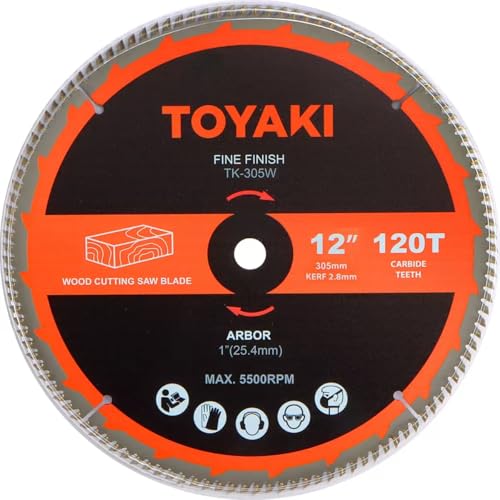
A 12 in blade with 120 teeth and vibration reduction, better for fine crosscuts than rips.
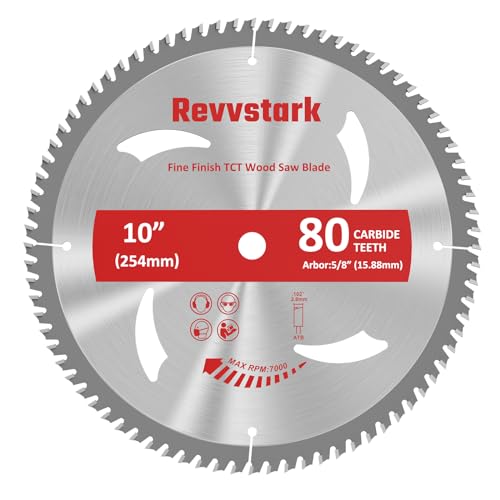
An 80 tooth tungsten carbide blade with a listed max RPM of 7000.
| Spec | ||||||||||
|---|---|---|---|---|---|---|---|---|---|---|
| Best Scoreout of 100 | 71 | 71 | 69 | 69 | 68 | 64 | 64 | 64 | 62 | 60 |
| Blade diameterin | 10.00 in | 12.00 in | 10.00 in | 10.00 in | — | 12.00 in | 12.00 in | 10.00 in | 12.00 in | 10.00 in |
| Tooth count | 120 | 120 | 80 | 120 | 60 | 100 | 100 | 90 | 80 | 60 |
| Kerf widthin | — | — | — | — | — | 0.106 in | 0.098 in | 0.087 in (best in row) | 0.118 in | 0.087 in (best in row) |
| Tooth grind | Fine finish ATB | Fine finish ATB | — | Fine finish ATB | Fine finish ATB | Fine finish ATB | Polished ASFG | Polished ASFG | Fine finish ATB | Fine finish ATB |
| Carbide type | — | — | Tungsten carbide | High-grade carbide | TiCo Hi-Density carbide | Carbide | Foxcarbide | FOXBC proprietary foxcarbide | Tungsten carbide | Tungsten carbide |
| Anti-stick coating | — | — | — | — | Yes | — | — | — | — | — |
| Vibration reduction | Yes | Yes | — | — | Yes | Yes | — | — | Yes | Yes |
| Max RPMRPM | — | — | 7000 RPM | — | — | — | — | — | — | — |
| Weightlb | 1.54 lb | 2.43 lb | 1.68 lb | 1.54 lb | 1.03 lb (best in row) | 2.86 lb | 2.67 lb | 1.65 lb | 2.93 lb | — |
| Warrantyyr | — | — | — | — | — | — | — | — | — | — |
We reviewed 60 table saw blades and kept only the 49 that pass every check below. Those are ranked by a Best Score built from spec fit for this job, sales rank.
These reviews are based on specifications and listing information only. They explain how each blade's listed numbers fit a hardwood rip cut.
Top spec score, but built for finer crosscuts
The TOYAKI TK-254W ranks first on our spec score, at 71, and it earns that spot on paper. It is a 10 in blade with 120 teeth and a fine finish ATB grind. That tooth count is the opposite of what a rip cut calls for. Ripping hardwood wants fewer, larger gullets to clear chips along the grain.
The listing says the teeth pattern reduces vibration, and the blade uses a 16mm arbor that suits many common saws. It weighs 1.54 lb, which is light to handle. The listing does not give a kerf width or a maximum RPM, so you cannot check it against your saw's power on this page. This page does not list a warranty either.
Buy it for fine crosscuts in hardwood and plywood where a smooth edge matters more than speed. For a rip-first job, choose a lower tooth count.
VerdictA strong fine-finish blade on paper, but its 120 teeth make it a weaker pick for ripping.
The 12 in version of the same 120 tooth design
The TOYAKI TK-305W uses the same 120 tooth fine finish ATB design as its 10 in sibling, but in a 12 in diameter. Its blade diameter ties for the largest in this group. A larger blade gives more cutting depth, which helps on thick stock. The tooth count still points toward fine crosscuts rather than fast rips.
The listing gives the arbor as 1 in and says the blade fits most table saws, circular saws, and miter saws. It weighs 2.43 lb, which is heavier than the 10 in version at 1.54 lb. The listing says the teeth reduce vibration. It does not list a kerf width, max RPM, or warranty, so those numbers are not available on this page.
Choose it if you want a 12 in blade for fine finish work and your saw takes a 1 in arbor.
VerdictA solid 12 in fine finish option, but it is not a rip-first blade.
80 tungsten carbide teeth with a kickback-resistant design
The Revvstark 10 Inch 80T blade has 80 tungsten carbide teeth, a middle ground between fine finish and fast cutting. The listing says the blade rips along the grain and is suited to hardwood and softwood. The tooth count is lower than the TOYAKI fine finish blades, which points it closer to rip work.
The listing gives a max RPM of 7000 and a 5/8 in arbor. It weighs 1.68 lb. The listing describes an anti-kickback tooth design and noise-reducing perforations, and says the thermal expansion grooves help heat dissipation. It does not give a kerf width in the data, so you cannot check the cut width against your saw's power from the specs alone.
It fits a buyer who wants an 80 tooth blade with a listed kickback design for mixed wood work.
VerdictA reasonable 80 tooth option with a kickback design, though the listing leaves key rip details out.
Non-stick coated 60 tooth blade for portable saws
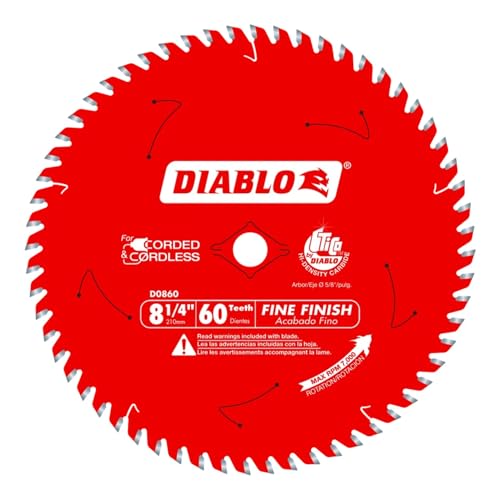
The Diablo D0860X is a 60 tooth fine finish ATB blade with TiCo Hi-Density carbide teeth. Its Perma-SHIELD non-stick coating is listed to resist heat, gumming, and corrosion. Pitch buildup can slow a rip cut, so the coating matters for hardwood. The listing says the blade suits oak, pine, and melamine.
The listing says the super thin kerf reduces resistance and heat buildup, and it describes the blade as suited to corded and cordless portable saws. It weighs 1.031 lb. No blade diameter is given in the data, so you need to confirm that the blade fits your saw before you buy. Vibration reduction is listed, but no kerf width or max RPM is given.
This blade suits a portable saw owner who wants a coated, lighter blade for clean hardwood cuts.
VerdictA good coated fine finish blade for portable saws, but the listing skips diameter and kerf.
Polished finish, 12 in, 100 teeth, 0.098 in kerf
The FOXBC FOX12100X is a 12 in blade with 100 teeth and a polished ASFG grind. The listing says the grind shears through material and produces a finish comparable to 220 grit sandpaper. That claim points to clean edges, but a finer tooth count means slower rips than a low tooth count blade would give. Keep that in mind for thick hardwood.
The listing gives a kerf width of 0.098 in and a hook angle of 7 degrees. It weighs 2.67 lb. The listing says the Ultra Thin Kerf design reduces amp draw on tools, which helps a saw with modest power. The data does not give a max RPM, so you cannot check speed limits from the specs.
Pick it if you want a 12 in polished finish blade and your saw has moderate power.
VerdictA strong polished finish blade with a listed thin kerf, better for fine cuts than fast rips.
Best among the reviewed tools
Low tooth counts clear chips fast, which suits ripping along the grain. High tooth counts leave a smoother edge but cut slower. For hardwood rips, look for a lower count. For crosscuts and trim, a higher count is usually better.
Rip-style grinds have flat-topped teeth made to cut along the grain. Alternate top bevel grinds handle crosscuts and mixed work. Listings often name the grind, so read it before you buy. If the listing does not name a grind, you cannot confirm the blade's intended use.
A thin kerf removes less material and needs less power, which helps smaller or cordless saws. A wider kerf is more rigid, which can help on bigger saws. Compare the listed kerf width with the power your saw delivers before you choose.
The blade diameter and arbor size must match your saw. Some listings give the arbor as 5/8 in and others as 1 in or 16mm. Check these numbers against your saw's manual before ordering to avoid a fit problem.
A lower tooth count is better for ripping hardwood. Fewer teeth give bigger gullets that clear chips faster along the grain. Blades with 120 teeth suit fine crosscuts, not fast rips. Many rip-focused blades use far fewer teeth than the fine finish models on this page.
Yes. Kerf width is the cut width the blade makes. A thin kerf needs less power and removes less material, which suits smaller saws. A wider kerf is more rigid. Compare the listed kerf with your saw's power before you buy.
Tooth grind is the shape of the cutting edge. Rip grinds are built to cut along the grain. Alternate top bevel grinds are built for crosscuts and mixed work. The grind affects edge quality and cutting speed, so check the listing for the grind type.
Check the blade diameter and arbor size. Listings give these numbers, such as 10 in or 12 in diameter, and 5/8 in, 1 in, or 16mm arbor. Match them to your saw's manual. If a listing leaves one out, confirm it with the maker before buying.
Your own selection is kept in the link, so friends see the same side-by-side.