How to Use a Table Saw Safely and Avoid Kickback
Use a table saw safely by setting it up on a stable surface, keeping the riving knife and guard in place, and feeding wood flat against the table and fence with a push stick. Kickback happens when the blade grabs the board and throws it back at you, so most prevention comes down to controlling the board and keeping the cut from pinching the blade. Stand to the side of the blade, never behind the board.
 EVOLUTION R10TBLXBest overall
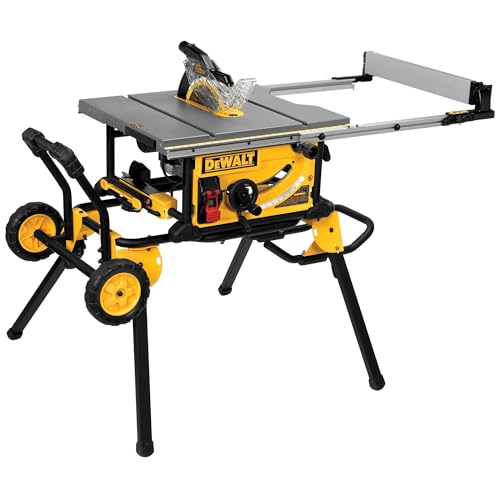 DEWALT DWE7491RSWidest rip capacity
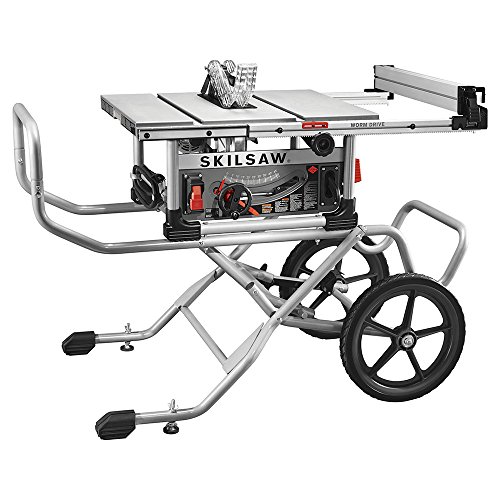 SKILSAW SPT99-11Deepest cut at 90°
Why kickback happens
Kickback is what happens when the back of the blade lifts the wood and throws it toward you. It usually starts when the board pinches the blade, twists away from the fence, or rides up onto the blade teeth. The spinning blade carries the board along with it, and it can leave your hands faster than you can react.
The most common triggers are a board that binds against the blade as the cut closes up, a fence that is not parallel to the blade, wood that is warped or twisted, and cutting freehand without the fence or miter gauge guiding the board. Removing the riving knife or guard also raises the risk, because these parts are there to keep the cut open and block the blade.
Why jobsite saws feel riskier
Jobsite saws get moved, set up and torn down constantly. That means the fence, blade and stand are adjusted more often, and a rushed setup is easy to get wrong. They are also often used on uneven ground, outdoors, or with long boards and sheet goods that are awkward to support.
Weight and stand stability matter here. Among the saws on our spec sheet, weights run from 50.8 lb for the Evolution R10TBLX to 112 lb for the DEWALT DWE7491RS. A lighter saw is easier to carry, but it needs careful footing and good outfeed support so a long board cannot tip or drag the saw. Our best jobsite table saw page puts weight, stand and rip capacity side by side if you are choosing one.
Set up before you turn it on
Most kickback problems can be prevented before the blade spins. Take a minute to check the saw and the work area every time you set up.
Unplug the saw before changing blades, adjusting the riving knife or reaching near the blade. Never rely on the switch alone.
- Place the saw on firm, level ground and lock the stand so it cannot roll or fold.
- Install the riving knife and blade guard. Make sure the riving knife sits in line with the blade.
- Check that the fence locks parallel to the blade and the miter slot.
- Raise the blade only about a quarter inch above the board, enough to clear the wood.
- Clear the floor around you and give long boards outfeed support.
- Wear safety glasses and hearing protection. Add a dust mask when cutting often.
Cutting habits that prevent kickback
Good habits matter as much as good equipment. Stand slightly to the left or right of the blade, out of the line where a kicked board would travel. Keep your thumbs wrapped beside the board, not on top of it, and never reach over the blade.
Use the fence for rip cuts and the miter gauge or a crosscut sled for crosscuts. Do not use both together on the same cut. Trapping a cut-off piece between the blade and the fence is a classic way to cause kickback, because the loose piece gets caught and thrown.
Feed the board at a steady pace. Pushing too hard can bog the motor, and pausing mid-cut can let the wood bind. Once the cut is finished, use a push stick to move the last part of the board past the blade, then switch off the saw and wait for the blade to stop before you reach in.
Only cut wood that is flat and stable. A bowed or twisted board can pinch the blade as the kerf opens or closes. Joint or flatten one edge first, or choose a different board.
Common causes and fixes
Use this table as a quick check when a cut feels wrong. If a board binds, burns or shifts, stop the saw, let the blade stop, and find the cause before trying again.
The guard, riving knife and anti-kickback pawls each do a different job, and none of them replaces good technique.
| Cause | What it does | Fix |
|---|---|---|
| Fence out of line with blade | Board pinches against the back of the blade | Realign the fence so it is parallel to the blade |
| No riving knife | Kerf closes on the blade | Install a riving knife matched to the blade |
| Warped or twisted board | Wood rocks and grabs the teeth | Flatten one edge first or choose a straight board |
| Using fence and miter gauge together | Cut-off piece traps against the blade | Use only one guide, or clamp a stop block well before the blade |
| Dull or wrong blade | Forces you to push harder, causing burning and binding | Use a sharp blade made for the cut |
| Standing behind the board | Puts your body in the kickback path | Stand to one side of the blade line |
Safety features to look for
Several features on the saw itself reduce risk. A riving knife, a blade guard and anti-kickback pawls are the basics. The Evolution R10TBLX lists an electronic blade brake, anti-kickback pawls and a riving knife. The Bosch GTS15-10 lists a brake that stops the blade in approximately three seconds, along with a riving knife, pawls and a guard assembly.
Not every listing mentions these items. For example, the EliteEdge listing mentions a transparent blade guard and a push stick, but not a blade brake. If a safety feature matters to you, confirm it on the maker's page before you buy. Our best table saw comparison can help if you are looking at larger saws as well.
Choose and maintain the right blade
The blade affects safety more than most people expect. A dull blade or the wrong tooth style makes you push harder, which raises the chance of binding and burning. Ripping with a blade built for crosscutting is a common mistake, and it can strain the saw on thick or dense wood.
If you rip a lot of solid lumber, see our guide to the best table saw blade for ripping hardwood. For a broader look at tooth counts and blade types, our best table saw blades page compares the options. Keep blades clean, since built-up pitch can cause friction and burning, and replace or sharpen them when cuts get rough.
Frequently asked questions
Is it safe to remove the blade guard?
Only for cuts that truly cannot be made with it, such as some non-through cuts, and then use extra care. Put the guard and riving knife back as soon as the cut is done. Most everyday cuts should be made with both in place.
Can a blade brake stop kickback?
No. A brake helps stop the blade quickly after you switch off or if the blade touches something it should not. It does not prevent a board from being thrown, so you still need the riving knife and good technique.
What is a push stick for?
It keeps your hands away from the blade while you feed the end of a board through. Use one for narrow rips and any cut where your hand would end up close to the blade.
Should I wear gloves at the table saw?
Generally no. Loose gloves or sleeves can catch on the board or the spinning blade and pull your hand in. Wear safety glasses and hearing protection, tie back long hair, and roll up loose sleeves.