What Is a Portable Table Saw and How Does It Work?
A portable table saw is a compact table saw built to be carried or rolled between work areas. A motor spins a circular blade that rises through a slot in the tabletop, and you guide the board past it using a fence or miter gauge. Jobsite models trade some size for lower weight and a folding stand.
 EVOLUTION R10TBLXBest overall
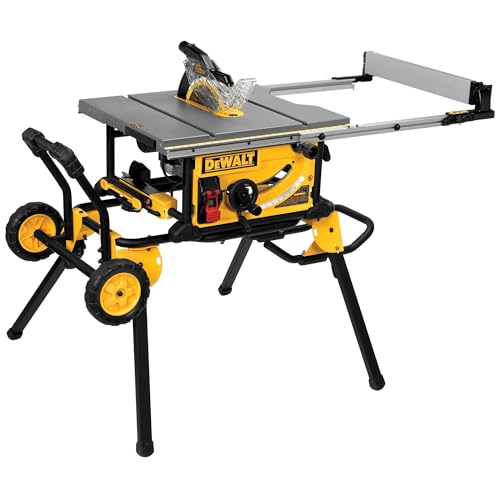 DEWALT DWE7491RSWidest rip capacity
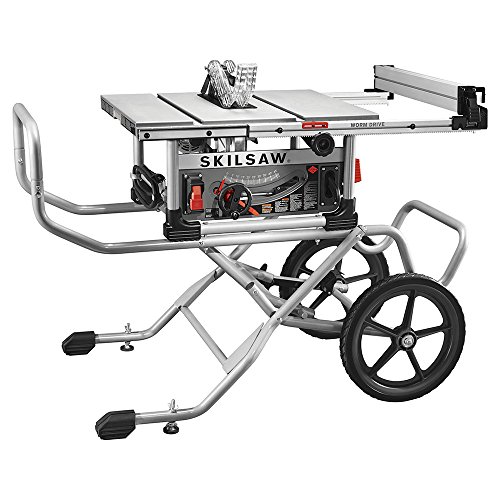 SKILSAW SPT99-11Deepest cut at 90°
What a portable table saw is
A portable table saw does the same basic job as a large shop saw. It makes straight, repeatable cuts in wood and sometimes other materials. The difference is the body. It is smaller, lighter and made to be loaded into a truck, carried through a door and set up in a few minutes.
Most portable saws are sold as jobsite saws. They usually come with a folding or rolling stand, onboard storage for the fence, wrenches and push stick, and a motor that runs on a standard household outlet. Many of the saws on our best jobsite table saw page list a 15 amp motor, a 10 inch blade and a rolling stand.
The tradeoff is table size and sometimes cutting capacity. A shop saw has a big, heavy cabinet and a long table. A portable saw gives up some of that in return for easy transport. For trim, shelving, framing parts and small furniture, that is often a fair swap.
How a portable table saw works
The core idea is simple. The blade stays in one place while you move the wood into it. That is the opposite of a handheld circular saw, where you move the saw along the board.
Here is the basic sequence for a typical cut:
- The motor turns an arbor, which is the shaft that holds the blade. On many portable saws the motor drives the blade directly, and some use gearing.
- A handwheel raises or lowers the blade so it pokes through the table slot at the depth you want.
- A second handwheel or lever tilts the blade for bevel cuts, commonly up to 45 degrees.
- The fence locks parallel to the blade. You set it to the width you want, then push the board along it for a rip cut.
- For a crosscut, you slide the board across the table with a miter gauge or sled instead of using the fence.
- You feed the board steadily with a push stick as the cut finishes, then switch the saw off and wait for the blade to stop.
The parts that matter most
Knowing the parts helps you read a spec sheet. The blade diameter sets the maximum cutting depth. Ten inch blades are standard on portable saws, and all five saws on our page use one. Depth of cut at 90 degrees then ranges from 2.91 in to 3.625 in across that group.
The fence controls accuracy and speed. A rack and pinion fence moves with a crank or knob and stays square to the blade, so it is faster to set than a simple clamp fence. Rip capacity is the widest cut you can make between the blade and the fence. Among the four saws that publish it, values run from 26 in to 32.5 in.
The stand matters more on a portable saw than on a shop saw. It sets your working height and lets you roll the saw across a site. Look at how quickly it folds and how steady it feels under a wide board.
Blade choice also changes results. A blade made for ripping cuts differently from one made for crosscutting, so see our best table saw blades page if you want to compare options.
How portable saws compare on the numbers
Weight is the biggest difference between portable saws. Two saws here weigh about half as much as the other three. The table below uses the published specifications from our comparison page.
| Saw | Weight (lb) | Rip capacity (in) | Depth at 90° (in) |
|---|---|---|---|
| Evolution R10TBLX | 50.8 | 26 | 3.375 |
| DEWALT DWE7491RS | 112 | 32.5 | 3.125 |
| SKIL SPT99-11 | 94.3 | 30.5 | 3.625 |
| Bosch GTS15-10 | 102.95 | 32.125 | 3.5625 |
| EliteEdge 10in | 52.96 | Not published | 2.91 |
Safety basics
A table saw is one of the more hazardous tools in a workshop, and a portable one is no exception. The blade is exposed through the table, and the wood can be thrown back at you if it binds. Take the basics seriously every time you cut.
Wear safety glasses and hearing protection. Keep long sleeves, jewelry and loose hair away from the blade. Stand slightly to one side of the cut line rather than directly behind the board.
- Keep the guard, riving knife and anti-kickback pawls in place for through cuts.
- Use a push stick for narrow pieces so your hands stay clear of the blade.
- Never freehand a cut. Always use the fence or miter gauge.
- Unplug the saw before changing the blade or making adjustments.
- Set the stand on firm, level ground and check that the wheels or legs are locked.
- Plug into a properly rated outlet and keep the cord clear of the blade path.
- Some saws list a blade brake, which stops the blade faster after switch-off. Only the Evolution and Bosch listings on our page mention one, and a brake does not replace the guard.
How to choose a portable table saw
Start with how you will move it. If you work alone or carry the saw up stairs, weight comes first. If you mostly leave it on a site, a heavier saw with a wider rip capacity may suit you better.
Next, match rip capacity to your projects. None of the saws on our page lists enough for a full sheet of plywood, so plan to break down large panels first. If a maker does not publish rip capacity, as with the EliteEdge, ask before you buy.
Then check cut depth, bevel range, the fence type and any listed brake. Our best table saw page covers larger and shop-focused options if portability is not your main concern. If you plan to cut hardwood boards, our best table saw blade for ripping hardwood page is a useful next step.
Frequently asked questions
Can a portable table saw cut dadoes and grooves?
Some can. The Evolution listing mentions an included dado plate, which allows dado cutting. Check your saw's manual and listing first, since not every portable saw supports a dado blade. Never use a dado set unless the saw is rated for it.
What is the difference between ripping and crosscutting?
Ripping cuts along the wood grain and uses the fence to set the width. Crosscutting cuts across the grain and usually uses a miter gauge or sled. Portable saws can do both, but they use different setups.
What does a riving knife do?
A riving knife is a thin metal plate that sits just behind the blade and rises and falls with it. It keeps the cut open so the wood is less likely to pinch the blade and kick back toward you.
Do I need a stand for a portable table saw?
A stand is strongly recommended. It sets a comfortable working height and keeps the saw stable. All five saws on our jobsite page list a rolling stand, which also makes moving the saw easier.