#1
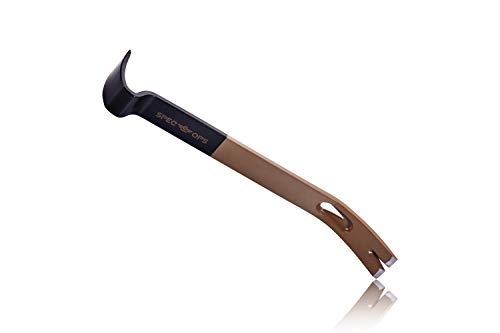
Titan 11509Titan Stainless Pry Bar Scraper
At 0.1 lb and 9.25 in, it is the lightest and shortest of all 16, suited to trim work.
- Length (longest bar)
- 9.3 in
- Weight
- 0.1 lb
- Pieces included
- 1
A demolition bar needs three things: forged one-piece steel, enough length for leverage, and enough weight to push through stuck boards. A strike cap for hammering is a bonus, though none of the top ten lists one. Length is in in and weight in pounds, so you can judge leverage and fatigue directly. We put 16 products on one spec sheet to show how each bar trades reach, weight and features, and which ones really suit tear-out work.
Quick answer
Ranked from 16 pry bars that met our standard, compared on forged one-piece construction, weight and length, strike cap.
As an Amazon Associate I earn from qualifying purchases. Links to retailers on this site are affiliate links; we may earn a commission at no extra cost to you.
At 0.1 lb and 9.25 in, it is the lightest and shortest of all 16, suited to trim work.
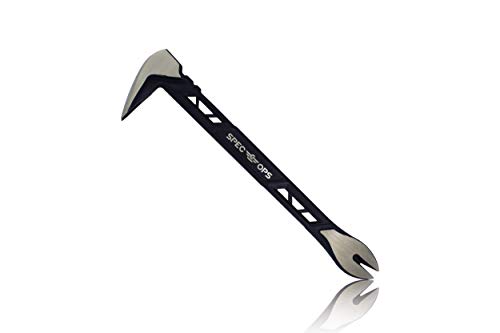
A 10 in cat's paw with two nail pullers and a 0.7 lb high-carbon steel body.

Forged in one piece, 24 in long and 3.6 lb, with a slotted hook for nails.
| Spec | ||||||||||
|---|---|---|---|---|---|---|---|---|---|---|
| Best Scoreout of 100 | 69 | 66 | 64 | 63 | 61 | 60 | 59 | 58 | 56 | 55 |
| Bar style | Flat pry bar scraper | Cat's paw nail puller | Gooseneck wrecking bar with slotted hook end | Wrecking bar with beveled chisel end and slotted claw | Gooseneck wrecking bar | Flat | Flat | I-beam pry bar with nail slot | 3-in-1 pro-claw pry bar | Flat pry bar set |
| Material | Stainless steel | High-carbon steel | Solid steel | Forged carbon steel | Solid American steel | High-carbon steel | Heat-treated carbon steel | Solid American steel | Steel | High-carbon steel |
| Length (longest bar)in | 9.3 in | 10.0 in | 24.0 in (best in row) | 18.0 in | 24.0 in (best in row) | 15.0 in | 15.0 in | 18.0 in | 16.0 in | 15.0 in |
| Weightlb | 0.1 lb (best in row) | 0.7 lb | 3.6 lb | 2.0 lb | 4.8 lb | 1.7 lb | 1.6 lb | 1.5 lb | 2.0 lb | — |
| Pieces included | 1 | 1 | 1 | 1 | 1 | 1 | 1 | 1 | 1 | 4 (best in row) |
| Forged one-piece | — | — | Yes | Yes | Yes | — | — | Yes | Yes | — |
| Nail puller slot | Yes | Yes | Yes | Yes | Yes | Yes | Yes | Yes | — | Yes |
| Strike cap | — | — | — | — | — | — | — | — | — | — |
| Scraper edge | Yes | — | — | — | — | — | — | — | — | Yes |
| Cushioned handle grip | — | — | — | — | — | — | — | — | — | — |
| Corrosion protection | Yes | — | — | — | — | — | Yes | — | — | Yes |
| Made in USA | — | — | Yes | — | Yes | — | — | Yes | Yes | — |
| Warrantyyr | — | Lifetime* | — | — | — | Lifetime* | — | — | — | — |
We reviewed 41 pry bars and kept only the 16 that pass every check below. Those are ranked by a Best Score built from spec fit for this job, sales rank.
These reviews are based on specifications and listing information only. Each one covers what the numbers mean for demolition work.
Handy stainless scraper, not a true demolition bar
This Titan is a 9.25 in flat bar made of stainless steel. It weighs 0.1 lb. Among all 16 products on this page it is the shortest and the lightest. For demolition that is the problem. Leverage comes from length and mass, and this bar has very little of either. Treat it as a trim and cleanup tool.
Where it works is light prying. The listing describes an angled chisel edge for baseboards, moldings and tile, plus a nail puller slot. A scraper edge handles caulk, adhesive and paint. The listing says the stainless steel resists corrosion and rust. The data shows no strike cap, so do not plan on hammering it.
It leads our ranking because it covers many features at once: nail puller, scraper edge and corrosion protection in one piece. That ranking reflects features, not brute strength. For a demolition crew, a longer forged bar fits better. Keep this one in a tool belt as a backup.
VerdictA useful cleanup tool that ranks first on features but is too small for real demolition work.
A compact cat's paw for pulling nails fast
The Spec Ops SPEC-D10CLAW is a 10 in cat's paw nail puller made of high-carbon steel. It weighs 0.7 lb. A cat's paw digs into wood and grabs a nail head, even when the head is flush or missing. That is a common job once walls and framing come apart, so it earns a spot in a demo kit.
The listing mentions dual strike zones and two nail pullers. Strike zones are the spots meant for hammer blows to drive the claw under a nail. The listing also claims durability on harsh jobsites. It lists compatibility with SRS Retention Lanyards. The maker does not publish a strike cap or forged one-piece status.
At 10 in, it gives little leverage for heavy prying. Use it for nails, not for lifting slabs or levering framing apart. It ranks second on our spec score, behind a bar that is less suited to demolition. Pair it with a longer wrecking bar and it fills the nail-pulling gap.
VerdictA good nail-pulling add-on that cannot replace a full-size demolition bar.
Forged 24 in gooseneck that fits demolition well
The Estwing EWB-24 is a gooseneck wrecking bar, 24 in long, forged in one piece from solid steel. It weighs 3.6 lb. Forged one-piece construction matters when you pry and strike, because there is no weld or joint to fail. This is the build buyers usually want from a demolition bar.
The gooseneck bend gives you a curved lever, and the listing says the design is built for torque when pulling nails and prying boards. One end is an angled chisel for prying and lifting. The other is a slotted hook for nails and spikes. Estwing lists it as made in the USA.
No strike cap is listed, so hammer on it with care. At 3.6 lb it is lighter than the Pro version at 4.8 lb, which makes it easier to carry and handle. Weight helps here because the bar does more of the work. It ranks third on our spec score. Choose it when you want forged strength without the extra weight.
VerdictA forged, American-made bar with a good balance of reach and weight for demolition.
Olympia 18 in bar is a lighter forged option
The Olympia Tools 87-731 is an 18 in wrecking bar of forged carbon steel, made in a single piece. It weighs 2 lb. The listing gives a 5/8 in diameter. That is a shorter bar than the Estwing gooseneck models at 24 in, so expect less leverage on stuck boards and framing.
The business end is a beveled chisel on one side and a slotted claw on the other. The claw is high visibility and shaped for pulling nails. A powder-coated finish covers the steel, which the listing credits for durability. The maker sells the bar in 18, 24, 30, 36 and 48 in lengths, so you can step up.
For demolition, the 18 in size suits tight spots, and it is easy to carry at 2 lb. It lists no strike cap. It ranks fourth on our spec score. Pick this size for light to medium tear-out, or order a longer length from the same line for heavier work.
VerdictA sound forged mid-size bar for light demolition, with longer sizes in the same line.
The Estwing Pro adds weight for harder prying
The Estwing EWB-24PS is a 24 in gooseneck bar forged in one piece from solid American steel. It weighs 4.8 lb, the most of the five bars reviewed on this page. Extra mass is useful on stubborn framing and heavy boards, though it also tires the arm sooner.
It shares its layout with the EWB-24. An angled chisel end handles prying and lifting. A slotted hook end pulls nails and spikes. The listing claims a high-leverage design made for torque and says the bar is made in the USA. The listing does not mention a strike cap, so treat hammering with care.
Compared with the lighter EWB-24, it adds weight at the same 24 in length: 4.8 lb against 3.6 lb. It ranks fifth on our spec score, two places behind the lighter model. Choose it for hard, sustained prying where leverage and mass matter more than comfort. Choose the lighter bar if you will carry it all day.
VerdictA heavy forged bar for demolition prying that costs you in carrying weight.
Best among the reviewed tools
A forged one-piece bar has no weld or joint to snap under load. For demolition, check that the listing says forged and one piece. Several bars here carry that spec. Flat bars and sets often do not, which suits trim work better than tear-out.
A longer bar gives more leverage, so stuck boards and framing move with less effort. The 24 in Estwing bars give the most reach of the ten ranked products. Short bars at 9.25 in and 10 in suit nails and trim.
Weight adds force when prying but tires you out. Among the nine ranked bars that list weight, it runs from 0.1 lb to 4.8 lb. Heavier forged bars suit tear-out. Lighter ones suit finish work and tight spots.
A strike cap protects the end when you hit the bar with a hammer. None of the ranked bars list one, so check before hammering hard. Nail puller slots, chisel ends and scraper edges add jobs but do not add strength.
On our spec score the Titan 11509 leads, but it is a 9.25 in trim tool. For real demolition, the 24 in Estwing EWB-24 fits better: forged in one piece, 3.6 lb, slotted hook end and made in the USA.
Longer bars give more leverage. The 24 in Estwing bars are the longest of the top five here, while 10 in and 9.25 in bars suit nails and trim. Pick length by the job and by the space you have to work in.
Only if the maker says it is made for striking. Estwing's listing text calls its forged one-piece bars striking tools, but none of the ranked products list a strike cap. Check the product page before you hit a bar hard.
A forged one-piece bar has no joints, which suits hard prying. Flat bars are thinner and reach into tight gaps, and many include several nail slots. For demolition, lean toward forged. For trim and finish work, a flat bar is fine.
Your own selection is kept in the link, so friends see the same side-by-side.