How to Use a Digging Bar Safely and Effectively
A digging bar is a long, heavy steel bar, often called a spud bar, tamping bar or digging iron. You use it by lifting it a short way and letting its weight drive the chisel end into hard ground, then prying the soil loose and scooping it out. Wear eye protection, gloves and sturdy boots, and confirm where buried utilities run before you break any ground.
 Titan 11509Lightest in the lineup
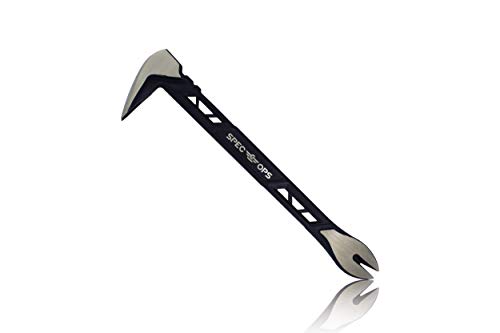 Spec Ops SPEC-D10CLAWCat's paw nail puller
 Estwing EWB-24Balanced forged demo bar
What a digging bar is and what it is called
A digging bar is a long steel bar with a working end at one or both ends. One end is usually a chisel or pointed blade for breaking up compacted soil, clay and small rocks. The other end is often a flat, blunt tamper face that packs soil back down around a post or into a trench.
People use several names for the same family of tools: spud bar, tamping bar, digging iron, rock bar and post hole bar. Product names vary by maker, so check the listing for the end shapes rather than relying on the name alone. If you see a chisel end plus a flat tamper end, it is built for digging and tamping.
Digging bars are not the same as the wrecking and pry bars used for tear-out work. A wrecking bar has a curved claw or hook for pulling nails and lifting boards. A digging bar is made to be driven into the ground. If your job is demolition, our best demolition bar comparison covers that tool instead.
Safety before you start
Digging bars look simple, but they cause injuries when the point glances off a rock or when someone digs where they should not. Take a few minutes to prepare.
Utility lines come first. In the US you can call 811 a few days before you dig, and the utility companies will mark buried lines for free. Do not skip this, even for a small post hole. Striking a gas line or electric cable with a steel bar can be deadly.
Then set yourself up with the right gear and habits:
- Wear safety glasses or goggles. Chips of stone and hard soil can fly up when the bar bounces.
- Wear leather or work gloves to protect your palms and improve grip.
- Wear closed, sturdy boots, ideally with a reinforced toe, in case the bar slips.
- Keep children, pets and bystanders well back from your swing path.
- Clear loose rocks and debris from your footing so you do not trip mid-stroke.
- Keep your knees slightly bent and your back straight when lifting the bar.
How to use a digging bar step by step
The goal is to let the bar's weight do most of the work. You guide it and lever it. You do not need to swing it hard.
- Mark the spot and confirm utilities are clear.
- Stand with your feet about shoulder width apart, with the bar upright in front of you and the chisel end down.
- Hold the bar with both hands, one near the top and one lower for control.
- Lift it a short distance, then let it drop with your hands guiding it so the point lands on the mark. Repeat in a controlled rhythm.
- When the point is a few inches in, rock the bar back and forth to crack the soil around it.
- Pull the bar out, then use a shovel, post-hole digger or scoop to remove the loosened material.
- Repeat in layers, loosening a bit more depth each time, until you reach the depth you need.
- Flip the bar and use the flat end to tamp soil in layers around a post or in a trench.
Tips for rocks, roots and tough ground
Dry, packed clay and gravel respond best to short, repeated strokes. Trying to drive the bar deep in one move wastes energy and raises the chance of a glancing hit. Work in small steps and clear material often.
When you hit a rock, stop and probe around it with the point. Use the bar as a lever under the edge of the stone to rock it loose. Avoid prying against a rock with a hard sideways jerk. The bar can slip, and the handle end can swing back toward you.
Roots need a different approach. A digging bar can sever thin roots with its chisel end, but thick roots are better cut with a hand saw or loppers. If the soil is bone dry, a light soaking the day before softens it and makes every stroke easier.
Take breaks. A heavy bar tires your shoulders and back quickly, and tired arms lose accuracy.
Digging bar vs demolition bar: how they differ
Both tools are steel bars that give you leverage, but they are shaped for different jobs. Our demolition bar comparison shows how much that shape and size can vary. Among the ranked bars, length runs from 9.25 in to 24 in, and weight from 0.1 lb to 4.8 lb. The Estwing EWB-24 is a 24 in, 3.6 lb forged one-piece wrecking bar with a slotted hook end for nails, which shows what a heavy tear-out bar looks like.
Use a pry or wrecking bar for boards, trim and nails. Use a digging bar for soil and posts. Swapping them tends to work poorly and can damage the tool or the job.
| Feature | Digging bar | Demolition or pry bar |
|---|---|---|
| Main job | Breaking soil, setting posts, tamping | Prying boards, pulling nails, tear-out |
| Working ends | Chisel or point plus flat tamper | Claw, hook, slot or beveled chisel |
| Typical use | Driven into the ground | Levered against wood, trim or framing |
| Best for | Fence posts, trenches, rocky soil | Framing, trim, shingles and nails |
| Strike cap | Not always present | None of the ranked bars list one |
Care, storage and when to stop
After each job, knock off dirt and wipe the bar dry. A light coat of oil on bare steel helps prevent rust. Store it in a dry spot where nobody can trip over it, and keep the working end pointed down or covered.
Check the bar before each use. Retire it if you see cracks, heavy mushrooming on the striking end or a bent shaft. A damaged bar can chip or snap under load.
If you plan to hit any bar with a hammer, check that it is made for striking. Our demolition bar page notes that none of the ranked bars list a strike cap, so hammering on them is a risk. Always wear eye protection when striking steel, and use hearing protection if you are working near others or for a long stretch.
Frequently asked questions
What is a digging bar also called?
Common alternative names include spud bar, tamping bar, digging iron, rock bar and post hole bar. The exact name depends on the maker and the end shapes.
Can I use a digging bar to set fence posts?
Yes. Use the chisel end to loosen the soil, dig out the loose material, place the post, and then use the flat end to tamp soil in layers around it.
Should I wear hearing protection with a digging bar?
Normal digging is not very loud. Wear hearing protection if you are striking rock, working beside machinery or doing long stretches of hard impact work.
Can a wrecking bar replace a digging bar?
Not well. A wrecking bar is shaped for pulling nails and prying wood, and it lacks the tamper end and weight distribution used for digging.