What Is a Wrecking Bar and What Is It Used For?
A wrecking bar is a long, heavy steel prying tool with a curved claw on one end and a chisel or flat end on the other. It is used to pull nails, pry apart boards and framing, and tear out materials during demolition. You may also hear it called a crowbar, a gooseneck bar, a demolition bar, or a heavy pry bar.
 Titan 11509Lightest in the lineup
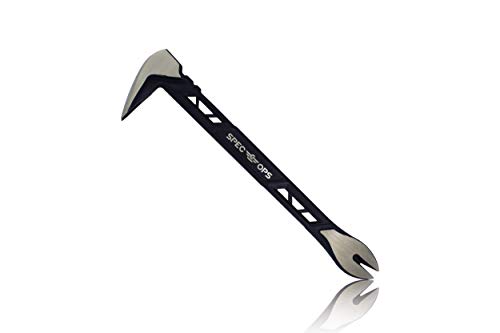 Spec Ops SPEC-D10CLAWCat's paw nail puller
 Estwing EWB-24Balanced forged demo bar
What a wrecking bar is
A wrecking bar is a single length of steel shaped as a lever. One end usually has a curved hook or claw with a slot for gripping nails. The other end is typically a beveled chisel or flat blade that slides into gaps between boards. A bend near the claw, often called a gooseneck, moves the pivot point so you can lift with more force.
The idea is simple leverage. You wedge the tip into a joint, rest the bar on a nearby surface, and push on the long handle. The longer the bar, the less effort you need to move something stuck.
Wrecking bars are made for demolition, where parts are nailed together and you do not plan to reuse them. That is why the good ones are thick, forged steel with no weld or joint to fail.
What a wrecking bar is used for
The main job is taking things apart that were fixed with nails or tight fits. Carpenters, framers, roofers and demolition crews all reach for one. Homeowners use them for remodeling and cleanup projects.
- Pulling nails and spikes with the slotted claw
- Prying up subfloor, decking and sheathing
- Separating framing members that are nailed together
- Removing old baseboards, trim and wall paneling when you do not need to save them
- Opening wooden crates and pallets
- Splitting apart stuck materials by driving the chisel end into a seam
- Lifting heavy items a short distance to slide something underneath
Other names for a wrecking bar
Names overlap a lot, and sellers do not always use them the same way. Crowbar is the most common alternate name. Strictly, a crowbar has a single curved end with flattened points, while a wrecking bar usually has a claw at one end and a chisel at the other, plus extra length and weight.
Other names include gooseneck bar, demo bar, ripping bar and heavy-duty pry bar. One listing in our data calls a flat bar a "wonder bar," and an Estwing listing says its gooseneck design outperforms standard crowbars. When you shop, read the specs and shapes rather than relying on the name alone. Our best demolition bar comparison lists each bar's length, weight and construction side by side.
Wrecking bar vs. pry bar
All wrecking bars are pry bars, but not all pry bars are wrecking bars. Pry bars are a broad family. Small flat ones suit trim, caulk and tight gaps. Wrecking bars are the larger, heavier members of the group, built for force.
The Titan flat pry bar scraper in our data is 9.25 in long and weighs 0.1 lb. It is a good example of a light bar for fine work. The Estwing EWB-24PS gooseneck wrecking bar is 24 in long and weighs 4.8 lb, and it is forged in one piece. These two tools do very different jobs.
| Bar | Style | Length | Weight | Best fit |
|---|---|---|---|---|
| Titan 11509 | Flat pry bar scraper | 9.25 in | 0.1 lb | Trim, caulk, tight spaces |
| Spec Ops SPEC-D10CLAW | Cat's paw nail puller | 10 in | 0.7 lb | Pulling embedded nails |
| Olympia Tools 87-731 | Wrecking bar, beveled chisel and slotted claw | 18 in | 2 lb | General demolition |
| Estwing EWB-24 | Gooseneck wrecking bar | 24 in | 3.6 lb | Prying boards and framing |
| Estwing EWB-24PS | Gooseneck wrecking bar | 24 in | 4.8 lb | Heavy, stubborn prying |
How to choose and use one
Match the bar to the task. For tear-out work, look for forged one-piece steel, a claw with a nail slot, and a length that gives you leverage. A 24 in bar gives more reach than an 18 in bar, but it is also heavier and harder to swing in tight spots.
Weight cuts both ways. A heavier bar adds force when prying but tires your arms over a long day. Lighter bars are easier to control for finish work.
To use a wrecking bar, follow these steps:
- 1. Slide the chisel end or claw into the gap or under the nail head.
- 2. Place a scrap of wood under the bar's pivot point to protect the surface and add height.
- 3. Pull the handle in a steady, controlled motion rather than jerking it.
- 4. Reposition and repeat, working along the seam instead of forcing one spot.
- 5. Pull remaining nails with the slotted claw before moving the material.
Safety notes
Wear safety glasses. Nails, splinters and old paint can fly when material gives way suddenly. Gloves help protect your hands from splinters and rusty nails.
Before prying into a wall, floor or ceiling, check for electrical wires, plumbing and gas lines. Shut off power at the breaker if there is any chance of contact. A steel bar can conduct electricity, so never pry near live wiring.
Keep your face and body out of the line the bar will travel if it slips. Stand with a stable footing, and be extra careful on ladders, roofs and raised platforms, where a slipping bar can cost you your balance.
If you plan to strike the bar with a hammer, check that it is built for that. A strike cap protects the end of the bar, and none of the ten bars ranked on our demolition bar page list one. Hammering a bar not meant for it can chip steel, so wear eye protection and consider hearing protection too.
Which kind should you pick?
If you mostly pull nails and handle trim, a smaller bar or cat's paw may be enough. If you are tearing out framing, subfloor or decking, a forged 18 in to 24 in wrecking bar is a better fit. The Estwing PB-18 is 18 in long, weighs 1.5 lb and has an I-beam shape with a nail slot, for example, while the Olympia Tools 18 in bar weighs 2 lb.
Many people end up with two tools: a larger wrecking bar for demolition and a small flat bar for delicate work. You can compare specs across both categories in our demolition bar comparison before you decide.
Frequently asked questions
Is a wrecking bar the same as a crowbar?
They are close and often used interchangeably. A crowbar usually has one curved end with flattened points. A wrecking bar typically adds a nail-pulling claw and a chisel end and is built heavier for demolition.
Can I use a wrecking bar to pull nails?
Yes. The slotted claw is made for this. Slide the slot under the nail head, then rock the bar back, using a scrap of wood under the pivot to protect the surface.
Do wrecking bars come in different lengths?
Yes. One Olympia Tools listing in our data says its bar comes in 18, 24, 30, 36 and 48 inch sizes. Longer bars give more leverage but are harder to use in tight areas.
Is a wrecking bar good for home projects?
It is useful for remodeling, deck removal and cleanup where you do not need to save the material. For delicate trim you plan to reuse, a small flat pry bar causes less damage.