#1
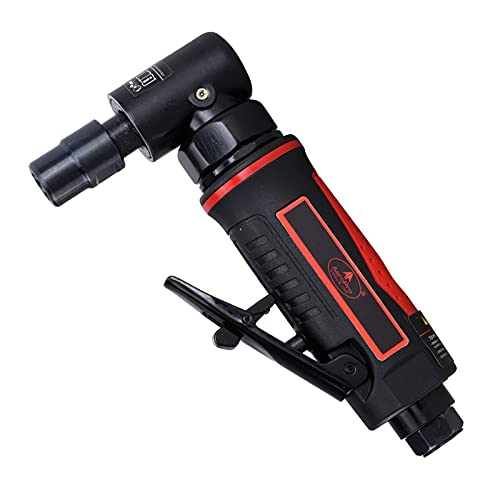
NEIKO 10649ANEIKO Micro Air Die Grinder
54,000 RPM and 0.25 lb are the top speed and lowest weight of all 21 products.
- Max free speed
- 54000 RPM
- Weight
- 0.25 lb
- Motor power
- —
A good air die grinder balances speed, power, weight and air use. RPM tells you how fast a burr spins. Motor power shows how well it holds speed under load. Air consumption in cfm decides whether your compressor can keep up. Weight affects fatigue in long jobs. Head type and collet size decide which jobs and bits fit. We put 21 products on one spec sheet so you can compare them directly, including what makers leave unpublished.
Quick answer
Ranked from 21 die grinders that met our standard, compared on max RPM, air consumption (CFM), and weight (lb).
As an Amazon Associate I earn from qualifying purchases. Links to retailers on this site are affiliate links; we may earn a commission at no extra cost to you.
54,000 RPM and 0.25 lb are the top speed and lowest weight of all 21 products.

Lists 30,000 RPM, 220 W and 0.75 lb, plus a safety lever and speed regulator.

Lists 246 W, second-highest among ranked products, with rear exhaust and 27,000 RPM.
| Spec | ||||||||||
|---|---|---|---|---|---|---|---|---|---|---|
| Best Scoreout of 100 | 64 | 62 | 62 | 62 | 60 | 57 | 54 | 53 | 52 | 52 |
| Max free speedRPM | 54000 RPM (best in row) | 30000 RPM | 27000 RPM | 25000 RPM | 21000 RPM | 28000 RPM | 23000 RPM | 25000 RPM | 20000 RPM | 20000 RPM |
| Motor powerW | — | 220 W | 246 W | — | 186 W | 186 W | 250 W (best in row) | — | — | 239 W |
| Weightlb | 0.25 lb (best in row) | 0.75 lb | 1.41 lb | 0.72 lb | 1.02 lb | 0.69 lb | 1.37 lb | 1.00 lb | 1.00 lb | 1.94 lb |
| Air consumptioncfm | — | 23.0 cfm | — | 3.0 cfm | 6.0 cfm | 6.0 cfm | 2.8 cfm (best in row) | 3.9 cfm | 3.0 cfm | — |
| Operating pressurepsi | 90 psi | — | — | 90 psi | — | — | 91 psi | 90 psi | 90 psi | — |
| Head type | pencil | Straight | — | straight | — | — | angle | 90-degree | — | angle |
| Collet sizes | 1/8 in (3 mm) | 15/64 in (6 mm) | 1/4" collet | 1/4 inch and 1/8 inch collets | 1/4" collet | 1/4" collet | 1/4 inch and 6 mm collets | 1/4 inch and 1/8 inch | 1/4 in | — |
| Included accessories | — | — | 3 | — | — | — | — | — | 4 | 22 (best in row) |
| Built-in speed regulator | Yes | Yes | — | — | — | — | — | Yes | — | Yes |
| Safety throttle lock | — | Yes | Yes | Yes | Yes | Yes | Yes | — | Yes | — |
| Rear exhaust | — | No | Yes (best in row) | Yes (best in row) | No | No | Yes (best in row) | Yes (best in row) | Yes (best in row) | Yes (best in row) |
| Warrantyyr | — | — | — | — | — | — | — | — | — | — |
We reviewed 52 die grinders and kept only the 21 that pass every check below. Those are ranked by a Best Score built from spec fit for this job, sales rank.
These reviews are based on specifications and listing information. Each one explains what the numbers mean for grinding, deburring and polishing on your compressor.
A 0.25 lb pencil grinder built for fine work
The NEIKO 10649A leads our ranking, and the reason is clear in the numbers. It lists 54,000 RPM, the highest free speed of all 21 products on this page. It also weighs 0.25 lb, the lightest of the 21. High speed helps small burrs cut cleanly, and low weight cuts hand fatigue.
This is a pencil-style tool with a 1/8 in (3 mm) collet, so it takes small shank bits. That suits polishing, cleaning and light deburring. It is not a stock-removal grinder. The maker does not publish motor power or air consumption, so check your compressor's output before you buy. It runs at 90 psi and has a built-in speed regulator.
The listing includes a 5ft nylon hose, two collet wrenches and a 1/4 in nipple. That covers the hookup, but you supply the bits. Pick it for detail work on small parts. Look elsewhere for heavy metal grinding.
VerdictA fast, featherlight detail tool that suits polishing and cleaning better than heavy grinding.
Compact straight grinder with real power, but a thirsty air draw
The Chicago Pneumatic CP876 ranks second. It lists 30,000 RPM and 220 W, a strong pairing for grinding, deburring and die contouring. The listing also rates it at 0.3 HP. At 0.75 lb it stays easy to control in tight spots. A safety lever blocks accidental starts, and the built-in speed regulator lets you slow the tool for delicate work.
The catch is air use. It lists 23 cfm. The WORKPRO lists 3 cfm and the Ingersoll Rand 301B lists 6 cfm. A small compressor may not keep up with 23 cfm, so check your pump output first. That matters most for long, continuous grinding. The maker does not publish operating pressure.
The spec lists a 15/64 in (6 mm) collet. Check that your bit shanks match. Exhaust is at the front, not the rear, so expect air near your work area. The body is aluminum with a composite over-sleeve. That aluminum build helps hold weight to 0.75 lb.
VerdictStrong speed and power in a light body, if your compressor can feed it.
246 W and rear exhaust, with three chisel-type extras
The Ingersoll Rand 3107G ranks third. Its 246 W is the second-highest power among the ten ranked products, behind the 250 W CP7408. Its 27,000 RPM is third-highest in that group. Together that gives enough output for metal grinding. Weight is 1.41 lb, which is heavier than the CP876 and WORKPRO.
Air needs are the gap. The maker does not publish air consumption or operating pressure, so you cannot match it to a compressor from the spec sheet alone. Without that number, a mismatch is a risk. The tool is sold alone, and a compressor is not included. It has a self-locking throttle and rear exhaust, which sends air away from your face.
It ships with three accessories: a tapered punch, a panel cutter and a flat chisel. Those are for cutting sheet metal and scraping, not for grinding. You still need to buy burrs for the 1/4 in collet. Treat the extras as a bonus for body work.
VerdictA strong straight grinder for metalwork, once you confirm your compressor can run it.
Light and frugal with air, but power is unlisted
The WORKPRO W182004A ranks fourth, and it is the one to look at if compressor size is your worry. It lists 3 cfm at 90 psi. The lowest on the page is 2.76 cfm, so this sits close to that. A lower air draw means a smaller compressor can keep the tool running.
Speed is 25,000 RPM and weight is 0.72 lb. That is a good balance for one-handed grinding and deburring. The maker does not publish motor power, so you cannot compare its strength to the 220 W or 246 W models. It has a safety lock on the trigger and a rear exhaust that keeps air off your face.
It comes with two collets, 1/4 in and 1/8 in, so it handles both common shank sizes. The listing also says lubricant is included. Remove the dust plug before you connect the air fitting. It works for one-handed use on welding repair and general fabrication cleanup. A compressor is not included.
VerdictA light, air-efficient straight grinder that suits small compressors well.
A right-angle grinder for tight spots, with modest power
The Ingersoll Rand 301B ranks fifth. Its right-angle head is the reason to buy it. The head turns the bit sideways, so you can reach into brackets and tight corners that a straight grinder cannot. That makes it the only right-angle tool among the five reviewed here. The listing calls it a compact 0.25 hp tool for grinding, cutting and polishing.
The numbers are modest. It lists 21,000 RPM, below the 25,000 RPM of the WORKPRO, and 186 W, which ties for the lowest power on the page. At 1.02 lb it is also heavier than the NEIKO, WORKPRO and CP876. Expect steady work, not fast stock removal. A lower-power tool is fine for deburring and polishing.
Air use is 6 cfm, higher than the 3 cfm WORKPRO but far below the 23 cfm CP876. That puts it in the middle for compressor demand. It uses a 1/4 in collet, a self-locking throttle and front exhaust. The maker does not publish operating pressure.
VerdictA practical angle grinder for access work, but not a pick for raw speed.
Best among the reviewed tools
Check cfm first. Die grinders on this page list from 2.76 cfm to 23 cfm among our ranked picks. A tool that draws more air than your compressor delivers will slow down and cycle the pump. Match the grinder to your pump's cfm at 90 psi.
RPM is free speed with no load. Motor power shows how well the tool keeps that speed while cutting. A 54,000 RPM pencil grinder suits small burrs, while models listing 220 W or more suit heavier grinding. Missing power ratings make a direct comparison harder.
Straight grinders fit most flat and open work. Right-angle and angle heads reach into tight corners but add bulk. Pencil grinders suit fine detail. Choose the head by where you work, then check that the collet size matches your bits, such as 1/4 in or 1/8 in.
Weight adds up over a long job, and the lightest here is 0.25 lb. Rear exhaust moves air away from your face. A throttle lock stops accidental starts. A speed regulator helps with polishing, where slower control matters. Check which of these each model lists.
It depends on the model. The ranked grinders here list from 2.76 cfm to 23 cfm, and several do not list air use at all. Check the cfm at 90 psi against your compressor's output, and pick a lower-cfm tool if your pump is small.
Makers that publish a pressure list 90 psi for most of these tools, and the CP7408 lists 91 psi. Several models do not publish operating pressure. Set your regulator to the maker's figure when one is listed.
It suits fine work. The NEIKO 10649A lists 54,000 RPM and a 1/8 in (3 mm) collet, so it fits small burrs for polishing and detail cleanup. For heavy stock removal, a 1/4 in collet model with 220 W or more is a better fit.
Some makers publish only RPM, pressure and air use. Of the ten ranked products, four do not list motor power: NEIKO, WORKPRO, KJE and AEROPRO. Without watts, judge strength by RPM, weight and intended use, and treat comparisons with caution.
Your own selection is kept in the link, so friends see the same side-by-side.