Why Do Die Grinder Bits for Metal Turn Black?
Die grinder bits for metal turn black mostly because of heat, which oxidizes the surface, and because of metal smeared or burned onto the teeth. A little dark discoloration on a carbide burr is often cosmetic. Black plus poor cutting means the teeth are loaded or overheated, so slow your feed, use lighter pressure, and clean the burr.
 BLENCEE Burr14-10Best overall
 Sworker 5TC635Best long-reach set
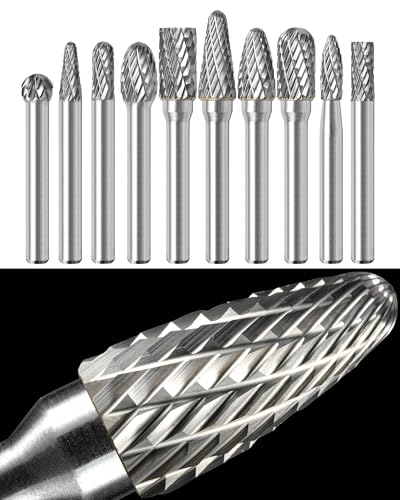 Sworker CBS-5Best mixed head sizes
What the black color usually means
A die grinder spins a bit at very high speed, and cutting metal turns most of that energy into heat. Heat reacts with oxygen in the air and leaves a dark oxide film on the bit, on the steel shank, and on the workpiece. That film is what you see as black, brown, or blue.
Three things tend to cause it: heat from the cut itself, metal chips packed between the teeth, and a bit that is no longer sharp and rubs instead of cutting. They often happen together, which is why one fix rarely solves it alone.
The main causes, side by side
Use the table to match what you see with the most likely cause. The fix column is where to start, not a full repair.
| What you see | Likely cause | First thing to try |
|---|---|---|
| Dark or bluish tint on the head, still cutting well | Normal heat oxidation | Keep working, ease off pressure if it spreads |
| Black smears filling the flutes | Chips loaded into the teeth | Stop, clean the burr, take lighter passes |
| Black head and little material removed | Dull teeth or rubbing instead of cutting | Replace the burr |
| Dark shank near the collet | Heat from slipping or a bent bit | Check shank fit and runout |
| Black residue after cutting aluminum or plastic | Material melted or smeared onto the teeth | Slow the feed, clean with a brass brush |
Heat, pressure and speed
Pressing hard does not make a burr cut faster. It packs chips into the flutes, raises friction, and builds heat that darkens the bit. Light pressure with steady movement lets each tooth take a small bite and carry the chip away.
Speed matters too. Carbide burrs are meant to run at moderate to high speed. The BOOLY 14-piece set, for example, lists a 45,000 rpm rating, and its listing says material removal and control improve as speed rises. A burr run too slowly tends to chatter and rub, which makes heat without clean cutting.
Keep the tool moving. Dwelling in one spot concentrates heat in the bit and the workpiece. If the metal itself is turning blue, you are overheating it, and that can change its hardness near the edge.
Clogging and the wrong cut pattern
When metal chips weld themselves into the teeth, the burr loses its bite and the dark buildup grows. Soft metals such as aluminum are common offenders, and so is gummy steel when the feed is too heavy.
Cut pattern helps here. Double cut burrs have crossed teeth that break chips into smaller pieces, which our best die grinder bits for metal page recommends for steel and iron. The BLENCEE 10-piece set is double cut, and its listing says that design reduces heat buildup. Single cut burrs remove material faster but make long chips that can wrap and clog.
If you are working with aluminum, a single cut or aluminum-cut burr can clear chips better than a fine double cut. Many people also touch the burr to a bit of cutting wax before aluminum work, though that is a general shop habit and not part of any listing.
How to clean a blackened bit
Cleaning can bring a loaded burr back, but it will not restore teeth that are worn smooth. Always let the bit cool completely first.
Follow these steps:
- Unplug the grinder or disconnect the air line, then remove the bit.
- Let it cool until you can hold it comfortably.
- Scrub the flutes with a brass or nylon brush, working along the teeth.
- For stubborn buildup, soak the head in a degreasing solvent and brush again. Keep solvent away from sparks and heat, and use it in a ventilated space.
- Wipe it dry and look at the teeth. If they look rounded or shiny, replace the burr.
- Store it in its case so burrs do not knock against each other.
When the bit is not working at all
If a bit turns black and also cuts poorly, check the basics before blaming the burr. First, the shank must match the collet. Most die grinders take a 1/4 in shank, and the sets on our list use 1/4 in shanks. Several listings, including BLENCEE and Sworker, note they do not fit 6 mm collets.
Second, check for a bent bit. Long burrs flex easily. The Sworker 5-piece long set is 158 mm overall, and its listing warns that burrs should stay in contact with the workpiece while the tool starts, runs, and stops, or the shank may bend. A bent burr wobbles, rubs, and heats up.
Third, make sure the burr suits the metal. Some listings name specific materials, such as steel, aluminum and cast iron for the Sworker long set. Picking a shape and size that fits the job also helps, and our best die grinder and best air die grinder pages cover whether your tool delivers steady speed. An air grinder that starves for air will run slow and rub.
Bits are not blades, and safety notes
Some people search for a die grinder bit blade. Burrs are rotary files, not cutting blades. For slicing through metal stock, a thin cut-off disc on an angle grinder is the usual tool, and our best angle grinder disc for cutting metal page compares options.
Safety comes first with any of this:
- Wear safety glasses or a face shield. Carbide can chip and sparks fly.
- Wear hearing protection, since high-speed grinding is loud.
- Wear gloves and expect hot bits and hot workpieces. Do not touch either right after cutting.
- Secure the workpiece so it cannot spin or jump.
- Keep sparks away from fuel, solvents and anything flammable.
- Use a dust mask or ventilation, especially on coated or rusty metal.
- Disconnect power or air before changing bits.
Frequently asked questions
Is a black burr ruined?
Not always. If it still cuts cleanly and the teeth look sharp, the color is only oxidation. If it cuts slowly or the flutes stay packed after cleaning, replace it.
Can I use coolant or water to keep a burr from turning black?
Dipping a hot carbide bit in water can cause thermal shock and cracking, so avoid it. Lighter pressure and cleaner chip clearing are safer ways to cut heat.
Why does my burr go black on aluminum so quickly?
Aluminum is soft and tends to smear onto the teeth, which then packs the flutes. Use light passes and clean the burr often.
Does a bigger set last longer?
Piece count does not change how long one burr lasts. A larger set gives you more shapes, so each burr can be matched to its job.