#1
AKNEAR FR-GTK9800-K1AKNEAR 99000 Lumen Headlamp
It lists 12 modes and a 1676 m beam distance, both the highest on the page.
- Max brightness
- 99000 lm
- Runtime on high
- —
- Weight
- 11.4 oz
For a general-purpose headlamp, start with the jobs you do most. Brightness in lumens sets how much light you get, but beam distance, weight, and water resistance decide how it feels in use. Red light helps at camp, and adjustable focus lets you switch between wide and narrow beams. Runtime and charging type matter for long trips. We put 6 products on one spec sheet so you can compare them directly. Missing specs are noted, not guessed.
Quick answer
Ranked from 6 headlamps that met our standard, compared on max lumens, high-mode runtime, weight.
As an Amazon Associate I earn from qualifying purchases. Links to retailers on this site are affiliate links; we may earn a commission at no extra cost to you.
It lists 12 modes and a 1676 m beam distance, both the highest on the page.
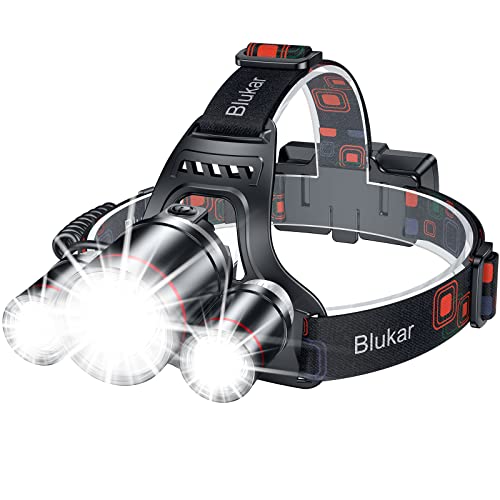
It lists 8000 lm, 9.74 oz, IPX6 and a red light, which covers most home tasks.

It lists 0.96 oz, the lowest weight, plus a motion sensor switch.
| Spec | ||||||
|---|---|---|---|---|---|---|
| Best Scoreout of 100 | 62 | 56 | 54 | 43 | 42 | 36 |
| Max brightnesslm | 99000 lm (best in row) | 8000 lm | 99000 lm (best in row) | 3000 lm | 2700 lm | 1500 lm |
| Beam distancem | 1676 m (best in row) | — | — | 191 m | 295 m | 350 m |
| Runtime on highhr | — | — | — | — | — | 8.0 hr |
| Battery energyWh | — | — | — | — | — | — |
| Weightoz | 11.4 oz | 9.7 oz | 1.0 oz (best in row) | 7.4 oz | 6.3 oz | 12.0 oz |
| Water resistance | IPX7 or higher (best in row) | IPX6 | IPX7 or higher (best in row) | IPX7 or higher (best in row) | — | IPX6 |
| Charging port | USB-C | USB-C | — | USB-C | USB-C | — |
| Number of modes | 12 (best in row) | 5 | 3 | 7 | — | 3 |
| Red light mode | Yes (best in row) | Yes (best in row) | No | Yes (best in row) | — | — |
| Adjustable focus beam | Yes | Yes | Yes | Yes | Yes | — |
| Motion sensor switch | — | — | Yes | — | — | — |
| Drop resistancem | — | — | — | 2.0 m (best in row) | 1.0 m | — |
| Warrantyyr | — | — | — | — | Lifetime* (best in row) | 0.5 years |
We reviewed 20 headlamps and kept only the 6 that pass every check below. Those are ranked by a Best Score built from spec fit for this job, sales rank.
These reviews are based on specifications and listing information. Each one explains what the numbers mean for camping, running, and home projects.
AKNEAR leads our ranking with the widest feature list
The AKNEAR FR-GTK9800-K1 ranks first on our spec score. It lists 99000 lm of max brightness and a 1676 m beam distance, the longest of the four models that publish one. Those are claimed maxima, so treat them as upper limits. For camping or yard work, what matters more is that it has a zoomable beam.
It has 12 light modes, the most on the page. The listing says the flood and spot beams each get five modes, plus a red light that can stay on or blink. Red light helps you keep night vision at camp. The IPX7 or higher rating means it should handle heavy rain. Charging is over USB-C.
The catch is weight. At 11.4 oz, it is heavy for a headlamp you wear on a run. The maker does not publish a drop rating or warranty length in the spec data. The listing also says the USB port can charge a phone.
VerdictA feature-packed pick for camping and projects that earns its first-place rank, as long as you can live with the weight.
Blukar keeps things simple with a lighter, mid-power build
The Blukar K9116 ranks second on our list. It lists 8000 lm of max brightness, which is far below the two 99000 lm models but plenty for walking the dog, car repair, or reading in a tent. It still outputs more than the 3000 lm and 2700 lm models below it. The maker does not publish a beam distance or a runtime on high, so those numbers are unknown.
It weighs 9.74 oz and has an elastic headband that the listing calls breathable and non-slip. The lamp head tilts 90°. There are 5 modes: main white, side white, all lights, all lights flashing, and a red main light. Zoom lets you switch between flood and spot. Charging uses USB-C.
Water protection is IPX6, which covers strong water jets but is a step below the IPX7 or higher rating on three other models. The battery is built in and cannot be swapped, and the listing says a full charge takes 5 hours.
VerdictA sensible middle option for everyday use, though missing specs make it harder to judge for long trips.
Curtsod trades modes for a hand-wave switch and low weight
The Curtsod Hl-99000 comes as a 2-pack and ranks third. It lists 99000 lm of max brightness, tied for the highest on the page, and a weight of 0.96 oz, the lowest listed. That weight is unusually low next to its brightness claim, so check what the 0.96 oz covers before you buy.
The standout feature is the motion sensor switch. Hold the power button for two seconds, then wave a hand to turn it on, off, or change modes. That helps when your hands are covered in grease or dirt. It has only 3 modes: high, low, and strobe. You can still switch between spot and flood.
There is no red light, so it is a weak fit for preserving night vision at camp. The maker does not publish a charging port type, beam distance, or runtime on high. The IPX7 or higher rating is solid for rain, and the listing quotes a 4-6 hour charge.
VerdictA light, hands-free option for projects and cycling, held back by few modes and missing specs.
Nitecore HC75 UHE pairs a drop rating with a red light
The Nitecore HC75 UHE ranks fourth. Its 3000 lm max brightness is far lower than the 99000 lm models, and its 191.1 m beam is the shortest of the four that list one. Even so, that is a lot of light for trail running, camp chores, or a garage project.
It weighs 7.37 oz and has seven modes: five white levels and two red. Red modes protect night vision. The stepless focus lets you slide from wide flood to tight spot. The listing says the USB-C port is waterproof and a full charge takes just over 2 hours. The IPX7 or higher rating covers rain.
A 2 m drop rating adds protection against knocks. Only one other model lists one, and it is 1 m. That matters on rocky trails and busy workbenches. The maker does not publish runtime on high or a warranty length here, so battery life on the brightest setting is unknown.
VerdictA well-rounded, tough lamp for everyday use, with less raw output than the top models.
Coast XPH34R offers a detachable, twist-focus design
The Coast XPH34R ranks fifth. It lists 2700 lm of max brightness and a 295 m beam distance, which reaches further than the Nitecore's 191.1 m. At 6.35 oz it weighs less than every model except the Curtsod, which means less strain on your neck on long runs or walks.
The design is different. A twist focus moves between a wide flood and a bullseye spot, and the lamp can detach and work as a handheld flashlight with a magnetic tail cap. The listing says the body is aluminum and is built for a 1 m drop. Charging is over USB-C.
Water resistance is the weak spot. The spec sheet has no rating, and the listing gives only IP54, which covers splashes but not heavy rain. The listing also quotes a lifetime warranty. The number of modes is not published. Treat it as a fair-weather lamp for camping, walks, or yard jobs.
VerdictA flexible, lighter lamp for dry-weather use, but weaker weather protection and a lower rank keep it from the top.
Best among the reviewed tools
Max brightness in lumens is a peak figure, not what you get all night. Two models here list 99000 lm, while others list 1500 lm to 8000 lm. Compare beam distance and runtime on high too, since a bright lamp that dims fast helps little on a long night.
Weight sits on your forehead. Listed weights here run from 0.96 oz to 11.99 oz. Lighter lamps suit running. Heavier ones with bigger batteries suit camp and work. Look for an elastic headband and a tilt hinge so the beam points where you look.
IPX6 handles strong water jets. IPX7 or higher survives short dunks. Most camping and running in rain needs at least IPX6. One model here lists only IP54, which suits dry or light-splash use. Check the rating before you buy for wet climates.
Red light keeps your night vision at camp. Adjustable focus switches between flood for close work and spot for distance. USB-C charging means one cable for most devices. A motion sensor helps when your hands are dirty. Pick the extras that match your jobs, not the longest feature list.
A few hundred lumens is enough for most camp chores and trail walking. The models here list 1500 lm to 99000 lm, so all clear that bar. Peak figures are not what you get all night, so look at beam distance and modes as well.
Yes, for camp and shared spaces. A red light keeps your eyes adjusted to the dark and does not blind others. AKNEAR, Blukar, and Nitecore list a red light mode. Curtsod lists none, and Coast does not publish one.
IPX6 is a good floor for rain. IPX7 or higher adds protection from brief submersion. AKNEAR, Curtsod, and Nitecore list IPX7 or higher, Blukar and svsviio list IPX6, and the Coast listing mentions IP54.
Yes, if you go on long trips. Runtime on high is published by only one model here, the svsviio at 8 hr. Most makers do not list it, so check the battery size and charge time on the listing before you rely on a lamp overnight.
Your own selection is kept in the link, so friends see the same side-by-side.


