Why Do Headlamps Have Red, Green and Strobe Modes?
Each extra mode solves a specific problem that plain white light handles badly. Red light protects your night vision and avoids dazzling people nearby. Green light helps with reading maps and spotting certain details, and strobe is for being seen or signaling for help. Most headlamps include only some of these, so check the mode list before you buy.
 AKNEAR FR-GTK9800-K1Most modes, longest beam
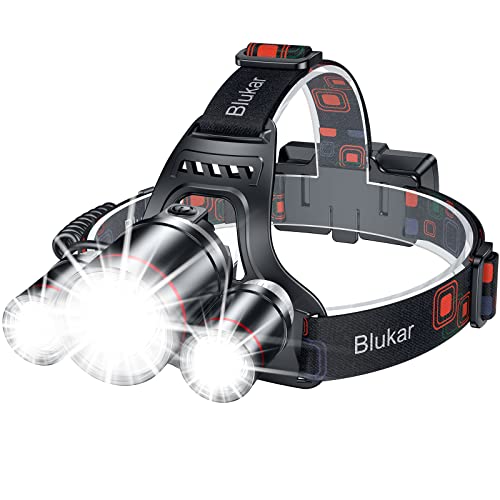 Blukar K9116Balanced everyday middle ground
 Curtsod Hl-99000Lightest with hands-free switch
The short version of each mode
White light is built for seeing far and clearly. It is also harsh. It makes your pupils shrink, it ruins your adjustment to the dark, and it annoys anyone it points at. The colored and flashing modes exist to fix those side effects or to do jobs white light cannot.
Here is a quick overview before we go into each one.
| Mode | Main purpose | Best for | Trade-off |
|---|---|---|---|
| Red | Keeps night vision, low glare | Camp, tent, group settings, reading at night | Dim and shows less detail at distance |
| Green | Softer than white, good contrast on some surfaces | Maps, fishing, wildlife viewing | Less common on headlamps |
| Strobe | Gets attention fast | Roads, trail signaling, emergencies | Drains battery, can disorient |
| SOS | Flashes a distress pattern | Emergencies only | Not for everyday use |
Why headlamps have a red light
Your eyes take time to adapt to darkness. After several minutes without bright light, you see much better in dim conditions. A flash of white light resets that adjustment, and it can take a while to get back.
Red light is the standard fix. Your eyes are less sensitive to red wavelengths, so a red beam lets you see nearby things without undoing your dark adaptation. That is why red mode is useful when you step out of the tent at night and then want to look at the stars, or when you need to check a map and then scan a dark trail.
Red is also polite. In a shared camp, a bunk room or a campsite where people are asleep, a red beam will not wake or blind anyone the way white does. Many pilots and astronomers use red for the same reason.
Product data shows how common this is. Our best headlamp comparison lists red light on the AKNEAR FR-GTK9800-K1, the Blukar K9116 and the Nitecore HC75 UHE, while the Curtsod Hl-99000 does not list one. The Nitecore lists five white levels and two red modes, and the AKNEAR lists a red backlight that can be constant or blinking.
A second use for red: being seen
Some lamps put the red light on the back of the head unit. Blukar describes its rear red light as a way to remind others that you are there in dark outdoor conditions. A steady or blinking red light behind you works like a bike tail light for walking or running on a road shoulder.
A blinking red mode, like the one the AKNEAR lists, also saves battery compared with running a bright white beam. It is not a substitute for reflective clothing, though. Treat it as one extra signal, not your only one.
Why some headlamps have green light
Green is less common than red, but it has its fans. Our product data does not list green on any of the lamps in the comparison, so treat this section as general background.
Green light sits near the middle of the visible spectrum, where human eyes are quite sensitive. That means a dim green beam can still show useful detail. It keeps more of your night vision than white, though less than red. People use it for reading maps and charts, since some printed colors show up better under green, and for fishing, where a gentler beam is less likely to spook things near the water.
Some hunters and trackers also like green for following trails at night, because it can make certain marks stand out. If that is your use, look for a lamp that lists a green mode by name rather than assuming it has one.
Why headlamps have strobe and SOS modes
A strobe is a fast, repeating flash. Your eye is drawn to motion and sudden changes, so a flashing light is easier to notice than a steady one at the same brightness. That makes it good for signaling.
Strobe appears on several lamps in our data. The Curtsod lists three modes: high beam, low beam and strobe. The AKNEAR lists strobe and SOS in both its flood and spot settings, as part of 12 modes. The Blukar lists an all-lights flashing mode among its five.
Typical uses for strobe and SOS include:
SOS repeats a pattern that is widely recognized as a call for help. Use it only if you actually need rescue, since it can pull people toward your location.
- Warning drivers or cyclists when you are walking along a road
- Marking your position if you are lost or injured
- Letting a group find you in a dark campsite or trail
- Signaling to a boat or vehicle from a distance
Safety notes before you use these modes
Flashing lights can trigger seizures in people with photosensitive epilepsy. Avoid using strobe around others, especially in enclosed spaces, and do not point it at faces.
Bright white beams can cause temporary vision loss at close range. Lamps rated in the tens of thousands of lumens, like the two listed at 99000 lm, should never be aimed at anyone's eyes, and you should not look into the beam. Also keep in mind that listed max lumens are peak figures, not what you get all night.
Red light is dim at distance, so do not rely on it to spot hazards like drop-offs, roots or water crossings. Switch to white or low white when you move over rough ground, then go back to red when you stop.
If you use strobe on a trail, remember it can disorient you and other hikers. Turn it off once someone has seen you.
How to choose the modes you need
Start with your most common job. If you camp or share space, a red mode matters more than extra brightness. If you run or walk on roads at night, look for a rear red light or a flashing mode. If you do work in a garage or attic, strobe matters less than steady beam options and a good headband.
Weight and water resistance still decide comfort and durability, so read the full spec sheet. Our headlamp comparison notes that red light helps at camp, and that a longer feature list is not better unless you will use those features.
Finally, check how the modes are accessed. The Nitecore lists two-button operation with direct access to Ultra High, Low or Red. That kind of shortcut saves fumbling when you need red fast without blasting white light first.
Frequently asked questions
Does red light really protect night vision?
Yes, in the sense that your eyes are less sensitive to red wavelengths. A dim red beam lets you see nearby things without a big reset of your dark adaptation, though it will not show much detail at a distance.
Is strobe mode more efficient than steady light?
Often it uses less power than a steady beam at the same peak brightness, since the light is off part of the time. The saving depends on the lamp, so check the runtime figures if they are listed.
Can I use a headlamp strobe while driving or cycling?
A headlamp flash is not a replacement for proper bike lights or vehicle lighting. Local rules vary, and flashing lights may confuse other road users, so check your local requirements.
Do all rechargeable headlamps have a red mode?
No. In our comparison, the Curtsod Hl-99000 lists no red light, even though it has a motion sensor, strobe and adjustable focus. Always check the mode list.