What Size Headlamp Do You Need? A Practical Guide
For most hiking and camp use, pick a mid-weight headlamp (roughly 6 to 10 oz in the listings we compare) with a few thousand lumens at most, a red light, and at least an IPX6 water rating. Go lighter for running, and heavier with a bigger battery for long nights or work. "Size" really means three things: how much the lamp weighs, how bright it can get, and how long the battery lasts.
 AKNEAR FR-GTK9800-K1Most modes, longest beam
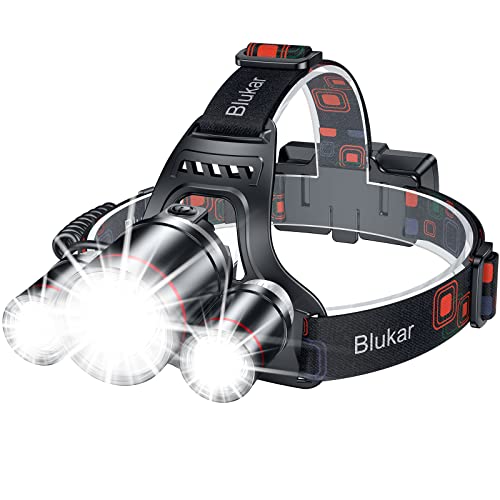 Blukar K9116Balanced everyday middle ground
 Curtsod Hl-99000Lightest with hands-free switch
What "size" means for a headlamp
Headlamps do not come in sizes like shoes. When people ask what size headlamp they need, they usually mean one of three things: the physical size and weight, the brightness, or the battery capacity. These three are linked. A bigger battery usually means more weight on your forehead, and a very bright lamp usually needs more battery to stay bright.
The good news is that you can work backward from the job. Decide where you will use the lamp most, then choose the weight and features that suit it. Our best headlamp page puts several models on one spec sheet, which makes this easier.
Match the headlamp to your activity
Different activities push you toward different trade-offs. Here is a simple way to think about it.
- Hiking and backpacking: Choose a mid-weight lamp with a red light and adjustable focus. You want a wide beam for camp chores and a narrow beam for spotting the trail ahead. Water resistance of at least IPX6 covers rain.
- Trail running: Weight matters most. A light lamp bounces less and does not strain your neck. A motion sensor switch is handy when you do not want to fumble with buttons.
- Camp and car camping: You can carry more weight, so a larger battery and more modes are fine. A red light keeps your night vision and is kinder to tent mates.
- Work, repairs and emergencies: A detachable or tilting lamp helps when your hands are busy. Long runtime and a rugged body matter more than saving a few ounces.
- Reading and close tasks: You rarely need much brightness. A low mode with a wide flood beam is easier on the eyes.
How listed specs compare
Here is how five of the models on our comparison page line up on published specs. Blank cells mean the spec was not listed, and we do not guess.
The weight spread is large. Across the full page, listed weights run from 0.96 oz to 11.99 oz, so the lamp you pick will feel very different depending on the model.
| Model | Weight (oz) | Max lumens | Beam distance (m) | Water rating |
|---|---|---|---|---|
| AKNEAR FR-GTK9800-K1 | 11.4 | 99000 | 1676 | IPX7 or higher |
| Blukar K9116 | 9.74 | 8000 | Not listed | IPX6 |
| Nitecore HC75 UHE | 7.37 | 3000 | 191.1 | IPX7 or higher |
| Coast XPH34R | 6.35 | 2700 | 295 | IP54 |
| Curtsod Hl-99000 | 0.96 | 99000 | Not listed | IPX7 or higher |
Reading lumens and beam distance
Lumens measure total light output, and the number on the box is a peak figure. You do not get it all night. Two models in our comparison list 99000 lm, while others list from 1500 lm to 8000 lm. Treat the top number as a ceiling, then look at how long the lamp can hold a useful level.
Beam distance tells you how far the light reaches, and it is often more useful than lumens on the trail. The Nitecore lists 191.1 m and the Coast lists 295 m, even though the Nitecore lists more lumens. A wider, softer beam can have high lumens and still reach less far.
For most hiking, you do not need the maximum setting often. You will spend most of your time on low and medium modes, so check that those modes feel comfortable and that the lamp is easy to step down from high.
Check weight, fit and battery
Weight sits on your forehead, so even a few ounces can be noticeable after hours. Among the models above, the Curtsod lists 0.96 oz and the AKNEAR lists 11.4 oz. That is a big gap in how the lamp will feel on a long walk or run.
Look for an elastic, breathable headband and a tilt hinge so you can aim the beam without moving your head. Some lamps use a built-in battery that you cannot swap, like the Blukar, which is worth knowing before a long trip.
Runtime figures need care too. On our page, only one model lists runtime on high, at 8 hr, so you often cannot compare this directly. If runtime matters, check the listed hours for the brightness level you plan to use, not just the longest figure. Charging type matters as well. USB-C is common and lets you share one cable with your other devices.
A simple way to decide
Work through these steps and you will land on a sensible choice without overthinking it.
- Pick your main activity from the list above.
- Set a weight limit. Choose light for running, and mid-weight for hiking and camp.
- Choose a beam style. Adjustable focus covers both close work and distance.
- Check the water rating against your climate. IPX6 or higher suits rain.
- Add extras you will actually use, such as a red light or motion sensor.
- Compare listed beam distance and runtime, not just lumens.
Safety notes
Never look directly into a bright headlamp or shine it in another person's eyes, especially on a high mode. Tilt the lamp down when you talk to someone, and use the red light around camp.
Bright lamps can get warm on high. Do not cover the lens or leave a running lamp pressed against fabric or inside a pack.
On rough or steep trails, do not rely on a low mode. Step up to a brighter setting before you cross uneven ground, stream crossings or anywhere with a drop. Carry a backup light on longer trips.
Charge lithium batteries with the cable and adapter recommended for your lamp, and do not charge a damaged or swollen unit. If you wear a headlamp over a helmet, make sure the band stays secure.
Frequently asked questions
Do more lumens mean a better headlamp?
Not always. Lumens are a peak figure, and beam distance, runtime and weight change how the lamp works in real use. A lamp that dims quickly from its maximum may help less than a steadier one.
Is a heavier headlamp a bad choice?
Not if the weight buys you something. A bigger battery and sturdier body suit camp and work. For running or long hikes, a lighter lamp is usually more comfortable.
Do I need a red light?
It is not required, but it helps at camp. Red light protects your night vision and is less glaring for others nearby. Among the models above, the Curtsod does not list one.
What water rating should I look for?
IPX6 handles strong water jets, and IPX7 or higher survives short dunks. An IP54 rating, like the Coast lists, suits dry or light-splash use rather than heavy rain.