What Is a Headlamp and What Is It Used For?
A headlamp is a small, strap-mounted light that you wear on your forehead or on a helmet, so the beam points where you look and your hands stay free. People use it for camping, hiking, running, fishing, repairs, and power outages. It beats a flashlight whenever you need both hands for the task.
 AKNEAR FR-GTK9800-K1Most modes, longest beam
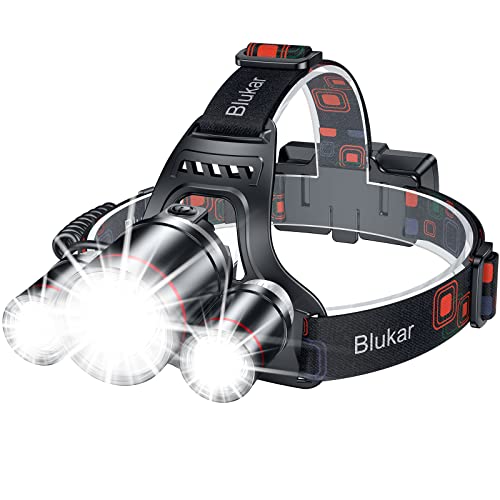 Blukar K9116Balanced everyday middle ground
 Curtsod Hl-99000Lightest with hands-free switch
What a headlamp is
A headlamp is a compact light source, usually an LED, attached to an elastic headband. Most have a battery either built into the lamp or held in a small pack. A button or switch lets you pick a brightness level or a special mode.
The core purpose is simple: put light exactly where your eyes are pointed. Because the light moves with your head, you do not have to hold anything, aim anything, or set a lantern down and lose the angle.
You may also see the word used for car lights. In a vehicle, a headlamp is the light at the front that shows the road. This guide covers the wearable kind.
What headlamps are used for
Anything that happens in the dark and needs both hands is a good fit. The common jobs fall into a few groups.
- Camping and hiking: cooking, setting up a tent, reading a map, and walking trails after sunset.
- Running and cycling: seeing the path ahead without carrying a light.
- Fishing: tying knots and handling gear at night.
- Home and car repairs: working under a sink, in an attic, or under a hood.
- Power outages: moving around the house and doing small tasks while the lights are out.
- Walking the dog: lighting your path and the ground ahead of you.
Headlamp vs flashlight
A flashlight is usually brighter per ounce in the hand and easier to aim at something far away. A headlamp trades a little of that for hands-free use and a beam that follows your gaze.
Neither one is better in every case. The right choice depends on whether your hands are busy.
| Situation | Headlamp | Flashlight |
|---|---|---|
| Cooking or setting up camp | Good fit, hands stay free | Needs a hand or a stand |
| Climbing or scrambling | Good fit, hands stay on the rock or rail | Hard to hold and use at the same time |
| Repairs in tight spaces | Beam follows your eyes | Often needs to be propped up |
| Signaling or checking a far object | Works, but turning your head is needed | Easy to point by hand |
| Quick grab in a drawer | Needs a strap to be worn | Ready to use at once |
Features that matter in a headlamp
Brightness is measured in lumens, but the number alone can mislead. On our best headlamp page, two models list 99000 lm, while others list 1500 lm to 8000 lm. Max brightness is a peak figure, not what you get all night, so also check beam distance and runtime.
Weight matters because it sits on your forehead. Listed weights on that page run from 0.96 oz to 11.99 oz. The AKNEAR 99000 Lumen Headlamp lists 11.4 oz, the Nitecore HC75 UHE lists 7.37 oz, and the Curtsod 2-pack lists 0.96 oz. Lighter lamps suit running. Heavier ones with bigger batteries suit camp and work.
Other features are worth a look based on what you do:
- Red light: keeps your night vision at camp and is gentler on others around you. The Blukar K9116 and the Nitecore HC75 UHE both list it.
- Adjustable focus: lets you switch from a wide beam for close work to a narrow beam for distance.
- Water resistance: IPX6 handles strong water jets, and IPX7 or higher survives short dunks. The Blukar K9116 lists IPX6, while the Coast XPH34R lists an IP54 design, which suits dry or light-splash use.
- USB-C charging: one cable can cover most of your devices.
- Motion sensor: lets you switch the lamp with a wave of the hand when your hands are dirty. The Curtsod model lists one.
How to pick one for your main use
Start with the job you do most. A runner cares about weight and a stable fit. A camper cares about runtime, red light, and rain resistance. Someone fixing things at home may want a wide flood beam and a tilt hinge so the light points at the work.
A tilt hinge is easy to overlook. It lets you angle the beam down at a task without bending your neck. A soft, elastic headband also helps when you wear the lamp for hours.
If you want one lamp that can also be a handheld light, look for a detachable design. The Coast XPH34R lists a detachable body with a magnetic tail cap, so it can work as a flashlight too. For a broader side-by-side look, our headlamp comparison puts the specs on one sheet. Missing specs are noted, not guessed.
Safety and care
Headlamps are low-risk tools, but a few habits help.
Never shine a bright beam into someone's eyes, and avoid looking into the lens yourself on high. Very bright lamps can leave spots in your vision for a short time.
When you climb a ladder, scramble on rocks, or work at a height, make sure the lamp is snug and the beam is aimed ahead before you move. A loose lamp that slips down can block your view.
Use strobe and SOS modes only when you need to signal, since flashing light can be disorienting. When you work on electrical items, treat the lamp as a light only and turn off power at the source first.
Charge the lamp with a proper cable and keep the charging port dry. Let a wet lamp dry before plugging it in. For grinding, cutting, or other tasks that throw debris, wear eye protection and hearing protection as the job requires, and do not rely on the lamp for that.
Frequently asked questions
Can I wear a headlamp over a hat or helmet?
Usually yes. Most headlamps use an adjustable elastic band that fits over a cap or helmet. Some listings also say the band can be fixed to a helmet. Check fit before relying on it.
Why does a headlamp have a red light?
Red light is easier on your night vision than white light. It lets you read a map or move around camp without losing your adjustment to the dark, and it is less glaring for people nearby.
Do I need the highest lumen number?
Not necessarily. A higher number means a higher peak output, but comfort, weight, beam distance, runtime, and water resistance often matter more for everyday use.
Can a headlamp replace a lantern?
For small tasks, yes, especially with a wide beam. For lighting a whole campsite or room evenly, a lantern spreads light more widely, so some people carry both.