How to Properly Use a Die Grinder on Metal
Use a die grinder on metal with a double cut tungsten carbide burr that matches your collet, wear eye, hearing and breathing protection, and clamp the work. Hold the tool with both hands, let the bit reach full speed before it touches the metal, and make light, steady passes instead of pushing hard.
 BLENCEE Burr14-10Best overall
 Sworker 5TC635Best long-reach set
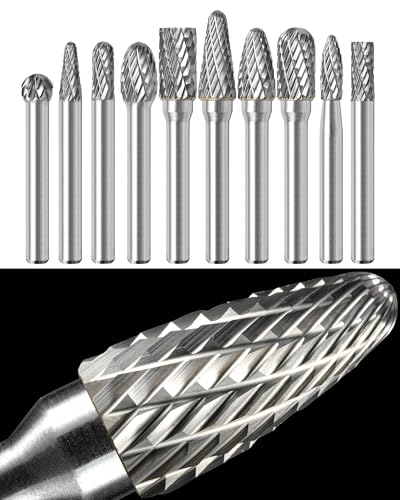 Sworker CBS-5Best mixed head sizes
Start with safety gear and a safe setup
A die grinder spins a small cutting head very fast, and it throws hot metal chips and dust. Most injuries come from skipping basic protection or from a loose workpiece that grabs the bit.
Set up before you pick up the tool. Clear the area of rags, solvents and anything that burns, because grinding makes sparks. Clamp the part in a vise or to a bench so both hands stay on the grinder.
- Wear safety glasses or a face shield rated for impact. Burr chips are sharp and fly sideways.
- Wear hearing protection. Metal grinding is loud, especially on thin sheet.
- Use a dust mask or respirator, particularly on painted, coated or galvanized metal, since the dust and fumes are not safe to breathe.
- Wear snug gloves and tie back long hair and loose sleeves so nothing can wrap around the bit.
- Keep a fire extinguisher nearby, and move fuel, brake cleaner and other flammables out of the spark path.
- Unplug an electric grinder or disconnect the air line before changing bits.
Choose the right bit and match the shank
For metal, tungsten carbide burrs are the usual choice. A double cut pattern has crossed teeth that make small chips and a smoother finish on steel and iron. Single cut burrs remove material faster but leave long chips and a rougher surface. Our best die grinder bits for metal page compares carbide burr sets on one spec sheet.
The shank has to match your collet. Most die grinders take 1/4 in (6.35 mm) shanks, while small rotary tools often take 1/8 in. The BLENCEE 10-piece set, for example, lists a 1/4 in shank and is noted as not compatible with 6 mm collets, so check your collet size before you buy.
Head shape decides what the bit does best.
| Head shape | Good for | Notes |
|---|---|---|
| Cylinder | Flattening, squaring edges, weld cleanup | Flat end reaches into square corners |
| Ball | Hollowing out curves, rounding recesses | Light pressure keeps the cut even |
| Tree or flame | Reaching into corners, shaping contours | Good for tight, curved spots |
| Cone | Chamfering holes, deburring edges | Works well on drilled holes |
| Long reach burr | Porting and deep bores | Needs extra care to avoid bending |
Step-by-step technique
Good technique matters more than muscle. The tool should do the cutting while you guide it.
- Check the bit for chips or cracks and throw away any damaged burr.
- Insert the shank fully into the collet, back it out slightly if the maker advises, then tighten with the wrench. Never tighten a collet with no bit in it.
- Pick up the grinder with both hands and keep your body out of line with the bit.
- Start the tool in the air and let it reach full speed before it touches the work.
- Touch the burr to the metal at a shallow angle and move it steadily in one direction.
- Make several light passes rather than one deep cut. Check progress often.
- Lift the bit off the work, let it stop spinning fully, and then set the tool down.
Speed, pressure and heat
Carbide burrs cut best at moderate to high speed with light pressure. Pressing hard slows the tool, builds heat, clogs the teeth and gives a wavy surface. Let the weight of the grinder and the sharpness of the burr do the work.
Always stay under the maximum rpm printed on the bit and the tool. Some kits state a rating, such as the BOOLY 14-piece kit, which lists 45000 rpm. If your grinder can run faster than your bit allows, use a different bit or a speed control.
Long burrs need extra respect. The Sworker 5-piece long set (158 mm overall, 8 and 10 mm heads) warns that the burr must stay in contact with the workpiece while the tool starts and stops, or the shank can bend and raise injury risk. A bent burr can break apart in use, so replace it.
If you use an air tool, check the air pressure rating on the tool and keep a proper regulator and clean, dry air. Our best air die grinder page lists air models, and the best die grinder page covers both types.
Using bits on a car, a metal roof and wheels
On car body panels, thin sheet metal heats up and warps quickly. Use light passes, move constantly and let the panel cool. Remove paint and filler dust with a respirator on. Disconnect the battery and keep sparks away from the fuel system, fuel lines and any plastic parts.
On a metal roof, the main hazard is height. Work from a secure ladder or platform, use fall protection where needed, and do not work on a wet or sloped roof alone. Sparks and hot chips can ignite insulation or debris below the panel, and they can damage the coating that protects the roof from rust. Cutting through panels is often better done with a cutting disc, so see our best angle grinder disc for cutting metal page for that job.
On wheels, use a small cylinder or ball burr to clean up casting flash, smooth a rough lip or remove light corrosion. Never remove material from load-bearing areas such as spokes or the hub, and do not grind a cracked or bent wheel. Aluminum is soft and can load up burr teeth, so use light pressure and clear the teeth often. If the wheel is damaged, have it checked by a professional.
Common mistakes and care
Most poor results come from a handful of habits that are easy to fix.
- Forcing the bit into the metal instead of letting it cut.
- Using a single cut burr when a smooth finish is needed.
- Starting the tool while it is already pressed against the work.
- Running long burrs hard with no support, which bends the shank.
- Skipping eye and ear protection because the job is short.
- Storing loose burrs together so the teeth knock against each other.
Keep your bits working longer
Clean burrs with a brush after use and remove stuck metal from the teeth. Keep them in a case so the teeth do not chip. A burr that cuts slowly, chatters or leaves a rough finish is worn and should be replaced.
If you are still choosing a set, a mix of shapes covers more jobs than a single burr, and sets like the BLENCEE 10-piece offer 10 head shapes in a storage case.
Frequently asked questions
Can I use a die grinder on aluminum?
Yes, with a double cut carbide burr and light pressure. Aluminum is soft and can clog the teeth, so clear them often and keep the bit moving.
Should I use a die grinder or an angle grinder?
A die grinder suits tight spots, shaping and detail work. An angle grinder with a disc is better for fast cutting and large flat surfaces.
How do I know when a burr is worn out?
It cuts slowly, vibrates, leaves a rough finish or glazes the metal. Chipped or missing teeth also mean it is time to replace it.
Do I need to oil a carbide burr?
Usually not for light work, but a small amount of cutting fluid or wax can reduce clogging on soft metals. Follow the tool and bit maker's advice.