#1
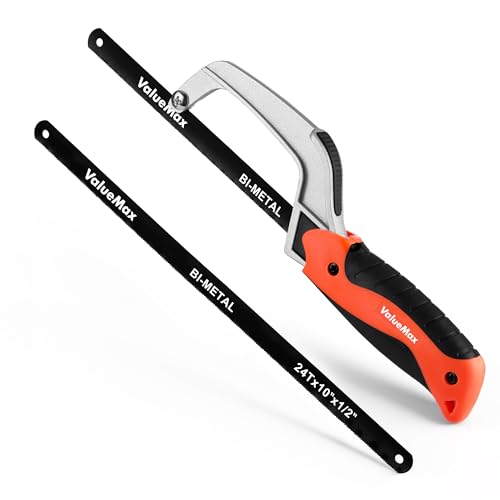
KATA KT21019MKATA 10-in Mini Hacksaw
Weighs 0.3 lb and includes three bi-metal blades, but the listing describes metal and PVC work.
- Blade length
- 10.0 in
- Blade TPI
- 24 TPI
- Weight
- 0.30 lb
Drywall work rewards a light saw, enough reach for the full board, and fine teeth that do not tear the paper facing. Look at blade length, cutting depth, TPI and weight. We put 33 products on one spec sheet and ranked them. Many saws in this category are hacksaws, pruning saws or coping saws, not true drywall saws. Check the saw type before you buy, and check whether the maker publishes cutting depth.
Quick answer
Ranked from 33 hand saws that met our standard, compared on cutting depth, blade TPI, and blade length.
As an Amazon Associate I earn from qualifying purchases. Links to retailers on this site are affiliate links; we may earn a commission at no extra cost to you.
Weighs 0.3 lb and includes three bi-metal blades, but the listing describes metal and PVC work.

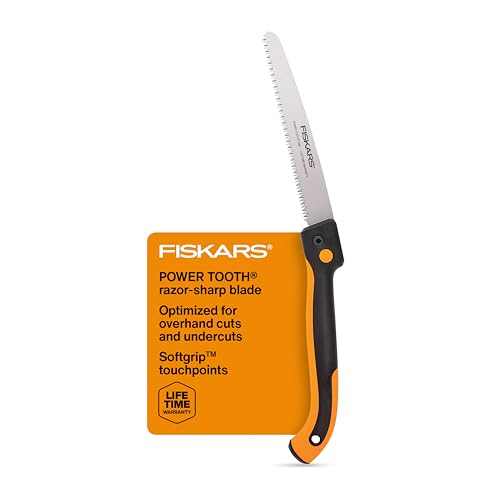
Folding saw with three blades and a 7.5 in length, but built for pruning.

Thin Japanese pull saw with a 0.008 in kerf, made for flush trimming.
| Spec | ||||||||||
|---|---|---|---|---|---|---|---|---|---|---|
| Best Scoreout of 100 | 66 | 64 | 60 | 60 | 54 | 54 | 54 | 53 | 50 | 52 |
| Saw type | Mini hacksaw | folding pruning saw | Flush cut pull saw | Compact hacksaw | — | — | folding jab saw | Hacksaw | pruning saw | folding pruning saw |
| Blade lengthin | 10.0 in | 7.5 in | 7.1 in | 10.0 in | 6.5 in | 10.0 in | 6.0 in | 10.0 in | 13.0 in (best in row) | 10.0 in |
| Cutting depthin | — | — | — | — | 6.25 in | — | — | — | — | — |
| Blade TPITPI | 24 TPI | — | 30 TPI | 24 TPI | 15 TPI | 24 TPI | — | — | — | — |
| Blade material | bi_metal (best in row) | — | — | bi_metal (best in row) | hss | bi_metal (best in row) | — | — | — | — |
| Included bladescount | 3 count | 3 count | — | — | 2 count | 2 count | 4 count (best in row) | 1 count | 1 count | 1 count |
| Tool-free blade change | — | Yes (best in row) | No | Yes (best in row) | Yes (best in row) | No | — | Yes (best in row) | — | — |
| Adjustable blade angle | — | Yes | — | — | — | — | Yes | — | — | Yes |
| Weightlb | 0.30 lb (best in row) | 0.77 lb | 0.31 lb | 0.50 lb | 0.58 lb | 0.54 lb | 0.54 lb | 0.50 lb | 0.70 lb | 0.83 lb |
| Handle grip | Ergonomic handle | TPR rubber comfort grip handle | Wingnut wood wrapped in vinyl rattan | Contoured overmolded handle | Ergonomic plastic handle | ABS and TPR, anti-slip, ergonomic | Ergonomic overmolded handle | Rubber over mold grip | Ergonomic pistol grip handle | Non-slip grip handle |
| Warranty | — | — | — | — | — | — | — | — | Lifetime* | Lifetime* |
We reviewed 94 hand saws and kept only the 33 that pass every check below. Those are ranked by a Best Score built from spec fit for this job, sales rank.
These reviews are based on specifications and listing information only. They cover the five top-ranked saws and say plainly where each one does or does not fit drywall.
A small metal hacksaw, not a drywall saw
The KATA KT21019M is a 10 in mini hacksaw with a 24 TPI bi-metal blade. Those fine teeth are made for metal rods, PVC pipe and thin tubing, according to the listing. Gypsum board is a different job. The maker does not publish a cutting depth. Nothing in the listing mentions gypsum board.
What it does well is stay light and easy to handle. It weighs 0.3 lb and has an ergonomic handle. Three blades come in the box, one installed and two spares. Spare blades matter if you cut metal fasteners or tubing often, since bi-metal blades are the type meant for that work.
It ranks first on our spec sheet, but that does not mean it fits this keyword. The ranking reflects specs across all hand saws, not drywall fit. For gypsum board, a jab saw is the better category. Use this one for the odd metal or PVC cut near a wall opening.
VerdictA handy small hacksaw for metal and plastic, but the wrong tool for cutting drywall openings.
A folding pruning saw with swappable blades
The Mossy Oak MO17009 is a folding pruning saw, built for branches and camp work. It has a 7.5 in blade and three blades in the package. The listing gives blade tooth counts of 5, 11 and 18 TPI. The finest is still coarser than the 24 TPI hacksaw blades on this page, so a clean paper edge is less likely.
Handling is the strong side. The blade changes without tools, and the blade angle adjusts, which helps you reach awkward spots. The handle has a TPR rubber comfort grip. At 0.77 lb it is heavier than the other saws in these reviews, which matters if weight is your priority.
Blade length is 7.5 in, but the maker does not publish a cutting depth. It ranks second on our spec sheet, though that reflects specs, not drywall fit. Think of it as a trail and yard saw that can also cut plastic. Keep it for pruning, camping and rough cuts.
VerdictA flexible outdoor saw with handy blade options, but it is not built for clean drywall work.
Fine 30 TPI teeth, but made for flush trimming
The SUIZAN SFL-003 is a Japanese flush cut pull saw with a 7.09 in blade. Its 30 TPI is the finest tooth count among the five saws reviewed here, and fine teeth help avoid tearing a paper facing. The listing describes a 0.008 in kerf, so the cut is very narrow.
There are limits. The blade is ultra thin and flexible, and the listing says it is made for light pressure and precise flush cuts, not heavy cutting. A flexible blade is a poor match for starting cuts in a wall panel. The maker does not publish a cutting depth.
It weighs 0.31 lb, so it is easy on the wrist. The handle is Japanese wingnut wood wrapped in vinyl rattan. The blade is replaceable, but not tool-free, since the listing calls for a Phillips screwdriver. The listing says the 7.09 in blade reaches wide plugs and trim. It ranks third on our spec sheet. Use it to trim molding or plugs, not to cut openings.
VerdictA fine-toothed trim saw that suits finishing work, not cutting drywall openings.
Compact hacksaw with a tool-free blade lever
The Klein Tools 31432 is a compact medium-cut hacksaw with a 10 in blade. The blade is bi-metal at 24 TPI, a fine tooth count. A tool-free lever handles blade changes and length adjustment, which the listing ties to flush cuts and work in low-clearance areas. That is handy when you swap blades on site.
Weight is 0.5 lb, and the handle is a contoured overmolded design. The listing says the blade flexes with the cut and extends to reach hard places. Those traits can help with tight spots around a wall opening. It is lighter than the Mossy Oak and the Jorgensen in these reviews. The maker does not publish a cutting depth.
This is a metal-cutting saw at heart. It ranks fourth on our spec sheet, but nothing in the listing mentions drywall. The Klein Tools 31757 folding jab saw ranks seventh, yet its listing names drywall directly. Choose this hacksaw only for metal or plastic work.
VerdictA quick-change compact hacksaw that suits tight spaces and metal, but not gypsum board.
Deepest listed reach, but a coping saw
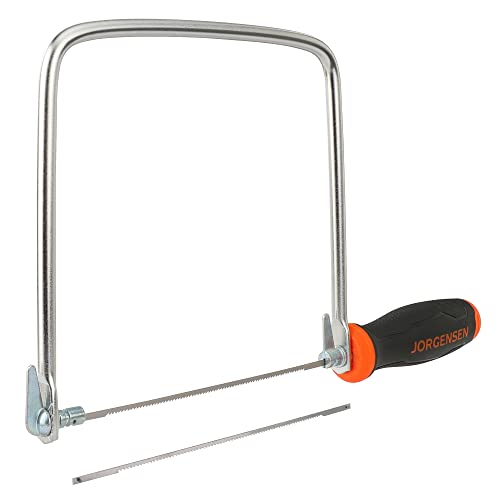
The Jorgensen Pro Coping Saw Set has a 6.25 in cutting depth, the highest on our page among the models that list it. Cutting depth is how far the blade can reach from the edge of the work. That reach suits wide workpieces, and the listing mentions cutting wood panels.
Its blade is 6.5 in long at 15 TPI, made of high-speed steel. That is coarser than the 24 TPI and 30 TPI saws reviewed here, so edge finish on paper facing is a real concern. Two replacement blades are included, and blades change without tools by turning the handle.
At 0.58 lb it is heavier than three of the five saws reviewed here. The listing describes intricate shapes and corner fits, so it can follow curves. It ranks fifth on our spec sheet, but it is made for trim and miter joints, not for opening drywall. Treat it as a trim tool, with reach to spare.
VerdictA deep-frame coping saw that excels at trim work, but only an awkward fit for drywall.
Best among the reviewed tools
A jab saw is the usual drywall tool. Many hand saws on this page are hacksaws, pruning saws or coping saws. Check the saw type first, because fine teeth alone do not make a saw suited to cutting gypsum board openings.
Cutting depth tells you how far the blade can reach from an edge. Only seven of the 33 products on our page list it, and the highest is 6.25 in. If the maker does not publish it, compare blade length instead.
TPI means teeth per in. Higher numbers cut finer and leave a cleaner paper edge. Listed TPI on our page runs from 8 to 32. Coarse blades cut faster but can tear the facing, so check the TPI of each blade.
A light saw is easier to hold through long cuts. Weights on our page run from 0.11 lb to 2.5 lb. Tool-free blade changes and adjustable blade angles save time when you switch between cuts or blade types.
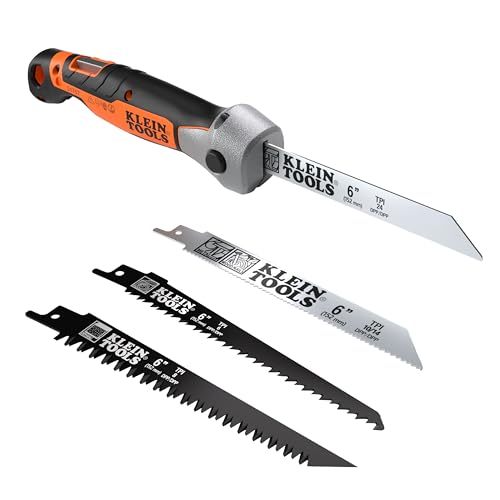
A jab saw is the usual choice. In our data, the Klein Tools 31757 folding jab saw is the one whose listing names drywall, and it includes four blades with an adjustable angle. Most other saws on this page are made for metal, wood or pruning.
It may cut, but the hacksaw listings here describe metal, PVC and tubing, not gypsum board. Their 24 TPI teeth are fine, which helps with paper facing. A saw built for drywall is still the safer pick.
Our data does not set a drywall TPI. Finer teeth, such as the 24 TPI and 30 TPI blades in our reviews, carry less tearing risk than the 15 TPI coping blade. Coarser blades remove material faster.
Frame or cutting depth helps when you cut far from an edge. The Jorgensen coping saw lists 6.25 in, the highest of the seven models that list a cutting depth. It is made for trim and miter joints, though.
Your own selection is kept in the link, so friends see the same side-by-side.