#1
Mossy Oak MO17009Mossy Oak 3-in-1 Folding Saw
Tool-free blade change, adjustable blade angle and 0.77 lb weight in one folding saw.
- Blade length
- 7.5 in
- Blade TPI
- —
- Weight
- 0.77 lb
A coping saw cuts tight curves and joinery with a thin blade that turns for angled cuts. Look at blade length, tooth count, blade angle, tool-free blade change and weight. A light frame helps control on small work. We put 35 products on one spec sheet. Be aware that none of the ten top-ranked saws is a true coping saw. Most are hacksaws or folding pruning saws, so this page shows which ones come closest on the specs that matter.
Quick answer
Ranked from 35 hand saws that met our standard, compared on adjustable blade angle, cutting depth, tool-free blade change.
As an Amazon Associate I earn from qualifying purchases. Links to retailers on this site are affiliate links; we may earn a commission at no extra cost to you.
Tool-free blade change, adjustable blade angle and 0.77 lb weight in one folding saw.

Ranked #2 with a Best Score of 63.

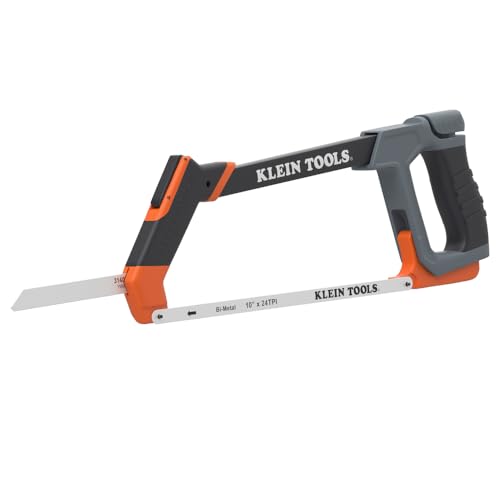
Weighs 0.3 lb and carries a 10 in, 24 TPI bi-metal blade.
| Spec | ||||||||||
|---|---|---|---|---|---|---|---|---|---|---|
| Best Scoreout of 100 | 74 | 63 | 63 | 61 | 60 | 60 | 59 | 58 | 57 | 54 |
| Saw type | folding pruning saw | hacksaw | Mini hacksaw | Hacksaw | folding pruning saw | Hacksaw | hacksaw | hacksaw | hacksaw | Hacksaw |
| Blade lengthin | 7.5 in | — | 10.0 in | 12.0 in (best in row) | 10.0 in | 12.0 in (best in row) | 12.0 in (best in row) | 12.0 in (best in row) | 12.0 in (best in row) | 10.0 in |
| Cutting depthin | — | — | — | 4.38 in | — | — | — | — | — | — |
| Blade TPITPI | — | — | 24 TPI | — | — | 24 TPI | 24 TPI | — | 24 TPI | — |
| Blade material | — | — | bi_metal (best in row) | — | — | bi_metal (best in row) | hss | bi_metal (best in row) | bi_metal (best in row) | — |
| Included bladescount | 3 count | 11 count (best in row) | 3 count | 1 count | 1 count | 2 count | 10 count | 3 count | — | 1 count |
| Tool-free blade change | Yes | Yes | — | — | — | — | — | — | — | Yes |
| Adjustable blade angle | Yes | Yes | — | Yes | Yes | Yes | Yes | Yes | Yes | — |
| Weightlb | 0.77 lb | 2.07 lb | 0.30 lb (best in row) | 1.33 lb | 0.83 lb | 1.45 lb | 1.01 lb | 1.32 lb | — | 0.50 lb |
| Handle grip | TPR rubber comfort grip handle | Ergonomic non-slip rubber grip | Ergonomic handle | Full-grip plastic handle | Non-slip grip handle | — | Rubber front-handle grip | TPR rubber handle | Rubber front-handle grip with thumb grip | Rubber over mold grip |
| Warranty | — | — | — | — | Lifetime* | — | — | — | — | — |
We reviewed 94 hand saws and kept only the 35 that pass every check below. Those are ranked by a Best Score built from spec fit for this job, sales rank.
These reviews are based on specifications and listing information only. Because none of these is a true coping saw, each review says how close it comes to the job.
Folding pruning saw with swappable blades, not a coping saw
This is a folding pruning saw, so it is not a true coping saw. It leads our ranking because it matches the other things you want: a tool-free blade change, an adjustable blade angle and a weight of 0.77 lb. A knob lets you change the blade and choose the direction, then tighten it before use.
Three blades come in the box. All are 7.5 in long. The 5 TPI pruning blade suits branches, the 11 TPI blade suits hardwood and plastic, and the 18 TPI blade suits thin metal pipe. Fewer teeth cut fast and rough. More teeth cut slower and smoother. None of these is a fine scroll blade for tight curves.
The handle has a TPR rubber grip. A lock stops the blade from closing during use, and the saw folds into a nylon pouch that also holds two extra blades. That makes it easy to carry. For coping joinery, the blade is too long and coarse. It fits rough outdoor cutting better.
VerdictA handy, light folding saw for outdoor work, but pick a real coping saw for tight joinery curves.
Hacksaw set with 11 blades, built for metal and wood
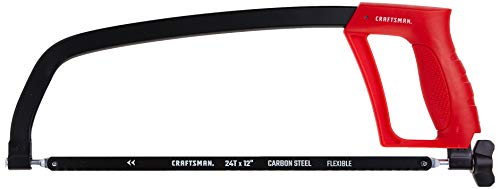
This is a hacksaw set, not a coping saw. It ranks second on our spec sheet, mostly because of what comes in the box. Weight is 2.07 lb, so it is heavy for fine work.
The 12 in frame holds a blade at 90 or 45 degrees, which covers standard and flush cuts. A knob at the bottom of the handle sets tension and lets you swap blades quickly. Blade sizes are 12 in, 10 in and 6 in. The listing gives 24T for the metal blades and 8 TPI for the wood blade.
A coping saw needs a thin blade that turns freely to follow curves. These hacksaw blades are straight and fixed in two positions, so tight curves are out. The aluminum alloy frame and rubber grip suit straight cuts in pipe, PVC and wood. The maker does not publish a warranty.
VerdictA well-stocked hacksaw kit for straight cuts, but it cannot do the curved work a coping saw does.
Light 10 in mini hacksaw for small cuts, not curves
KATA sells this as a mini hacksaw, so it is not a coping saw. Still, it is the lightest of the five products we review here, at 0.3 lb. Low weight cuts hand fatigue on small jobs and makes the saw easier to steer. The frame is aluminum and meant for tight spaces.
The blade is 10 in long with 24 TPI and bi-metal construction. A high tooth count means fine, slow cuts that leave less rough edge, which suits metal rods, PVC and thin tubing. Three blades are included, one installed and two spare. The listing does not show a tool-free blade change or an adjustable angle.
Those gaps matter for coping work. The listing gives no way to rotate the blade for angled cuts, and a hacksaw blade is built for straight lines. It fits light repairs better than joinery. The maker also says it is not meant for heavy demolition, large lumber or thick hardened steel.
VerdictA light, compact hacksaw for small repairs that falls short of what a coping saw does for curves and joinery.
Deep-frame hacksaw with 4.375 in cutting depth
This is a 12 in hacksaw, so it is the wrong tool type for a coping saw. It ranks fourth on our spec sheet. Its 4.375 in cutting depth is the figure to know: the frame leaves that much room between the blade and the back, which helps with deep straight cuts rather than curves.
The listing says the blade can be set at 90 and 180 degrees for flush cuts. That is an adjustable angle, but it is a set position, not a blade that turns freely. Only one blade is included, which matches the lowest count on the page. The listing does not show a tool-free blade change.
The frame is solid metal and is designed for tension up to 225 lbs. The handle is a full-grip plastic handle, and the tension knob is large. At 1.33 lb, it is not light. It is built for sturdy straight cuts, so skip it if tight curves in trim are the job.
VerdictA sturdy deep-cut hacksaw that suits straight work, but it does not replace a coping saw for tight curves.
Folding pruning saw with a lifetime warranty
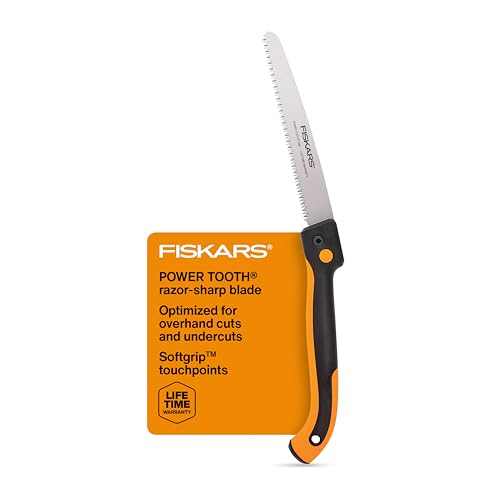
Fiskars sells this 10 in folding saw for pruning and bushcraft, so it is not a coping saw. It ranks fifth on our list. The triple-ground blade is made for fast, aggressive cuts in thicker branches, which is the opposite of the slow, fine work coping needs. Its 10 in blade is long for tight curves.
The blade locks in two positions, one for overhand cuts and one for undercuts. That is an adjustable angle, though it is two set positions and not a blade that rotates freely. The saw weighs 0.83 lb and folds into the handle for storage. It has a hang hole.
Fiskars lists a lifetime warranty, which is the top level among the products that list one. The grip is non-slip. One blade is included, and the listing shows no tool-free blade change. You get a tool for yard work, but you would need a separate coping saw for joinery.
VerdictA capable folding saw for branches and bushcraft, but too coarse and too fixed in its angles for coping joinery.
Best among the reviewed tools
A true coping saw has a thin blade held in a light frame. The ranked products here are hacksaws and folding pruning saws. They can cut straight lines in wood, PVC and metal, but they are not built for tight scrolls. Check the saw type first.
A blade that turns lets you angle the cut without twisting the frame. Many saws here offer set positions instead, such as 45 and 90 degrees. That helps with flush cuts but gives less freedom than a freely rotating blade. Check the adjustable blade angle line.
TPI means teeth per in. A low number, like 5 TPI, cuts fast and leaves a rough edge. A high number, like 24 TPI, cuts slower and cleaner in metal and plastic. For joinery you want finer teeth and a thin blade.
Lighter saws tire your hand less on detailed work. Tool-free blade change saves time when you swap between wood and plastic. Not every maker lists weight or blade change. Where a spec is missing, treat it as unknown and read the listing.
Not really. A hacksaw blade is stiff and straight, so it works for straight cuts in pipe, PVC and wood. A coping saw uses a thin blade for tight curves. Among the ten ranked saws here, none is listed as a coping saw.
Fewer teeth per in cut faster in wood but leave a rougher edge. In this data, the Mossy Oak lists 5 TPI for branches and 11 TPI for hardwood. A higher count such as 24 TPI suits metal and plastic better.
Yes. A blade held at 45 or 90 degrees lets you make standard and flush cuts. Several saws here list this. It is a set position, so it is less flexible than a blade that rotates freely for angled coping cuts.
It saves time when you switch blades for different materials. Mossy Oak, DOWELL and Milwaukee list it. The other top-ranked models do not list it, so check the product page before you buy if quick swaps matter to you.
Your own selection is kept in the link, so friends see the same side-by-side.