#1
Valvoline 601457Valvoline DOT 3 & 4 Synthetic Brake Fluid
Covers DOT 3 and DOT 4 with ABS compatibility, three named standards and corrosion inhibitors.
- DOT grade
- DOT 3 & 4
- Wet boiling point
- —
- Volume
- 12 fl oz
Brake fluid is a safety part, so the numbers on the label matter. Look at the DOT grade your manual calls for, then at the dry and wet boiling points, which show heat limits fresh and after moisture. Check ABS compatibility, named standards and whether the fluid mixes with other DOT 3 or DOT 4 products. Bottle size matters too. We put 17 products on one spec sheet so you can see which details each maker publishes and which it leaves out.
Quick answer
Ranked from 17 brake fluids that met our standard, compared on DOT grade, wet boiling point, dry boiling point.
As an Amazon Associate I earn from qualifying purchases. Links to retailers on this site are affiliate links; we may earn a commission at no extra cost to you.
Covers DOT 3 and DOT 4 with ABS compatibility, three named standards and corrosion inhibitors.
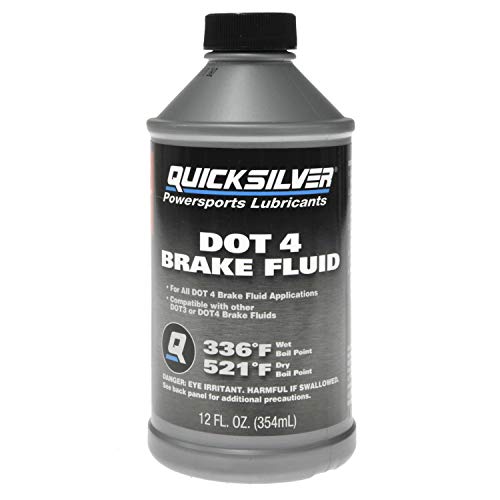
Lists 521 °F dry and 336 °F wet boiling points, the only model here to do so.

Synthetic glycol fluid that the listing says works with ABS, disc and drum brakes.
| Spec | ||||||||||
|---|---|---|---|---|---|---|---|---|---|---|
| Best Scoreout of 100 | 73 | 39 | 64 | 61 | 57 | 70 | 70 | 65 | 65 | 64 |
| DOT grade | DOT 3 & 4 | DOT 4 | DOT 4 LV | DOT 4 | DOT 3 | DOT 3 & 4 | DOT 3 & 4 | DOT 3 | DOT 3 | DOT 5.1 (best in row) |
| Fluid base | Full synthetic (best in row) | — | Synthetic glycol | Full synthetic (best in row) | Synthetic glycol | Synthetic glycol | Synthetic glycol | Full synthetic (best in row) | Full synthetic (best in row) | Synthetic glycol |
| Dry boiling point°F | — | 521 °F | — | — | — | — | — | — | — | — |
| Wet boiling point°F | — | 336 °F | — | — | — | — | — | — | — | — |
| Volumefl oz | 12 fl oz | 12 fl oz | 12 fl oz | 12 fl oz | 32 fl oz | 32 fl oz | 12 fl oz | 32 fl oz | 32 fl oz | 17 fl oz |
| Price per fl oz$/fl oz | — | 1.67 $/fl oz | — | — | — | — | — | — | — | — |
| Low-temp viscosity (-40°C)mm²/s | — | — | — | — | — | — | — | — | — | — |
| ABS compatible | Yes | — | Yes | Yes | Yes | Yes | Yes | Yes | Yes | Yes |
| Standards met | SAE J1703; FMVSS 116; ISO 4925 | — | DOT 3, DOT 4 | FMVSS 116, ISO 4925, SAE J1703 | Exceeds minimum government boiling point standards | SAE J1703, FMVSS 116, ISO 4926 | SAE J1703, FMVSS 116, ISO 4926 | Exceeds SAE J1703, FMVSS 116, ISO 4925 DOT 3 | SAE J1703, FMVSS 116, ISO 4925 | DOT 3, DOT 4, DOT 5.1 |
| Mixable with DOT 3/4 | Yes | Yes | — | — | — | — | — | — | — | Yes |
| Corrosion inhibitors | Yes | Yes | Yes | Yes | — | Yes | Yes | Yes | Yes | Yes |
| Container | — | Bottle | — | — | Bottle | — | — | — | — | — |
We reviewed 58 brake fluids and kept only the 17 that pass every check below. Those are ranked by a Best Score built from spec fit for this job, sales rank.
These reviews are based on specifications and listing information only. Where a maker does not publish a spec, we say so.
Valvoline's DOT 3 & 4 fluid covers the most bases
This Valvoline fluid is labeled DOT 3 & 4, so one bottle suits systems that call for either grade. The base is full synthetic. The maker lists SAE J1703, FMVSS 116 and ISO 4925, which are the standards a passenger car or light truck owner should look for on any brake fluid label.
The data lists ABS compatibility as yes, and corrosion inhibitors are included. The fluid also mixes with other DOT grades, which helps if you top off a system that holds a different DOT 3 or DOT 4 product. The listing points to a low-moisture formula for vapor lock protection. The maker does not publish dry or wet boiling points here.
Missing boiling point data is the main gap. You cannot rank its heat limits against the others by number. It leads our ranking because it checks more of the other boxes: ABS, standards, inhibitors and mixability. The 12 fl oz size matches three other bottles on this page.
VerdictA well-documented all-rounder for cars and light trucks, though it gives no boiling point numbers.
Only fluid here with published boiling points
Quicksilver lists a dry boiling point of 521 °F and a wet boiling point of 336 °F. Dry means fresh from a sealed bottle. Wet means after the fluid has absorbed moisture, which is how it behaves in a car over time. Among the products on this page, it is the only one that gives both numbers.
It is DOT 4 and mixes with DOT 3 and DOT 4 fluids. Corrosion inhibitors are listed, and it comes in a bottle. The name says it is made for marine, automotive and powersports use, so it is not aimed only at cars. The data does not list ABS compatibility or standards met, so check your owner's manual before you buy.
The listing says the boiling points exceed common DOT 4 characteristics, and that it matches DOT 4 manufacturer recommendations. Those are maker claims, and the data gives no independent figures to confirm them. For a buyer who puts heat limits first, it gives the only numbers to work with. It ranks second overall.
VerdictThe best choice here for comparing heat limits by number, with gaps on ABS and standards.
STP's DOT 4 LV suits cars and trucks with ABS
STP sells this as a synthetic glycol fluid with a DOT 4 LV grade. The standards field reads DOT 3, DOT 4, so it fits systems that call for either spec. The listing says it works with ABS, disc and drum brakes in cars and trucks. That lines up with the passenger car and light truck use in this keyword.
Heat protection is described in words only. The listing says the formula helps resist vapor lock under high heat. It gives no dry or wet boiling point, so you cannot check that claim against a number. Corrosion inhibitors are listed, and the product is ready to use with no mixing.
Volume is 12 fl oz, the same as three other bottles here. The data leaves the mixability field blank. It ranks third overall. Its listing is long on claims and short on measured specs, so it suits a buyer who just needs an ABS-safe DOT 4 for routine service.
VerdictA sensible DOT 4 for everyday cars and trucks, but its heat claims have no numbers behind them.
Valvoline DOT 4 adds a full synthetic base and ABS use
This is the single-grade Valvoline option. It is DOT 4 with a full synthetic base, sold in a 12 fl oz bottle. The maker lists FMVSS 116, ISO 4925 and SAE J1703. Your owner's manual tells you the DOT grade your system needs. If it says DOT 4, this fluid fits.
The listing describes a premium high boiling point but gives no number. It also says the full synthetic formula resists moisture absorption, which matters because brake fluid takes on water over time and its boiling point drops. ABS, disc and drum systems are all named as suitable. Corrosion inhibitors are listed.
It ranks fourth overall. The data does not say whether it mixes with other DOT grades, so avoid blending it until you check the label. It makes sense when your manual calls for DOT 4 and you want a synthetic base with named standards. Compared with the DOT 3 and 4 bottle from the same brand, it is narrower in scope and less clear on mixing.
VerdictA straightforward synthetic DOT 4 with clear standards, held back by missing heat numbers.
Prestone AS401 is a DOT 3 fluid in the largest bottle
At 32 fl oz, this is the largest bottle on the page. The other four hold 12 fl oz each. A bigger bottle helps if you service more than one vehicle or flush a whole system. The fluid is DOT 3 with a synthetic glycol base, so check that your manual allows DOT 3.
Prestone says its wet and dry boiling points both exceed minimum government standards. It does not give the numbers. The listing also says the polyglycol ether mix keeps hot brakes from forming dangerous vapor and helps avoid a spongy pedal. ABS, disc and drum systems are all named as suitable.
Meeting a minimum is not the same as a high rating. A buyer chasing the highest boiling points has no number to compare here. The data also lists no corrosion inhibitors or mixability. It ranks fifth overall and fits best as a larger bottle for DOT 3 systems. Treat it as a volume pick, not a performance pick.
VerdictA large DOT 3 bottle that offers volume, but no published numbers to back its safety margin claims.
Best among the reviewed tools
Start with your owner's manual. It names the DOT grade your brake system needs. DOT 3 and DOT 4 are both glycol based, and two bottles here list both grades together. Do not use a grade your manual does not allow.
Dry boiling point is for fresh fluid. Wet boiling point is for fluid that has absorbed moisture, and it is the number that matters as the fluid ages in your car. Higher is better for heat. On this page only Quicksilver lists both, at 521 °F dry and 336 °F wet.
Cars with ABS need a fluid that is made for those systems. Look for ABS compatibility in the data and for named standards such as FMVSS 116, ISO 4925 or SAE J1703. Quicksilver does not list either, so confirm fit with the maker before you buy.
Four bottles here hold 12 fl oz. Prestone holds 32 fl oz. A larger bottle suits a shop or a household with several vehicles. Brake fluid absorbs moisture once opened, so a smaller bottle can make more sense if you only top off one car.
Valvoline 601457 and Quicksilver both list that they mix with other DOTs, and Quicksilver says it is compatible with all DOT 3 and DOT 4 applications. The other three do not state mixability, so check the label first.
Dry boiling point is measured on new fluid. Wet boiling point is for fluid that has taken on moisture. The wet number is lower and shows heat limits later in the fluid's life. Four of the five products here do not publish either number.
Valvoline 601457 leads our ranking and lists ABS compatibility, three standards and corrosion inhibitors. STP, Valvoline DOT 4 and Prestone also list ABS compatibility. Match the DOT grade to your manual first, since that decides which of these fits.
Only if you service more than one vehicle. Prestone AS401 is the only 32 fl oz bottle here, and the other four hold 12 fl oz. An opened bottle can absorb moisture, so buy only what you will use.
Your own selection is kept in the link, so friends see the same side-by-side.


