#1
Valvoline 601457Valvoline DOT 3 & 4 Synthetic Brake Fluid
Covers DOT 3 and 4 in a 12 fl oz bottle with ABS compatibility.
- DOT grade
- DOT 3 & 4
- Wet boiling point
- —
- Volume
- 12 fl oz
Choosing brake fluid for a motorcycle starts with the DOT grade on your reservoir cap. Most small bikes and scooters call for DOT 3 or DOT 4. Next, check boiling points, since they show how well the fluid resists vapor lock when hot. Finally, match the bottle to the job, because opened fluid absorbs moisture and a small reservoir needs very little. We put 16 products on one spec sheet so you can compare grade, base, volume, boiling points and standards met in one place.
Quick answer
Ranked from 16 brake fluids that met our standard, compared on DOT 3 or DOT 4 rating, wet and dry boiling points, small bottle volume.
As an Amazon Associate I earn from qualifying purchases. Links to retailers on this site are affiliate links; we may earn a commission at no extra cost to you.
Covers DOT 3 and 4 in a 12 fl oz bottle with ABS compatibility.

Three bottles totaling 50.7 fl oz, the highest volume listed, in DOT 5.1.

DOT 3 only, full synthetic, 32 fl oz, exceeding SAE J1703, FMVSS 116 and ISO 4925.
| Spec | ||||||||||
|---|---|---|---|---|---|---|---|---|---|---|
| Best Scoreout of 100 | 65 | 66 | 59 | 56 | 57 | 57 | 54 | 56 | 37 | 31 |
| DOT grade | DOT 3 & 4 | DOT 5.1 (best in row) | DOT 3 | DOT 4 LV | DOT 4 | DOT 3 & 4 | DOT 3 | DOT 4 | DOT 3 & 4 | DOT 4 |
| Fluid base | Full synthetic (best in row) | Synthetic glycol | Full synthetic (best in row) | Synthetic glycol | Full synthetic (best in row) | Full synthetic (best in row) | Synthetic glycol | Full synthetic (best in row) | Synthetic glycol | — |
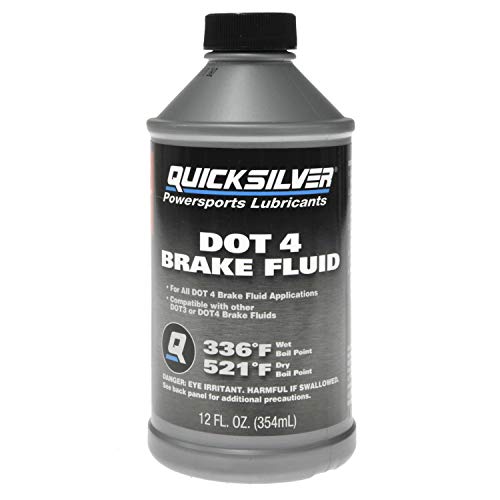
| Dry boiling point°F | — | — | — | — | — | — | — | 637 °F (best in row) | — | 521 °F |
| Wet boiling point°F | — | — | — | — | — | — | — | 401 °F (best in row) | — | 336 °F |
| Volumefl oz | 12 fl oz | 51 fl oz | 32 fl oz | 12 fl oz | 32 fl oz | 32 fl oz | 32 fl oz | 17 fl oz | 17 fl oz | 12 fl oz |
| Price per fl oz$/fl oz | — | — | — | — | — | — | — | 1.66 $/fl oz | 1.54 $/fl oz (best in row) | 1.67 $/fl oz |
| Low-temp viscosity (-40°C)mm²/s | — | — | — | — | — | — | — | — | — | — |
| ABS compatible | Yes | Yes | Yes | Yes | Yes | Yes | Yes | — | — | — |
| Standards met | SAE J1703; FMVSS 116; ISO 4925 | DOT 3, DOT 4, DOT 5.1 | Exceeds SAE J1703, FMVSS 116, ISO 4925 DOT 3 | DOT 3, DOT 4 | FMVSS 116, ISO 4925, SAE J1703 | SAE J1703, J1704; exceeds FMVSS 116 DOT 3 & 4 | Exceeds minimum government boiling point standards | FMVSS 116 DOT 4, SAE J1703; exceeds DOT 3, 4, 5.1 | FMVSS 116 DOT 3/4, SAE J1703, SAE J1704 | — |
| Mixable with DOT 3/4 | Yes | Yes | — | — | — | — | — | — | Yes | Yes |
| Corrosion inhibitors | Yes | Yes | Yes | Yes | Yes | Yes | — | — | Yes | Yes |
| Container | — | — | — | — | — | — | Bottle | 500ml foil-sealed bottle | — | Bottle |
We reviewed 58 brake fluids and kept only the 16 that pass every check below. Those are ranked by a Best Score built from spec fit for this job, sales rank.
These reviews are based on specifications and listing information only. We compare what each maker publishes and note where the data is silent.
Small-bottle DOT 3 and 4 fluid that fits scooters
This Valvoline fluid leads our ranking for motorcycle use. It is listed as DOT 3 & 4, so it covers both common grades for motorcycle brakes. The base is full synthetic. Check your reservoir cap or manual first, since the grade must match what the maker prints there.
The bottle holds 12 fl oz. That should suit a bleed or a full flush on a small bike, with little left to sit open and absorb moisture. The maker does not publish dry or wet boiling points, so you cannot compare heat limits with the racing fluids. It does list SAE J1703, FMVSS 116 and ISO 4925.
It is ABS compatible and has corrosion inhibitors. It also mixes with other DOT 3 and DOT 4 fluids, which helps when you top off a reservoir that holds a different brand. The listing mentions a low-moisture formula and vapor lock protection.
VerdictA sensible first pick for small bikes that call for DOT 3 or DOT 4, with the caveat that heat ratings are not listed.
A DOT 5.1 three-pack that works better for several bikes
This is a DOT 5.1 fluid, not DOT 3 or DOT 4, so it is a step outside the grade most buyers search for. The listing says it works in systems that call for DOT 3, DOT 4 or DOT 5.1, and names motorcycles. It is a non-silicone, synthetic glycol fluid.
The pack totals 50.7 fl oz, the largest volume on the page. For one small motorcycle or scooter, that is far more than a bleed needs, and opened bottles can take on moisture. It makes more sense for a household with several bikes or cars. No dry or wet boiling points are listed.
Listing notes cover ABS, ESP and ASR systems, a low-viscosity formula for cold weather, and corrosion protection. It is ABS compatible and mixes with DOT 3 and DOT 4 fluids. Its ranking comes from its spec list, not from a fit to small reservoirs. Check your manual before choosing it over a plain DOT 4.
VerdictRanked second on specs, but it fits a multi-vehicle garage better than a single small motorcycle.
DOT 3 only, in a 32 fl oz bottle
Pick this one only if your bike's cap says DOT 3. It is a full synthetic fluid and is labeled DOT 3 alone, so it will not serve a bike that needs DOT 4. The ranking places it third, ahead of the DOT 4 option from the same brand.
The bottle holds 32 fl oz. A small scooter reservoir takes only a small amount, so most of this would sit on a shelf after one service. That suits a shop or a rider with several bikes better. Boiling point figures are not published for it. Buying it makes sense mainly for repeat use.
The listing says it exceeds SAE J1703, FMVSS 116 and ISO 4925 for DOT 3. It is ABS compatible and has corrosion inhibitors. It suits disc and drum brake systems, which matters on bikes with a drum rear brake. Its mixing compatibility with other fluids is not stated.
VerdictA fine DOT 3 fluid, but the large bottle and single grade limit its fit for one small motorcycle.
DOT 4 LV in a small bottle, listed for cars
STP lists this as DOT 4 LV and says it meets DOT 3 and DOT 4. That makes it usable where either grade is called for, if your manual agrees. The base is synthetic glycol. The listing names cars and trucks, and it does not mention motorcycles, so confirm fit yourself.
At 12 fl oz, the bottle matches the size of the top-ranked fluid and suits a small reservoir. You open it, fill, and have little left over. That makes it a tidy buy for one top-off or a single bleed. Dry and wet boiling points are missing, so heat limits cannot be compared with the Motul RBF 700 or Quicksilver, which do list them.
It is ABS compatible, works with disc and drum systems, and has corrosion inhibitors. The listing says it needs no mixing and helps resist vapor lock under high heat. The data does not say how it mixes with other fluids.
VerdictA workable small-bottle DOT 4 option, though the listing never names motorcycles.
Straight DOT 4 in a bottle sized for a garage
This is plain DOT 4 from Valvoline, with a full synthetic base. It lists FMVSS 116, ISO 4925 and SAE J1703. If your motorcycle calls for DOT 4, this meets the grade, and the listing says it exceeds the DOT 4 requirements. It does not state a DOT 3 rating. That makes the choice easy to verify against your manual.
The 32 fl oz size is the main drawback for a small bike. A scooter reservoir uses very little, so most of the bottle stays unused and exposed to moisture once opened. Two or more bikes, or shop use, would make better use of it. The listing gives no boiling point figures.
It is ABS compatible and has corrosion inhibitors. The listing says it suits disc and drum brakes and describes the formula as resisting moisture absorption. The data does not say if it mixes with other DOT fluids. It ranks fifth in our list.
VerdictGood for DOT 4 systems in a shared garage, but oversized for one small reservoir.
Best among the reviewed tools
Read the reservoir cap or owner's manual first. Then pick a fluid labeled for that grade. Some listings, such as the DOT 3 & 4 products here, cover both grades, while others cover only one. DOT 5.1 is a different grade, so confirm your manual allows it.
Dry boiling point applies to fresh fluid. Wet boiling point applies after it has absorbed moisture, which matters more over time. Only three of the 11 products list them, from 518°F to 637°F dry and 336°F to 401°F wet. Higher is better for hard, repeated braking.
Small reservoirs hold very little fluid. Bottles here run from 8.45 fl oz to 50.7 fl oz. Opened fluid absorbs moisture, so a 12 fl oz bottle fits one bleed on a scooter better than a 32 fl oz bottle, which suits several bikes or a shop.
Look for ABS compatibility, corrosion inhibitors and standards such as SAE J1703, FMVSS 116 or ISO 4925. These show the fluid is built to a published spec. Some listings, such as Prestone's, only say they exceed minimum government boiling point standards.
Use the grade your reservoir cap or manual states. The data here does not rank one grade as better for every bike. Fluids labeled DOT 3 & 4, such as Valvoline 601457 and Triax, suit bikes that call for either grade.
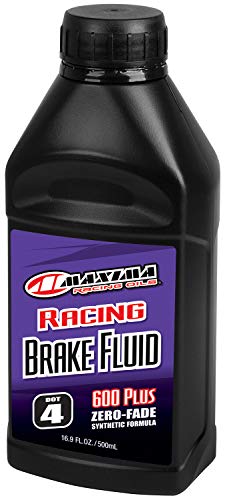
Some listings say yes. Valvoline 601457, Motul DOT 5.1, Maxima and Quicksilver list mixing with other DOT 3 or DOT 4 fluids. For the rest the data is silent, so check the label. A full flush with one fluid is the cleanest path.
The data does not give reservoir sizes, so check your manual for capacity. Small reservoirs hold little, which makes a 12 fl oz bottle a practical size. A 32 fl oz bottle makes more sense if you service several bikes.
The data has no shelf life figures. Glycol fluids absorb moisture, which lowers the wet boiling point, so a smaller bottle used up soon is a sound choice. Follow the maker's label for storage and replacement.
Your own selection is kept in the link, so friends see the same side-by-side.