#1
Valvoline 601457Valvoline DOT 3 & 4 Synthetic Brake Fluid
Leads our ranking, but it lists no boiling points and is a street fluid.
- DOT grade
- DOT 3 & 4
- Wet boiling point
- —
- Volume
- 12 fl oz
Track days push brake fluid hard. Repeated stops heat the fluid, and hot fluid that has absorbed moisture can boil and leave you with a soft pedal. So the dry and wet boiling points matter most, along with the DOT grade. Many fluids on this page do not publish those numbers. We put 16 products on one spec sheet so you can see which ones give you real data and which only list standards. Racing fluids are marked clearly, and street fluids are called out as such.
Quick answer
Ranked from 16 brake fluids that met our standard, compared on Wet boiling point, dry boiling point, cold viscosity.
As an Amazon Associate I earn from qualifying purchases. Links to retailers on this site are affiliate links; we may earn a commission at no extra cost to you.
Leads our ranking, but it lists no boiling points and is a street fluid.

Comes in 32 fl oz, but DOT 3 is not the grade track drivers usually want.

Labeled DOT 4 LV and ABS compatible, but no boiling points are listed.
| Spec | ||||||||||
|---|---|---|---|---|---|---|---|---|---|---|
| Best Scoreout of 100 | 71 | 63 | 62 | 63 | 62 | 58 | 59 | 55 | 44 | 38 |
| DOT grade | DOT 3 & 4 | DOT 3 | DOT 4 LV | DOT 4 | DOT 5.1 (best in row) | DOT 3 & 4 | DOT 4 | DOT 3 | DOT 3 & 4 | DOT 4 |
| Fluid base | Full synthetic (best in row) | Full synthetic (best in row) | Synthetic glycol | Full synthetic (best in row) | Synthetic glycol | Full synthetic (best in row) | Full synthetic (best in row) | Synthetic glycol | Synthetic glycol | — |
| Dry boiling point°F | — | — | — | 637 °F (best in row) | — | — | — | — | — | 521 °F |
| Wet boiling point°F | — | — | — | 401 °F (best in row) | — | — | — | — | — | 336 °F |
| Volumefl oz | 12 fl oz | 32 fl oz | 12 fl oz | 17 fl oz | 17 fl oz | 32 fl oz | 12 fl oz | 32 fl oz | 17 fl oz | 12 fl oz |
| Price per fl oz$/fl oz | — | — | — | 1.66 $/fl oz | — | — | — | — | 1.54 $/fl oz (best in row) | 1.67 $/fl oz |
| Low-temp viscosity (-40°C)mm²/s | — | — | — | — | — | — | — | — | — | — |
| ABS compatible | Yes | Yes | Yes | — | Yes | Yes | Yes | Yes | — | — |
| Standards met | SAE J1703; FMVSS 116; ISO 4925 | Exceeds SAE J1703, FMVSS 116, ISO 4925 DOT 3 | DOT 3, DOT 4 | FMVSS 116 DOT 4, SAE J1703; exceeds DOT 3, 4, 5.1 | DOT 3, DOT 4, DOT 5.1 | SAE J1703, J1704; exceeds FMVSS 116 DOT 3 & 4 | FMVSS 116, ISO 4925, SAE J1703 | Exceeds minimum government boiling point standards | FMVSS 116 DOT 3/4, SAE J1703, SAE J1704 | — |
| Mixable with DOT 3/4 | Yes | — | — | — | Yes | — | — | — | Yes | Yes |
| Corrosion inhibitors | Yes | Yes | Yes | — | Yes | Yes | Yes | — | Yes | Yes |
| Container | — | — | — | 500ml foil-sealed bottle | — | — | — | Bottle | — | Bottle |
We reviewed 58 brake fluids and kept only the 16 that pass every check below. Those are ranked by a Best Score built from spec fit for this job, sales rank.
These reviews are based on specifications and listing information only. Where a maker publishes no boiling points, we say so.
Top-ranked, but built for the street, not the track
This Valvoline fluid leads our ranking on its overall spec score. It is a full synthetic DOT 3 & 4 fluid in a 12 fl oz bottle. It meets SAE J1703, FMVSS 116 and ISO 4925. Those are the standards for normal road use, and they set a floor, not a track-day target.
The data has a gap that matters for track work. Valvoline does not list a dry or wet boiling point for this fluid. Without those numbers you cannot judge fade resistance once moisture builds up. The listing mentions a low-moisture formula and vapor lock protection, but that is a claim, not a measured result. Check the bottle or maker sheet before you rely on it.
It does mix with other DOT fluids, and it is ABS compatible. It also lists corrosion inhibitors. That makes it a reasonable fill for a daily driver that sees an occasional event. For repeated hard laps, pick a fluid that publishes its boiling points.
VerdictA well-rounded street fluid that leads our ranking, but track drivers need published boiling points to judge fade.
A DOT 3 jug that misses the track-day grade
The Valvoline VV503 ranks second, but it is a DOT 3 fluid. Track and autocross drivers usually look for DOT 4 or DOT 5.1, so this is the wrong grade for the job. Its 32 fl oz size is the largest on the page, tied with two other bottles.
The listing says it exceeds SAE J1703, FMVSS 116 and ISO 4925 DOT 3 standards. It also claims a premium high boiling point and full synthetic resistance to moisture. No dry or wet boiling point is published, so those claims cannot be checked against numbers. Marketing words do not tell you how it behaves hot and wet.
It is ABS compatible and lists corrosion inhibitors. That suits a car that calls for DOT 3. If you want a bigger bottle for a street car, this fits. For a car you push on track, move up to a DOT 4 or DOT 5.1 fluid with listed boiling points.
VerdictA large DOT 3 bottle for street cars, and not the right grade for repeated hard track braking.
A DOT 4 LV fluid, but with no boiling data
STP lists this fluid as DOT 4 LV on a synthetic glycol base. DOT 4 is a sensible grade for a track car. The LV in the name points to low viscosity, though STP does not publish a low-temperature viscosity figure here. It comes in a 12 fl oz bottle.
Boiling points are missing. The listing says the formula helps resist vapor lock under high heat, but gives no dry or wet number. For track days, the wet figure shows how the fluid copes after it absorbs moisture. Here you have nothing to compare, so you would be trusting the label alone.
It is ABS compatible, lists corrosion inhibitors, and works in disc and drum systems. The standards line reads DOT 3, DOT 4, so it fits cars that call for either grade. It ranks third, just ahead of the Motul RBF 700, though the Motul is the stronger pick for hard use.
VerdictA reasonable DOT 4 for street duty, but the missing boiling points make it hard to trust on track.
Published boiling points make this the clearest track pick
Motul RBF 700 is a full synthetic racing fluid graded DOT 4. It lists a dry boiling point of 637°F and a wet boiling point of 401°F. Among the models that list both, those are the highest figures. Dry is the fresh-fluid number. Wet is what you get after moisture builds up.
The 401°F wet figure is the one that matters most for repeated sessions. It tells you the fluid does not boil until 401°F once it holds moisture. The listing also says it exceeds DOT 3, 4 and 5.1 requirements, so it covers the grades track drivers ask about. It ranks fourth overall, as the data leaves out ABS and mixing details.
It comes in a 16.9 fl oz foil-sealed 500ml bottle. A sealed bottle helps keep moisture out before you open it. It is also listed for clutch systems. The data does not list ABS compatibility or mixing details, so check your car's manual first.
VerdictAmong models that list both, it has the highest dry and wet boiling points, which makes it the clearest track pick.
The only DOT 5.1 fluid here, but no boiling data
Motul DOT 5.1 is a synthetic glycol fluid in a 16.91 fl oz bottle. DOT 5.1 is one of the two grades track buyers look for. Motul's listing talks about high thermal stability and reduced fade risk during repeated braking and spirited driving. Those claims line up with track use.
The problem is the missing numbers. No dry or wet boiling point is published, so you cannot compare it with the Motul RBF 700, which lists 637°F dry and 401°F wet. Without a wet figure, you cannot judge it after it has absorbed water. The listing mentions additives that fight moisture-related degradation.
It lists ABS compatibility, corrosion inhibitors and mixing with DOT 3 and DOT 4 fluids. That makes it easy to top off a car that already has DOT 4. It ranks fifth. Pick it for a street car that sees occasional hard use, or choose the RBF 700 when you want proof of heat limits.
VerdictA DOT 5.1 fluid that fits the grade you want, but the missing boiling points keep it from a firm track recommendation.
Best among the reviewed tools
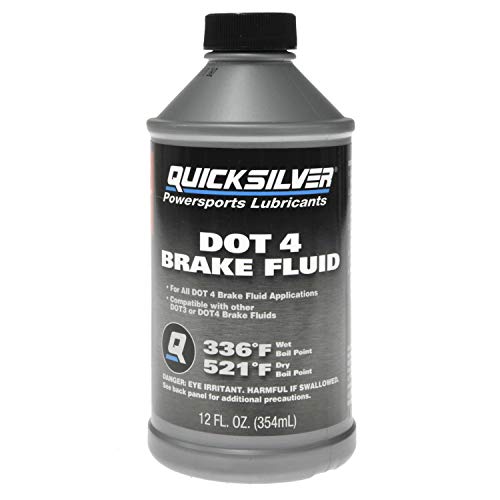
Brake fluid absorbs water over time, and water lowers its boiling point. The wet figure shows how a fluid performs after that happens. Of the products here, only Motul RBF 700 at 401°F and Quicksilver DOT 4 at 336°F publish one. If a maker gives no wet number, treat that as missing data.
Track and autocross drivers usually want DOT 4 or DOT 5.1. DOT 3 fluids, such as the Valvoline VV503 and Prestone AS401, fall short of that grade target. Check your car's manual, then match the grade. Motul's DOT 5.1 listing says it works with DOT 3 and DOT 4 systems.
SAE J1703, FMVSS 116 and ISO 4925 are minimum standards for road fluids. A listing that names them shows basic compliance, not track performance. Several fluids here, like the Valvoline and Triax bottles, list standards without boiling points. Look for actual dry and wet numbers before you trust a fluid at the limit.
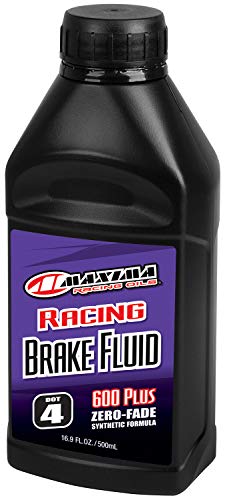
Do not assume fluids mix. Motul DOT 5.1, Valvoline 601457, Maxima and Quicksilver list mixing with other DOTs. The Motul RBF 700 data does not. Also check ABS compatibility, which several listings state. When you switch to a racing fluid, flush the system rather than topping off.
Among the products here, Motul RBF 700 is the clearest pick. It is DOT 4, with a 637°F dry and 401°F wet boiling point, the highest among the models that list both. Most other fluids on this page do not publish boiling points.
Not automatically. Both grades suit track use, and the boiling points matter more than the grade label. The Motul RBF 700 is a DOT 4 fluid that says it exceeds DOT 5.1 requirements. Motul's DOT 5.1 lists no boiling points here, so you cannot compare them directly.
Several listings say yes. Motul DOT 5.1 says it works with DOT 3 and DOT 4 systems, and Valvoline 601457, Maxima and Quicksilver also list mixing. Mixing a racing fluid with older fluid dilutes its listed boiling points, so flush first.
Brake fluid absorbs moisture as it ages, and moisture lowers the temperature at which it boils. Boiling fluid makes gas bubbles and a soft pedal. The wet figure shows how much margin remains in an older fill. Motul RBF 700 lists 401°F wet, and Quicksilver lists 336°F.
Your own selection is kept in the link, so friends see the same side-by-side.