Why Welders Wear Gloves and What They Protect Against
Welders wear gloves because the work throws molten spatter, intense heat and sharp, hot metal at the hands every few seconds. Heavy leather gloves with a long cuff block most of that, so a small slip becomes a minor event instead of a burn. Yes, you really need them for any arc welding, and the right pair depends on your process.
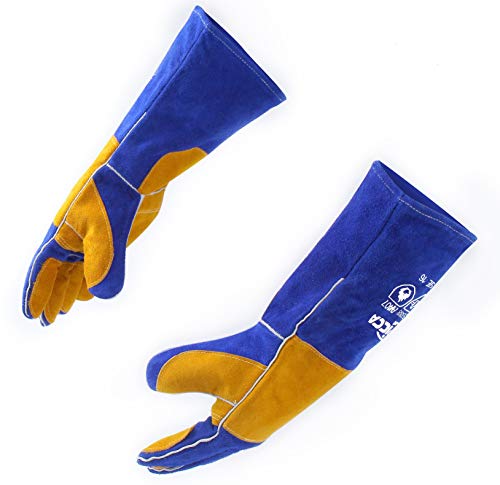 RAPICCA 7169a460-6cc9-4f72-b127-964f3fc0117aBest overall
 TICONN Ticonn-1702Highest listed heat rating
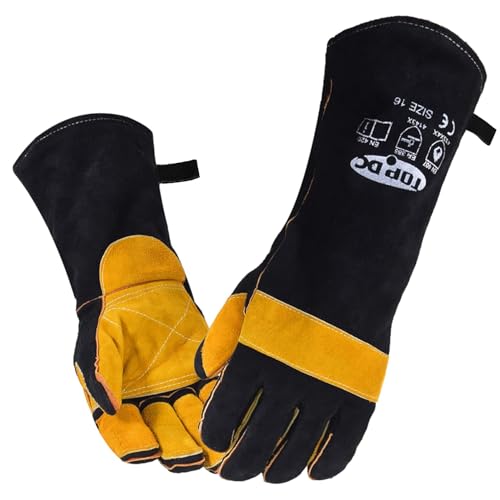 TOPDC TD-GL16Most pairs included
What welding gloves protect against
Welding hands take a lot of abuse, and the hazards come from several directions at once. Gloves are the first layer between your skin and all of them.
Here are the main things a good pair is meant to handle:
- Spatter: tiny beads of molten metal that fly off the weld and stick to whatever they land on.
- Radiant heat: the heat the arc and the glowing workpiece give off, even when you are not touching anything.
- Contact burns: grabbing a part, clamp or electrode holder that is much hotter than it looks.
- Sparks and slag: hot debris from the weld and from grinding that lands on the wrist and forearm.
- Cuts and scrapes: sharp edges, burrs and rough steel that you handle all day.
- UV exposure: the arc gives off ultraviolet light that can burn bare skin, much like a sunburn.
Why the heat matters so much
An arc is hot enough to melt steel, and the area around it stays hot for a long time. Skin does not need to touch the arc to be hurt. Standing close and holding a torch is enough to feel strong radiant heat on your hands.
Hot metal also stays hot after the arc stops. A part that looks dull gray can still burn you badly. Gloves buy you the seconds you need to set something down instead of dropping it or letting it burn through a thin glove.
UV is the quieter hazard. It does not feel like much while you work, but bare skin near an arc can burn, so cover your hands and wrists as well as your face.
How glove design does the job
Most welding gloves work in layers. Leather on the outside takes spatter and abrasion. Insulation or a lining inside slows heat on its way to your hand. Stitching holds it together, and seams are a weak point, so heat-resistant thread matters.
The cuff is just as important as the hand. Sparks and spatter often land on the wrist and forearm, and a short cuff leaves a gap between glove and sleeve. Long cuffs close that gap, especially for overhead work or stick welding, where sparks fall everywhere.
| Glove (from our spec sheet) | Leather | Length / cuff | Heat rating (maker claim) | Kevlar stitching |
|---|---|---|---|---|
| RAPICCA Fireproof Welding Gloves | Fireproof leather | 16 in / 7.5 in | 932°F | Yes |
| TICONN 16in Leather Welding Gloves | Cowhide, 2.4 mm | 16 in / 7.5 in | 1000°F | Yes |
| TOPDC Welding Gloves 16in MIG/Stick | Cowhide, 1.2 mm | 16 in / 7.5 in | 932°F | Yes |
| WZQH Welding Gloves 16 in Cowhide | Split cowhide, 1.2 mm | 16 in / 7.5 in | 932°F | Not listed |
| Caiman 1540 TIG Welding Gloves | Goatskin / split cowhide | 4 in cuff | Not listed | Yes |
Match the glove to your welding process
Not every process needs the same glove. Stick and flux-core throw the most spatter and heat, so they call for thick leather and long cuffs. The 16 in gloves above, with 7.5 in sleeves, fit that kind of work.
MIG sits in the middle. You want solid cover with enough grip to handle the gun and wire. TIG makes less spatter, but you feed filler rod by feel, so a thin, close-fitting glove helps. The Caiman is a good example: it uses goatskin for fingertip feel and weighs 0.4 lb, with a short 4 in cuff.
Keep in mind that a short cuff or thin glove gives up some protection for better control. That is a fair trade for light TIG work but not for overhead stick welding. Our best welding gloves page lines these specs up so you can compare them side by side.
Reading the specs without being misled
Heat ratings on the spec sheet run from 662°F to 1000°F across the models we compare. These are maker claims, and the test method is not given, so treat them as rough guides rather than guarantees.
Leather thickness, insulation and lining tell you more about how long a glove holds off heat. The TICONN lists 2.4 mm cowhide, while the TOPDC and WZQH list 1.2 mm. Weight matters too: gloves in our comparison range from 0.4 lb to 1.19 lb, and lighter pairs tire your hands less over a long job. If you want help weighing these details, start with the welding glove comparison and check leather, cuff length and stitching first.
Safety notes and when gloves are not enough
Gloves are one part of your protective gear, not all of it. Pair them with a proper welding helmet for your eyes and face, and wear hearing protection when grinding. Long sleeves made of flame-resistant material help cover the gap at the cuff.
Follow these habits every time:
- Check gloves before each session for holes, thin spots and burned seams.
- Keep them dry. Wet leather conducts heat faster and can scald.
- Do not use gloves that are stiff, cracked or soaked with oil near an arc.
- Stop welding and replace gloves if heat starts to come through.
- Do not rely on gloves for electrical safety. Keep cables in good shape, work on dry ground and never touch live parts.
Frequently asked questions
Can I weld with regular work gloves?
It is not a good idea. Fabric and thin leather work gloves can melt or burn through when spatter lands on them. Welding gloves use thicker leather and insulating layers built for that heat.
Do I need gloves for TIG welding?
Yes. TIG makes less spatter, but it still gives off heat and UV light and leaves hot metal around. Thin goatskin gloves give you cover and still let you feel the filler rod.
Can I use welding gloves for other hot jobs?
Many makers list uses such as fire pit tending, wood stoves, grilling and forge work. Check the listing for your pair, and remember that heat ratings are maker claims.
How often should I replace welding gloves?
There is no fixed schedule. Replace them when the leather is thin, cracked or burned through, when seams open up, or when you can feel heat sooner than you used to.