#1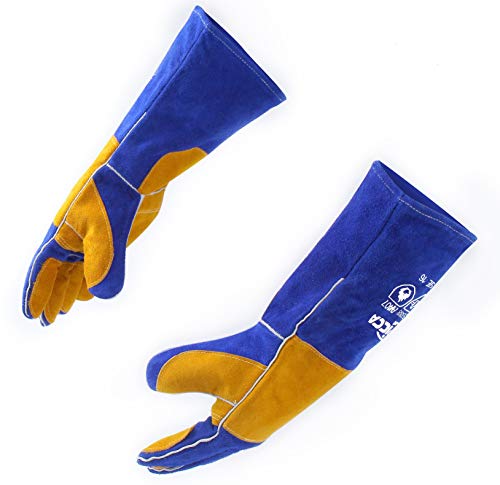
RAPICCA 7169a460-6cc9-4f72-b127-964f3fc0117aRAPICCA Fireproof Welding Gloves
A 16 in glove with a 7.5 in sleeve, a 932°F rating and Kevlar stitching.
- Max heat resistance
- 932 °F
- Glove length
- 16.0 in
- Leather thickness
- —
Good welding gloves keep spatter, arc heat and hot metal off your hands without making you fight the torch. Stick and flux-core work call for thick leather and long cuffs. MIG needs a balance of cover and grip. TIG favors thin, close-fitting leather so you can feed filler rod by feel. Check leather type, cuff length, heat rating and stitching before you buy. We put 6 products on one spec sheet so you can compare those numbers side by side.
Quick answer
Ranked from 6 welding gloves that met our standard, compared on heat resistance, leather thickness, Kevlar stitching.
As an Amazon Associate I earn from qualifying purchases. Links to retailers on this site are affiliate links; we may earn a commission at no extra cost to you.
A 16 in glove with a 7.5 in sleeve, a 932°F rating and Kevlar stitching.

Rated to 1000°F with 2.4 mm cowhide, the thickest leather among models that list it.
Two pairs at 0.5 lb each listing, the lightest of the 16 in gloves here.
| Spec | ||||||
|---|---|---|---|---|---|---|
| Best Scoreout of 100 | 81 | 73 | 72 | 60 | 55 | 29 |
| Leather type | Fireproof leather | Cowhide | 100% natural cowhide | Genuine cowhide split leather | Goatskin/Split Cowhide | Split cowhide |
| Glove lengthin | 16.0 in (best in row) | 16.0 in (best in row) | 16.0 in (best in row) | 16.0 in (best in row) | — | 14.0 in |
| Cuff/sleeve lengthin | 7.5 in (best in row) | 7.5 in (best in row) | 7.5 in (best in row) | 7.5 in (best in row) | 4.0 in | 5.5 in |
| Max heat resistance°F | 932 °F | 1000 °F (best in row) | 932 °F | 932 °F | — | 662 °F |
| Lining material | Cotton liner | Flame-retardant cotton | Cotton | Cotton | Unlined palm/fleece lined back | Cotton |
| Kevlar stitching | Yes | Yes | Yes | — | Yes | Yes |
| EN 388 certified | — | — | — | — | — | — |
| Leather thicknessmm | — | 2.4 mm (best in row) | 1.2 mm | 1.2 mm | — | — |
| Weightlb | 1.06 lb | 1.19 lb | 0.50 lb | 1.00 lb | 0.40 lb (best in row) | — |
| Pairs included | 1 | 1 | 2 (best in row) | 1 | 1 | 1 |
| Multi-use (fireplace, BBQ, etc.) | Yes | Yes | Yes | Yes | — | Yes |
We reviewed 15 welding gloves and kept only the 6 that pass every check below. Those are ranked by a Best Score built from spec fit for this job, sales rank.
These reviews are based on specifications and listing information from each maker. They appear in the order of our ranking.
Long-cuff stick and MIG gloves that lead our ranking
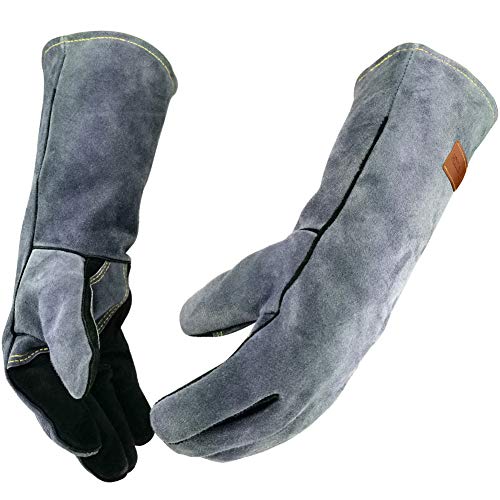
RAPICCA leads our ranking, and the spec sheet shows why. Each glove runs 16 in long with a 7.5 in sleeve, which keeps sparks off your wrists and lower forearms during stick and MIG work. The listing rates heat resistance up to 932°F, and the seams use Kevlar stitching, which helps them hold together under heat and spatter.
The build is layered: a fireproof leather shell, an aluminum foil middle layer, and a flame retardant cotton liner. Double leather padding covers the fingers, palms and backs. The listing names stick, MIG, flux-core, forge and blacksmith work as intended uses. RAPICCA does not publish leather thickness, so you can't compare hide thickness directly with the TICONN or TOPDC models.
At 1.06 lb, these are the second heaviest gloves among the models that list weight. With this much padding, they are a poor match for TIG, where you feed filler rod by feel. The listing also covers fireplace, BBQ and campfire use, so one pair can handle shop and backyard jobs.
VerdictA well-rounded long gauntlet for stick and MIG that earns its spot at the top of our ranking.
Highest listed heat rating and thickest listed leather here
TICONN posts the highest heat rating among the models that list one, at 1000°F, and its 2.4 mm cowhide is the thickest leather among the models that publish thickness. Thick hide and a high rating matter most for stick and flux-core welding, where large spatter and long arc times put a lot of heat into your hands.
The three-layer build pairs that cowhide with an aluminum foil middle layer and a flame-retardant cotton liner. Kevlar thread reinforces stress points, and double leather stitching runs across the palm, fingers and back. A 16 in length and 7.5 in cuff cover the forearm, and an adjustable elastic band at the opening helps keep the gloves from sliding down.
The tradeoff is weight. At 1.19 lb, this is the heaviest pair among the models that list weight, and thick leather costs some finger feel. The listing mentions TIG use, but buyers doing fine TIG work will likely want a thinner glove. It ranks second in our ranking.
VerdictPick the TICONN when heat protection matters more to you than a light, nimble glove.
Two pairs of light 16 in gloves for MIG and stick
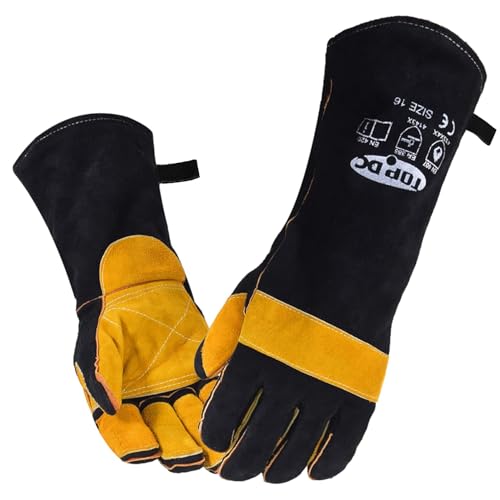
TOPDC is the only model here that ships two pairs, which helps if you share a shop or want a spare while one pair wears out. Each glove is 16 in long with a 7.5 in sleeve, matching the longest coverage in the lineup. The listing rates them for MIG and stick welding with heat resistance up to 932°F.
At 0.5 lb, they are the lightest 16 in gloves on the page, and second lightest overall among models that list weight. They use 1.2 mm cowhide, which ties for the thinnest leather among models that publish thickness. Thinner leather bends more easily and gives better grip on a MIG gun, but it passes heat through sooner.
Kevlar stitching and double leather at stress points add wear protection, and an aluminum foil layer adds insulation in the palm. The listing mentions foil only in the palm, so the back of the hand relies on leather and cotton lining. It ranks third in our ranking, just behind TICONN.
VerdictThe TOPDC set gives you a light MIG glove and a spare in one box.
Basic split cowhide gauntlet without listed Kevlar stitching
WZQH covers the same ground as the top three on length: a 16 in glove with a 7.5 in sleeve. Heat resistance is listed at 932°F, matching RAPICCA and TOPDC. The maker recommends it for stick, MIG and flux-core welding, plus forging, so it fits the usual jobs for this kind of glove.
The shell is 1.2 mm split cowhide, tied for the thinnest leather among models that publish thickness. Under it sits an aluminum foil and flame retardant cotton laminate, then a cotton lining. The listing describes flame retardant thread stitching rather than Kevlar, and our data does not show Kevlar stitching for this model. Seams take a lot of heat and abrasion, so that difference is worth weighing.
At 1 lb, it carries twice the listed weight of the TOPDC gloves with the same leather thickness, and you get one pair instead of two. It ranks fourth in our ranking, a step below the top three. The listing also suggests grilling, gardening and animal handling.
VerdictA plain long-cuff option that covers the basics but trails the top three on stitching and weight.
A TIG glove built for feel, not heavy spatter
Caiman's 1540 is a different kind of glove from the rest of this page. It is a TIG glove with goatskin palms and a split cowhide back, shaped to follow the natural curve of the hand. TIG welding asks you to feed filler rod and control a torch with your fingertips, and supple goatskin suits that kind of control.
At 0.4 lb, it is the lightest glove among the models that list weight. The cuff is only 4 in, the shortest on the page, so your wrists and forearms get far less cover than with the 7.5 in sleeves elsewhere. Caiman does not publish a heat rating or overall glove length, so you can't compare it on those specs.
The palm is unlined and the back is fleece lined, which favors feel over insulation on the palm side. Kevlar stitching, a combination palm reinforcement and a drag patch add wear protection. It ranks fifth in our ranking, but its design makes it the closest match for TIG on this page.
VerdictChoose the Caiman 1540 for TIG, and pair it with a gauntlet for stick or heavy MIG.
Best among the reviewed tools
Cowhide is the common choice for stick and MIG because it stands up to spatter and heat. Goatskin is softer and gives better fingertip feel, which is why TIG gloves like the Caiman use it on the palm. Split leather often shows up on backs and cuffs.
Sparks and spatter often land on your wrist and forearm, not just your hand. Four of the gloves here run 16 in with a 7.5 in sleeve. Shorter cuffs, like the 4 in Caiman cuff, allow more wrist movement but give less cover. Pick long cuffs for overhead and out-of-position stick work.
Listed heat ratings on this page range from 662°F to 1000°F. These are maker claims, and the test method is not given, so treat them as rough guides. Leather thickness, insulation layers and lining tell you more about how long a glove can hold off heat.
Seams are a weak point in any welding glove. Kevlar stitching is listed on five of the six models here and helps seams resist heat. Weight matters too: the gloves range from 0.4 lb to 1.19 lb, and lighter gloves tire your hands less on long jobs.
TIG work needs fingertip control for feeding filler rod, so look for a close-fitting glove with a goatskin palm. On this page, the Caiman 1540 fits that job best. It weighs 0.4 lb and uses goatskin palms, though its 4 in cuff gives less forearm cover.
Often yes, if the glove has thick leather and a long cuff. Stick welding usually throws more spatter and heat than MIG. The long gauntlets here, such as the TICONN with 2.4 mm cowhide and a 1000°F rating, are listed for both MIG and stick.
For stick and MIG, a gauntlet with a long cuff keeps sparks off your wrists. Four models here are 16 in long with a 7.5 in sleeve. The PerfeSafe runs 14 in with a 5.5 in cuff, and the Caiman TIG glove has a 4 in cuff.
Many are. Five of the six gloves here are listed as multi-use for tasks like fireplace, BBQ and campfire work. Their listings mention handling hot logs and grill tools. Keep a separate pair for cooking if your welding gloves are covered in metal dust or oil.
Your own selection is kept in the link, so friends see the same side-by-side.