Why Does My Floor Jack Keep Going Down? Causes and Fixes
A floor jack that keeps going down usually has a release valve that is not fully closed, air trapped in the hydraulic oil, low or dirty fluid, or worn seals and check valves. Start with the free fixes: close the valve firmly, bleed the air and check the oil level. If it still sinks, the internal parts are worn and the jack should be repaired or replaced, and never trusted to hold a car.
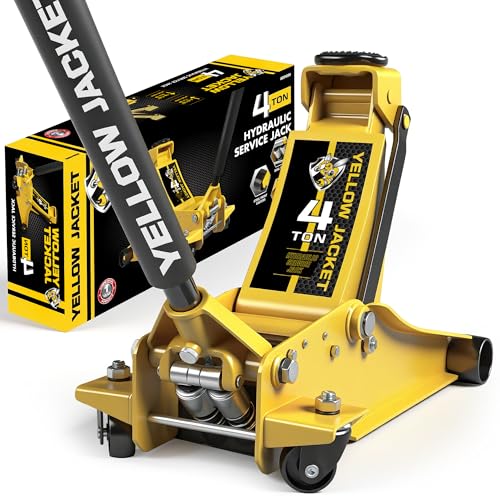 YELLOW JACKET AS84009Best overall
 BIG RED AT84007RBest heavy-duty steel
 SATA 3T AluminumBest aluminum jack
Start With the Simple Checks
Most slow sinking has a cheap cause. Before you take anything apart, rule out the easy ones. Set the jack on a flat, hard surface with nothing on it and look it over in good light.
Work through this short list in order:
- Close the release valve all the way. On most jacks you turn the handle clockwise until it stops. A valve that is only snug can seep.
- Look for oil on the ram, the pump body and the floor underneath. Wet spots point to a leaking seal.
- Check that the saddle, ram and pump piston are clean. Grit on the ram can scratch the seals as it moves.
- Pump the jack with no load. If the handle feels spongy or the ram rises in jerks, air is likely in the system.
The Usual Causes of a Sinking Jack
A hydraulic jack holds a load because oil is trapped under the ram. Two one-way check valves keep that oil from flowing back, and the release valve lets it out on purpose. If any of those parts fail to seal, the oil slips past and the ram drops.
Here is how the common symptoms line up with their causes:
| What you see | Likely cause | What to try |
|---|---|---|
| Sinks slowly under load, no visible oil | Release valve not fully seated, or dirt on a check valve | Close the valve firmly, then flush and clean the valve seats |
| Spongy handle, jerky lift | Air trapped in the oil | Bleed the jack |
| Will not lift to full height | Low oil level | Top off with hydraulic jack oil |
| Oil on the ram or body | Worn or damaged seals | Replace the seal kit or the jack |
| Stops lifting near its limit and drops back | Overload valve opening | Check the load against the jack's rated tons |
| Sinks more on cold mornings | Stiff seals and thick oil | Let it warm up, then recheck the seal condition |
How to Bleed Air and Top Off the Oil
Air compresses, oil does not. Air in the system makes the jack feel soft and can let the ram creep down. Bleeding it out is a quick job on most jacks, though the exact fill plug location varies, so check your manual.
Wear safety glasses, because hydraulic oil can spray under pressure. Keep the jack empty of any load for every step.
- Open the release valve by turning it counterclockwise and lower the ram fully.
- Pump the handle fully several times with the valve open to push trapped air toward the reservoir.
- With the jack level and the ram fully down, find the oil fill plug and remove it.
- Check the oil level. It should sit near the bottom edge of the fill hole. Add hydraulic jack oil if it is low.
- Refit the plug, close the release valve, then raise the ram to full height and lower it a few times to confirm it feels firm.
When the Valves or Seals Are Worn
If the jack still sinks after closing the valve, bleeding and topping off, the problem is inside the pump. A tiny bit of grit or a nick in a check valve seat is enough to let oil bypass. Some jacks let you open the pump and clean those parts, and a flush with fresh oil can help.
Worn rubber seals are different. They harden and crack over the years, and they cannot be cleaned back to health. A seal kit can work on some jacks, but the repair only makes sense if you are comfortable with hydraulics and the right parts exist for your model.
Do not use brake fluid, motor oil or any random fluid as a stand-in. Those can swell or damage seals. Use oil made for hydraulic jacks, and wipe up any spills so you do not slip on them.
Safety: A Jack Is Not a Support
A floor jack lifts a vehicle. It is not meant to hold one. Even a healthy jack can lose pressure, and a sinking jack is a warning that the vehicle could drop without notice.
Follow these rules every time:
- Lift only on firm, level ground, and chock the wheels that stay on the ground.
- Use the vehicle's marked lift points.
- Put jack stands under solid frame points before you go under the car or reach in with your body. Keep your head, arms and legs out of the space under the load until the stands carry the weight.
- Stay within the rated capacity. For example, a 3 ton jack lifts one end of most cars and SUVs, while trucks and heavier SUVs call for 4 ton.
- Retire a jack that leaks oil or sinks when loaded. Do not work under a car held only by a jack.
Keeping a Good Jack From Sinking
Some habits keep seals and valves in good shape. Store the jack with the release valve open and the ram fully lowered, which protects the ram from rust and takes pressure off the seals. Wipe the ram clean after use, and keep the jack in a dry spot.
Avoid shock loads. Dropping a car onto a jack, or pumping past the top of the ram's travel, stresses the valves. Many jacks have an overload valve that stops lifting beyond the rating, which protects the pump as well as you, and the SATA 3-ton aluminum jack in our data also lists a slow-release system for controlled lowering.
Check the oil once or twice a year, and top it off with the right fluid. A jack that gets regular care usually lasts much longer than one left in a damp garage corner.
When It Is Time to Replace the Jack
If cleaning, bleeding and refilling do not stop the leak-down, replacement is the safer move. A jack that fails under load costs far more than the time you spend shopping for a new one.
When you pick the next one, match capacity to your vehicle and check the minimum height for low cars. Our best floor jack page puts capacity, lift range, pump type and safety features side by side. If you carry the jack often, the best aluminum floor jack list covers lighter options, such as the Jack Boss at 58.5 lb. For sports cars and lowered cars, see the best low profile floor jack comparison, where minimum heights go down to 2.9 in.
Frequently asked questions
Is it normal for a floor jack to sink a little?
A healthy jack should hold a load for the length of a job with no visible drop. Any steady sinking means something is leaking by, so treat it as a fault.
Can I fix a leaking jack by adding more oil?
Only if the level was low. If seals are worn, extra oil just leaks out again, and the jack will still sink.
Does the release valve need to be tight?
It needs to be fully closed, which is firm hand pressure on the handle. Do not use tools or force it, because that can damage the valve seat.
Can a jack sink because it is overloaded?
Yes. If the load is above the jack's rating, the overload valve can open and let the ram drop back. Check the vehicle weight against the jack's capacity.