Why Does My Drywall Screw Gun Not Work?
Most drywall screw guns that seem dead have a simple cause: a drained or loose battery, a cord or outlet fault, the reverse switch engaged, or a worn bit. If the tool runs but drives badly, the depth setting, the feed or the nosepiece is usually at fault. Work through the checks below before you replace it, and compare newer models if it keeps failing.
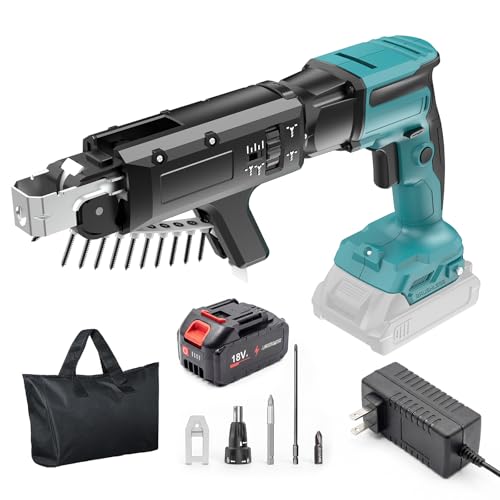 Funnywhale iScrewgun1017Best overall
 Senco 10F0001NBest corded auto-feed
 Senco 10C0002NBest cordless Senco
Start with power and switches
Before you suspect the motor, rule out the boring causes. A screw gun that does nothing at all is usually missing power. A screw gun that spins but will not bite is often set to reverse or has a bit that no longer grips.
Always disconnect power first. Unplug a corded gun, or take the battery off a cordless one, before you touch the nose, the feed or the bit.
- Cordless: confirm the battery is charged and clicked fully into place, and try a second battery if you have one.
- Corded: test the outlet with another tool, check the cord for cuts, and try a different extension cord.
- Switches: make sure reverse is off, the trigger lock is not engaged and any speed selector is set where you expect.
- Bit: look for a rounded tip or a bit that wobbles in the chuck. A worn bit slips, stalls and chews screw heads.
- Heat: if a cordless tool shuts off during heavy use, let the battery and tool cool before you try again.
Fix depth problems and torn paper
If the gun runs but the screws sit proud, or they punch through the paper face, the cause is almost always the depth setting. Drywall screws should finish just below the paper without tearing it. Torn paper holds poorly and needs extra joint compound.
Reset the depth adjustment, drive a test screw into a scrap piece, and adjust again in small steps. Tools with tool-free adjustment and clear stop marks make this quick when you change screw length. A depth lock keeps the setting from drifting while you work.
Also look at the nose. A worn or packed nosepiece changes how far the screw is allowed to travel. Clean it, and replace it if the contact surface is chewed up. If you are hanging board over steel framing, a slower speed setting can help the screw seat more cleanly.
Clear feed jams on auto-feed guns
Auto-feed guns add a feed mechanism, and that is where most frustrating jams start. Collated strips have to match the gun, and the strip has to sit straight in the guide. A strip that is bent, wet or loaded crooked will misfeed.
Dust is the other common culprit. Drywall dust packs into the feed path and slows the moving parts. Remove the strip, clear the path and wipe it clean. Some guns let you take the feed system off the body, which makes cleaning easier and exposes the bit for reversing a stuck screw.
If jams keep returning right after cleaning, check the screw length against the gun's range and the depth setting. A screw that is too long or too short for the setup will bind even in a clean feed.
Match the symptom to the likely cause
Use this table as a quick map. It does not replace the maker's manual, so check that for service steps on your model.
| Symptom | Likely cause | What to try |
|---|---|---|
| No sound, no movement | Dead battery, bad outlet or cord | Swap the battery or outlet and inspect the cord |
| Spins but will not drive | Reverse on or worn bit | Check the switch and replace the bit |
| Screws sit proud | Depth set too shallow or low power | Reset depth and test on scrap |
| Paper tears | Depth set too deep or worn nose | Back off depth and clean or replace the nose |
| Frequent jams | Crooked strip, dust or wrong screw length | Reload, clean the feed and match the screws |
| Stalls under load | Weak battery or overheating | Charge, cool down and rest between runs |
Stay safe while you troubleshoot
Drywall work throws dust and sharp debris, so wear safety glasses the whole time. A dust mask or respirator helps when you clean the feed or cut board. Hearing protection is sensible when you run any power tool for long stretches.
Never reach into the feed or nose with the battery attached or the cord plugged in. A screw gun can start with one slip of a finger on the trigger. When you work overhead, use a stable ladder or scaffold and keep both feet planted rather than stretching.
When replacing the gun makes sense
If you have checked power, depth and feed and the tool still fails, wear may be the issue. Motors, clutches and feed parts do age, and a tool that has run through a lot of board may simply be done. Warranty coverage is worth knowing about here. On our spec sheet, three of the Senco models list a 5-year warranty.
A different design can also solve a recurring problem. On our best screw gun for drywall page, the Funnywhale is the lightest at 4.41 lb and has the fastest motor at 5000 RPM, with a depth-sensitive nose and tool-free depth adjustment. The Senco guns list 2500 RPM, and they weigh from 5.8 lb to 7 lb.
If steel framing is part of your work, the cordless Senco DS322 has a selectable 1600 rpm setting for heavy steel and a removable feed system for easier cleaning. If you want a corded tool with a depth lock and both drywall and wood nosepieces, the 5.8 lb Senco DS232 fits that. You can line up weight, motor speed and power source side by side in our drywall screw gun comparison before you decide.
Frequently asked questions
Why won't my drywall screw gun drive screws?
Start with the simple causes: a depleted or poorly seated battery, a cord or outlet problem, a worn bit, or the reverse switch left engaged. Then check the nosepiece and feed for debris. If it still fails, unplug it or remove the battery before opening it up.
Why does my screw gun keep jamming?
Jams usually trace back to a collated strip loaded crooked, a screw length that does not match the depth setting, or drywall dust and a worn nosepiece in the feed. Disconnect power, clear the feed, and reload a fresh strip. Easy-to-clean feed parts make this simpler.
Why do my screws tear the paper?
Screws set too deep tear the paper face and weaken holding. Reset the depth adjustment so heads sit just below the surface, and check that the nose is not worn. A depth-sensitive nose or depth lock helps keep results consistent from screw to screw.
Is it worth replacing a screw gun that keeps breaking?
If the cause is wear, a damaged feed or a motor that struggles, compare a model with a warranty and parts that are easy to service. Listed warranties vary, with three Senco models here showing 5 years. Fix simple settings issues first before you replace anything.