What Size Band Saw Do You Need for a Home Workshop?
For most home workshops, a 14 in band saw is the best fit, because it offers about 13 to 13-5/8 in of throat width and can resaw boards up to 13 in tall on some models. If space is tight and you mostly cut curves in thin stock, a 10 in benchtop saw is enough. Choose by the thickest board you plan to slice and the widest piece you need to turn.
 Jet 714400KBest overall
 QD-KYOHO QBS-14"Widest throat capacity
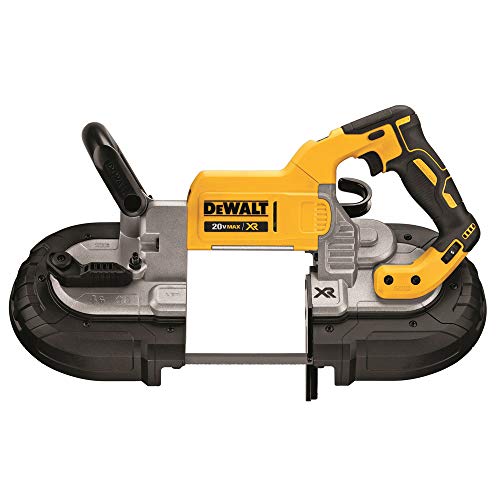 DEWALT DCS374BBest portable cordless
Start with what you will cut
Band saw size is usually the wheel diameter, but two other numbers tell you more about what the saw can do. Resaw height is how tall a board it can cut on edge. Throat width is the distance from the blade to the frame, which limits how wide a workpiece can be while you cut a curve.
Think about your three or four most common jobs. Cutting scroll shapes in 3/4 in boards is a very different task from slicing a thick slab into bookmatched panels. The first needs a modest saw. The second needs real height and a motor that can pull a wide blade through dense wood.
10 in saws: compact and capable for small shops
A 10 in benchtop saw suits a garage corner, a basement bench or a shared space. The RIKON 10-3062S, for example, lists 5 in of cutting height and 9-5/8 in of cutting width, with a 1/2 HP motor and two blade speeds. It weighs 77.5 lb, so it is manageable to place on a stand and move when needed.
This size works well for curves, small boxes, toys, inlay strips and general stock preparation. The limit is height. At 5 in, you can rip and resaw narrow stock, but you cannot slice a wide, thick board into veneer.
If your projects stay under about 5 in thick and 9 in wide, a 10 in saw is a sensible and space-friendly choice.
14 in saws: the sweet spot for most hobbyists
A 14 in floor-standing saw gives you a wider throat and, with the right model, much more resaw height. Among the saws on our comparison page, the 14 in models list throat widths from 13.5 to 13.625 in. The Jet JWBS-14SFX and the QD-KYOHO 14 in both list a 13 in cutting depth, and the Jet adds a 360 sq in cast iron table, while the QD-KYOHO lists 338.6 sq in.
The Jet JWBS-14CS takes a different route. It cuts 6 in tall out of the box, and the manufacturer offers a separate riser block kit that raises the depth of cut to 12 in. That lets you start with a lower height and expand later if your projects change.
The tradeoff is space and weight. The Jet JWBS-14CS weighs 120 lb and the JWBS-14SFX weighs 272 lb, so plan a permanent spot with room to feed long boards.
Size comparison at a glance
This table uses published specifications from the saws on our comparison page. Dashes mean the figure was not listed in our data.
| Saw | Type | Cut height | Throat width | Weight |
|---|---|---|---|---|
| RIKON 10-3062S | 10 in benchtop | 5 in | 9-5/8 in | 77.5 lb |
| Jet JWBS-14CS | 14 in with closed stand | 6 in (12 in with riser) | 13.5 in | 120 lb |
| QD-KYOHO 14 in | 14 in | 13 in | 13-5/8 in | Not listed |
| Jet JWBS-14SFX | 14 in with steel stand | 13 in | 13.5 in | 272 lb |
| DEWALT DCS374B | Cordless portable | 5 in | Not listed | 16.98 lb |
Do you need anything larger or portable?
Larger saws with 16 to 18 in wheels add power and capacity, but they need more floor space, a stronger electrical supply and more weight to move. For most hobby shops, a 14 in saw with good resaw height covers the work without that extra footprint.
Portable band saws are a different tool. The DEWALT DCS374B cuts 5 in material and weighs 16.98 lb, which suits pipe, conduit and stock on a job site. It will not replace a stationary saw for curves or resawing in wood. If you cut metal often, see our best band saw for metal page, since a woodworking saw such as the Jet JWBS-14CS is built for wood only.
A quick way to choose
Run through these questions in order:
- Do you want to resaw boards wider than about 6 in? Look for 12 to 13 in of cut height, or a saw that accepts a riser.
- Do you need to turn large panels on curves? Choose a throat near 13 in or more.
- Is your shop tiny or shared? A 10 in benchtop saw is the practical pick.
- Can you dedicate floor space? A 14 in saw gives you room to grow.
- Will you cut metal or work on site? Consider a portable or metal-cutting saw instead.
Blades and safety
The saw is only half the setup. Blade width and tooth style change how well it resaws or turns tight curves, so check our best band saw blades guide and, for thick stock, the best band saw blade for resawing page. Some saws, like the Jet JWBS-14SFX, ship without a blade, so budget for one.
Safety notes: unplug the saw before changing a blade or adjusting guides. Wear eye and hearing protection. Keep your hands out of the blade path, set the upper guide just above the workpiece, and use a push stick for narrow cuts. Check that your circuit suits the motor, since some saws run on 115V and others offer 230V wiring. If you want a full lineup to compare, see our best band saw for home workshop page.
Frequently asked questions
Is a 10 in band saw big enough for woodworking?
Yes, for curves, small projects and thin stock. Just remember the cut height is limited, so it cannot resaw wide boards.
Can I add height to a 14 in band saw later?
Some models can. The Jet JWBS-14CS cuts 6 in tall and accepts an optional riser block kit that raises the depth of cut to 12 in.
Does bigger always mean better?
No. Extra capacity only helps if you use it, and larger saws take more space, weight and electrical capacity.
Where can I find a band saw size chart or PDF?
Manufacturer manuals list exact dimensions, but our comparison page puts capacity, table size and weight for several saws side by side.