What Is the Life Expectancy of a Sewage Ejector Pump?
Most residential sewage ejector pumps are commonly expected to last about 7 to 10 years, and a well-installed, well-cared-for unit can run longer. Heavy use, flushed wipes, a poor basin setup and a failing float switch are the usual reasons a pump wears out early. Your pump's age is a guide, not a deadline, so watch how it behaves.
 FOTING FT-Q1300215-BLUEBest overall
 LANCHEZ Q800167-1Best 1 HP ejector
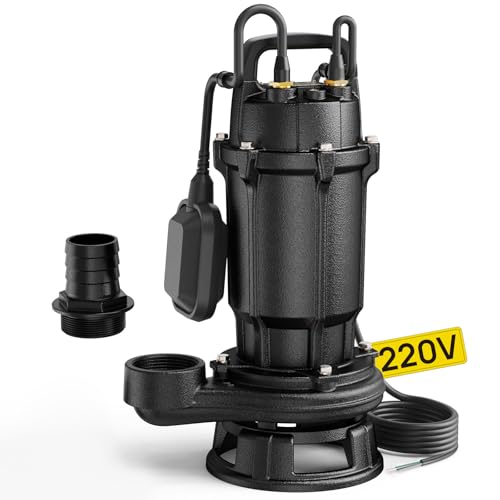 AQUASTRONG SEP100CABest 220V grinder
The short version: 7 to 10 years is a sensible planning number
A sewage ejector pump has no single fixed lifespan. A commonly cited range for a residential unit is 7 to 10 years, and some last well beyond that. Others fail sooner because of how they are used.
Think of that range as a planning figure. If your pump is in its seventh year, start budgeting time for a replacement and check it more often. If it is at year fifteen and still works smoothly, there is no reason to swap it just because of age.
The pump in your basement may only run a few times a day, perhaps after a shower, a flush or a load of laundry. That light duty is why many outlast their rough estimates. It also means small problems can hide for a long time before the pump finally stops.
What actually wears a pump out
Most failures come from a short list of causes. Knowing them helps you spot trouble early and avoid the ones you control.
- Short cycling: if the pump turns on and off every few seconds, the motor starts far more often than it should. The float switch, basin size or a leaking check valve is usually behind it.
- Wipes and other solids: flushable wipes, hygiene products and paper towels can wrap around the impeller or jam the pump. Even a 2 in solids-handling pump is not built for everything.
- Running dry: a pump that runs without liquid overheats. Many models include thermal overload protection to shut the motor off, but repeated overheating still shortens life.
- Stuck or failed float switch: a float that hangs on the basin wall or the cord can keep the pump running, or stop it from running at all.
- Worn seals: the mechanical seal keeps waste out of the motor. When it wears, moisture can reach the windings.
- Corrosion and grit: sewage is harsh on metal over time. Cast iron and stainless steel housings resist this better than thin materials.
How design and warranty relate to lifespan
A warranty is not a lifespan. It only tells you how long the maker stands behind the product against defects. Still, it is a useful clue about how much a maker expects from the build.
From the published specifications we compare, the FOTING 1.5 HP sewage pump and the LANCHEZ 1 HP cast iron pump each list a 3-year warranty. The Aquastrong 1 HP grinder pump and the Acquaer 3/4 HP pump each list 2 years. The Schupethauer grinder pump has no warranty term in the data we have.
Features that support a long working life include a cast iron or stainless housing, thermal overload protection and a tethered float switch you can adjust. You can check these side by side on our best sewage ejector pump comparison.
| Pump (published specs) | Housing | Thermal overload | Warranty |
|---|---|---|---|
| FOTING 1.5 HP | Cast iron | Yes | 3 years |
| LANCHEZ 1 HP | Cast iron | Yes | 3 years |
| Aquastrong 1 HP grinder | Cast iron | Not listed | 2 years |
| Acquaer 3/4 HP | Cast iron | Yes | 2 years |
| Schupethauer 1.5 HP grinder | Stainless steel | Yes | Not listed |
How to help your pump last longer
Good habits matter more than any single feature. Most of these cost nothing and take a few minutes.
- Flush only human waste and toilet paper. Keep wipes, feminine products, dental floss and grease out of the system.
- Once or twice a year, lift the basin lid, check that the float moves freely and confirm the pump starts and stops.
- Make sure the basin is sealed and vented as your local code requires, and that nothing blocks the float's path.
- Check that the check valve works so waste does not flow back and cause extra cycling.
- Never lift the pump by its power cord. Use the handle, since cord damage can be permanent.
- Keep the pump fully submerged when it runs, and protect any exposed piping from freezing.
Warning signs it is near the end
Pumps usually give hints before they quit. Catching them early lets you replace the pump on your schedule, not during a backup.
Listen for loud grinding, rattling or a hum without pumping. Watch for slow draining at the lowest fixtures, gurgling, or a sewer smell near the basin. A pump that runs for a long time, or one that cycles constantly, deserves attention. A tripped breaker is another clear warning.
If you see these signs, the fix may be small, such as a stuck float or a clogged impeller. If the pump is also past 10 years old, replacing it often makes more sense than repeated repairs.
Safety and when to call a plumber
Treat the basin as a hazardous space. Sewage contains bacteria, and the basin can hold gases, so keep the lid sealed and never lean over the open pit for long. Wear gloves and eye protection if you handle anything that has touched waste.
Always shut off power at the breaker before you work on a pump, and never touch a plugged-in pump or its cord while standing in water. Some grinder models run on 220V, which calls for extra care and often a licensed electrician.
Many areas require a licensed plumber for ejector installs, including a vented, sealed basin, a check valve and a shut-off valve. Replacement is usually simpler than a first install, but check local rules before you start. A professional can also confirm the new pump's lift covers the rise to your sewer line.
Repair or replace?
Repair makes sense for a young pump with a simple fault such as a stuck float, a bad switch or a clog. Replacement makes more sense when the pump is near or past the 7 to 10 year range, the seal has failed, or the motor trips its overload repeatedly.
When you replace, match the basics: lift height, solids handling, discharge size and voltage. Ejectors pass 2 in solids, while grinders chop waste and suit higher lifts. You can narrow the choice with our sewage ejector pump comparison, where we list published specs side by side.
Frequently asked questions
Can a sewage ejector pump last 20 years or more?
It can, especially with light household use, proper venting and a clean waste stream. Longer life is not guaranteed, so keep checking it as it ages.
Does a bigger horsepower rating mean a longer life?
Not by itself. A pump sized to the job and not forced to short cycle will often outlast an oversized or poorly installed one.
How often should I inspect my ejector pump?
A quick check once or twice a year is a reasonable habit. Look at the float, listen to a cycle and watch for leaks or odors.
Will a failed pump always cause a backup?
Not always, but fixtures below the sewer line can back up if the pump stops. A high-water alarm gives you early notice.
Is the warranty period the same as the pump's life expectancy?
No. A warranty covers defects for a set time, while a pump can last far longer when it is installed and used well.