What Is a Sewage Ejector Pump and How Does It Work?
A sewage ejector pump is a submersible pump in a sealed basin that lifts waste from below-grade fixtures up to the main sewer or septic line. Waste drains into the basin, a float switch starts the pump when the level rises, and the pump pushes the waste up and out through a discharge pipe. You need one when a basement bathroom, laundry or kitchen sits lower than the sewer line, so gravity can't carry the waste away.
 FOTING FT-Q1300215-BLUEBest overall
 LANCHEZ Q800167-1Best 1 HP ejector
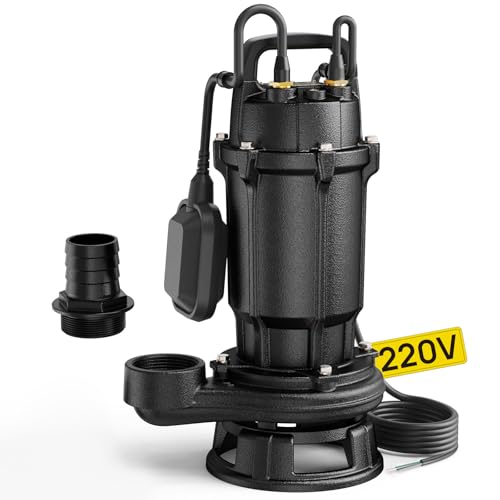 AQUASTRONG SEP100CABest 220V grinder
What a sewage ejector pump does
In most homes, drains work by gravity. Waste flows downhill from your toilets, sinks and washer into a main sewer line that leaves the house. That works well until a fixture sits below the level of that line, as it often does in a finished basement.
A sewage ejector pump solves that problem. It collects waste from the low fixtures in a basin and then lifts it up to the main line. Think of it as a small elevator for wastewater.
It is not the same as a sump pump. A sump pump moves groundwater or rain runoff away from your foundation. An ejector pump handles toilet waste, so it has to pass solids and sits in a sealed basin instead of an open pit.
How a sewage ejector system works, step by step
The whole system is simple. It has a basin, a pump, a float switch and some piping. Here is what happens each time you flush or drain a fixture downstairs:
- Waste flows by gravity from the fixtures into a sealed basin set in the floor.
- The basin slowly fills and the float rises with the water level.
- At a set level, the float switch turns the pump on.
- The pump's impeller spins and pushes the waste up through the discharge pipe.
- A check valve keeps the waste from running back into the basin once the pump stops.
- As the level drops, the float falls and the pump shuts off.
The parts that make it work
Each part has a job, and a weak link in any of them can cause trouble. Knowing them helps you read a spec sheet.
The basin holds the waste until the pump is ready to move it. It should be sealed and vented. The sealed lid keeps sewer gas and odors out of the room, and the vent lets gas escape safely outdoors and lets air move as the level changes.
The pump sits inside the basin. Many residential models, like the FOTING 1.5HP, use a cast iron housing and a vortex impeller that passes solids up to 2 in. Its listing also notes thermal overload protection, which shuts the motor off if it overheats.
The float switch is the pump's trigger. The FOTING and Lanchez pumps use a tethered float, which you can adjust to set when the pump starts and stops.
The discharge pipe, check valve and shut-off valve finish the system. A 2 in discharge is common for residential ejectors. The shut-off valve lets you isolate the pump for service without draining the line above it.
Ejector pump or grinder pump?
An ejector pump passes solids through a wide opening. It does not cut them up. A grinder pump has blades that chop waste into a slurry, so it can push it farther or higher through smaller pipes. That is why grinders often suit long runs, higher lifts or homes where wipes get flushed.
Lift is the biggest difference you will see on a spec sheet. Lift, also called head, is how high the pump can raise water. Your pump's lift must cover the vertical rise from the basin to the sewer line. Real-world flow drops as lift goes up. For example, the Lanchez listing says its 1 HP pump moves 6,600 gallons per hour at 0 ft of lift and 5,644 gallons at 5 ft.
Here is how a few pumps from our comparison stack up on published lift and power:
| Pump | Type | Max lift | Discharge | Power |
|---|---|---|---|---|
| FOTING 1.5HP | Sewage pump | 29 ft | 2 in | 1.5 HP |
| LANCHEZ 1HP | Sewage pump | 27 ft | 2 in | 1 HP |
| Acquaer 3/4 HP | Sewage pump | 29 ft | 2 in | 115V |
| Aquastrong 1HP | Grinder | 40 ft | 2 in | 220V |
| Schupethauer 1.5HP | Grinder | 42 ft | 2 in | 110V |
When you need one and what to compare
You need an ejector system when a bathroom, laundry or kitchen is below the main sewer line. Basement baths are the classic case. If the fixtures are above the line, gravity alone is enough.
When you shop, start with the rise to your sewer line and choose a pump that covers it with room to spare. Then check solids handling, the float switch, the housing material and the voltage. Some grinders run on 220V, such as the Aquastrong, while others run on standard household power.
Our best sewage ejector pump page puts the specs side by side. It covers pumps that lift 18 to 42 ft, so you can match one to your home. You can also use it to decide between a plain ejector and a grinder.
Installation and safety notes
Many areas require a licensed plumber and a vented, sealed basin for these installs. Check your local plumbing code before you buy. A good install also includes a check valve and a shut-off valve.
Keep these safety points in mind:
- Turn off power at the breaker before touching the pump, float or wiring. Water and electricity are a dangerous mix.
- Never lift a pump by its power cord. Use the handle, as the product listings warn.
- Sewer gas is unpleasant and can be hazardous. Keep the basin lid sealed and the vent clear.
- Wear gloves and eye protection when you handle a pump that has been in sewage, and wash well afterward.
- Keep the pump fully submerged when it runs, since dry running can overheat the motor.
Keeping it running
Flush only waste and toilet paper. Wipes, rags, feminine products and grease cause most clogs, even in a grinder pump. The Aquastrong listing, for example, says to avoid rubber items and thick towels.
In cold areas, follow the maker's winter tips, such as shortening the float cable to help prevent freezing. Test the system now and then by running water into the basin and watching the pump start and stop. If you hear odd noises or the pump runs nonstop, call a plumber.
If you want to see how pumps and kits compare before you decide, our sewage ejector pump comparison lists the picks, warranties and specs in one place.
Frequently asked questions
Can I use a sump pump instead of a sewage ejector pump?
No. A sump pump is built for groundwater and can't pass toilet waste. It also doesn't sit in a sealed, vented basin, so sewer gas could escape.
Do ejector pumps need a vent?
Yes. A vented, sealed basin lets sewer gas escape safely outside and helps air move as the level changes. Local codes usually require it.
What does a check valve do in an ejector system?
It lets waste flow up and out but stops it from flowing back down into the basin when the pump shuts off.
Does a sewage ejector pump need electricity?
Yes. Most run on 110V or 115V household power, and some grinders need 220V. A licensed electrician or plumber should handle the wiring.
How do I know the float switch is working?
Run water into the basin and watch the pump. It should turn on as the level rises and shut off as it falls.