What Is a Circular Saw Used For?
A circular saw is a handheld power saw with a round, toothed blade that spins to make fast, straight cuts. It is mainly used to cut lumber, plywood and other sheet goods to size, and with the right blade it can also cut plastic, metal and masonry. It is a good first saw for home projects, framing, decks and basic repairs.
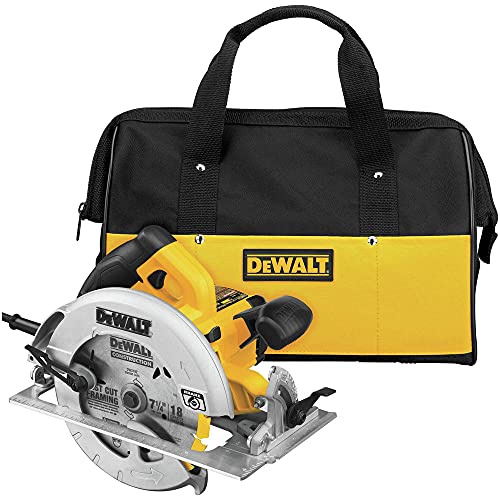 DEWALT DWE575SBWidest bevel with brake
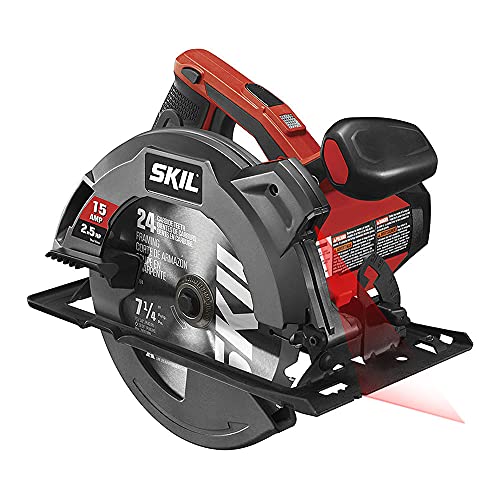 Skil 5280-01Best overall
 Skil 5080-01Light corded option
What a circular saw is
A circular saw is a power tool built around a flat, round blade with teeth around the edge. A motor spins the blade at high speed, and you guide the whole tool along the material. The blade sits under a flat plate called the shoe or base, which rests on your workpiece and keeps the cut at a steady depth.
If you searched for the circular saw machine, this is the one most people mean: a handheld saw you push through the work. The same cutting principle is also used in stationary machines, such as table saws and miter saws, where the blade is fixed and you move the material or lower the blade into it. The handheld version is the most portable and the most common in home workshops.
Most models let you set the blade depth and tilt the base for angled cuts, called bevels. Those two adjustments cover most of what the tool does.
What a circular saw is good for
The saw earns its place because it is quick, portable and handles large pieces that would be awkward on a bench tool. You carry the saw to the work instead of carrying the work to the saw.
Common jobs include:
- Cutting dimensional lumber, such as 2x4s and 2x6s, to length for framing, shelving and workbenches
- Trimming plywood, OSB and other sheet goods down to size
- Cutting deck boards and decking framing
- Making crosscuts, which run across the grain, and rip cuts, which run along the grain
- Cutting bevels and angled ends for roof, stair and trim work
- Cutting off the ends of fence boards, posts and siding
- Demolition tasks, such as cutting through old flooring or boards before pulling them up
Which materials it can cut
The material you can cut depends on the blade, not just the saw. A general-purpose wood blade handles most lumber and plywood. For other materials you need a blade made for that job, and the saw should be rated to accept it.
Blade choice also affects how clean the cut looks. Blades with more teeth generally leave a smoother edge, while blades with fewer teeth cut faster and clear sawdust more easily. If you want to compare options, see our guide to the best circular saw blade picks.
The table below shows the general match between material and blade type.
| Material | Blade type to look for | Notes |
|---|---|---|
| Framing lumber | General-purpose or framing wood blade | Fast cuts, rougher edge is fine |
| Plywood and veneered panels | Fine-tooth wood blade | Cut with the good face down to reduce splintering |
| Plastic and laminate | Blade made for plastics or fine-tooth blade | Support the work well to limit chipping |
| Thin metal and aluminum | Metal-cutting blade | Use only if the saw maker approves metal cutting |
| Masonry and tile | Abrasive or diamond blade | Creates heavy dust, so use dust protection |
Corded or cordless: which fits your jobs
Circular saws come in corded and battery-powered versions. A corded saw gives steady power for as long as you have an outlet, which suits long cutting sessions in a garage or shop. A cordless saw gives you freedom on a roof, in a yard or anywhere without power nearby.
Cordless saws trade unlimited run time for convenience, so the battery you choose matters. If that sounds like your situation, our comparison of the best cordless circular saw models lays out the options. If you want to see both types side by side, start with the best circular saw page.
For occasional home projects, either type works. Think about where you will cut most often and how long each session usually lasts.
What a circular saw does not do well
A circular saw is not the right tool for everything. It cuts in straight lines, so curves are better handled with a jigsaw. Very fine joinery, such as tight cabinet joints, is easier on a table saw or with a guide rail. Long, repeated cuts at the same angle are often faster on a miter saw.
You can still make accurate cuts with a circular saw by clamping a straightedge to the work and running the base along it. Many beginners also cut a little off the waste side of the line, so the blade width does not shorten the finished piece.
Safety basics
A circular saw is powerful, and the blade keeps spinning for a moment after you release the trigger. Treat it with care every time.
Follow these habits on every cut:
- Wear safety glasses and hearing protection. Add a dust mask when cutting treated wood, composite boards or masonry.
- Clamp the workpiece so it cannot shift, and keep both hands on the saw.
- Set the blade depth so it extends just past the bottom of the material.
- Keep the power cord, or your free hand, clear of the blade path. Unplug the saw or remove the battery before changing blades.
- Let the blade reach full speed before it touches the wood, and keep the lower guard working freely.
- Support both sides of the cut so the board does not pinch the blade and cause kickback.
- Do not cut at a height, such as on a ladder, unless you have stable footing.
How to make your first straight cut
Once you have the safety gear on, the basic process is simple and repeatable.
1. Mark your cut line and measure twice.
2. Clamp the board on solid supports, with the cut-off piece free to fall without pinching the blade.
3. Set the blade depth and check that the blade is sharp and clean.
4. Rest the front of the shoe on the board, line up the blade with your mark, and start the saw clear of the wood.
5. Push forward at a steady pace and let the blade do the work. If the saw bogs down, slow your feed rate.
6. Release the trigger at the end of the cut and wait for the blade to stop before setting the saw down.
Frequently asked questions
Can a circular saw cut metal?
Some can, if you fit a blade made for metal and the saw maker allows it. Check the manual first, wear eye and hearing protection, and expect sparks or hot chips.
What is the difference between a crosscut and a rip cut?
A crosscut runs across the wood grain, and a rip cut runs along it. Many general-purpose blades handle both, while specialty blades are tuned for one or the other.
Do I need a guide for straight cuts?
It helps. A clamped straightedge or a guide rail keeps the saw on line much better than freehand cutting, especially on long cuts through plywood.
Is a circular saw good for beginners?
Yes, if you learn the safety habits first. It is simple to set up and useful for many projects, but kickback is a real risk, so practice on scrap wood.
How often should I change the blade?
Change or sharpen it when cuts get slower, burn the wood, or leave rough edges. Using the wrong blade for the material also wears it out faster.