What Are Welding Gloves Made Of and Why It Matters
Welding gloves are made mainly of leather, usually cowhide, goatskin or split leather, often with an insulating middle layer and a soft cotton lining. The material matters because it sets how well the glove blocks spatter and heat, how much feel you keep in your fingers, and how long the seams hold up. Match the leather to your welding process and you will get better protection and less hand fatigue.
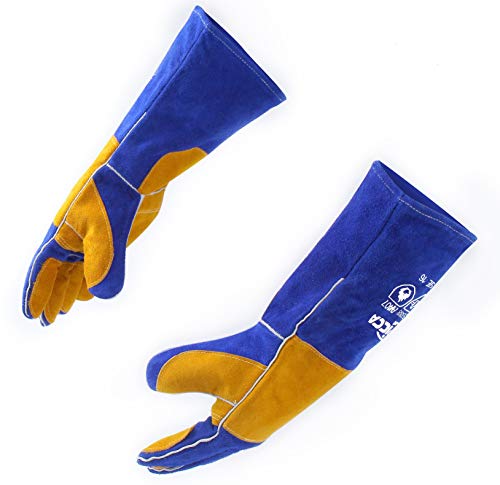 RAPICCA 7169a460-6cc9-4f72-b127-964f3fc0117aBest overall
 TICONN Ticonn-1702Highest listed heat rating
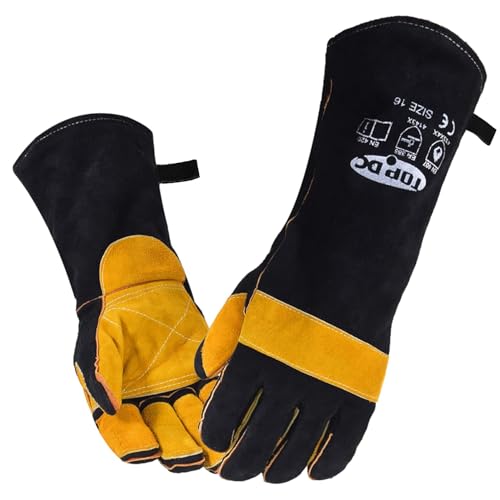 TOPDC TD-GL16Most pairs included
The short version: leather outside, layers inside
Almost every welding glove starts with a leather shell. Leather resists sparks and spatter better than most fabrics, and it does not melt onto skin the way many synthetics can. That is why the leather type is the first spec to check.
Many gloves add more than leather. The product listings we compare describe a layered build: a leather outer, an aluminum foil insulating layer in the middle, and a cotton lining against your hand. Each layer does a different job, so the glove protects better than the leather alone.
The main leather types
Three leathers show up again and again. Each one trades toughness against feel.
Cowhide is the common choice for stick and MIG welding because it stands up well to spatter and heat. It is thick and sturdy, so it gives up some fingertip sensitivity. Goatskin is softer and thinner, which gives better feel. That is why the Caiman 1540 TIG glove uses goatskin on the palm, where you handle filler rod. Split leather is made from the inner layers of the hide. It is often used on backs and cuffs, and some gloves, like the WZQH, use it for the whole shell.
| Leather | Feel | Best for | Trade-off |
|---|---|---|---|
| Cowhide | Sturdy, a bit stiff | Stick, MIG, flux-core | Less fingertip feel |
| Goatskin | Soft, close fit | TIG and filler rod work | Thinner, less cover |
| Split leather | Rougher, flexible | Backs, cuffs, general hot work | Less smooth than top grain |
Linings, insulation and stitching
What sits under the leather affects comfort and heat protection as much as the shell does. Cotton lining is the usual choice. It absorbs sweat and adds a layer between your skin and the hot leather. The RAPICCA, TICONN, TOPDC and WZQH gloves all list cotton linings, and the TICONN lists flame-retardant cotton.
The aluminum foil layer reflects heat. It is listed on the RAPICCA, TICONN, TOPDC and WZQH gloves. Seams matter too, because stitching is a weak point in any welding glove. Kevlar thread resists heat better than ordinary thread, and it is listed on the RAPICCA, TICONN, TOPDC and Caiman gloves.
Some TIG gloves skip full lining to keep a thin profile. The Caiman lists an unlined palm with a fleece-lined back, which keeps the hand-side thin for control.
Why thickness and construction matter
Thicker leather generally holds off heat longer, but it is also stiffer and heavier. Among the models that list thickness, the TICONN uses 2.4 mm cowhide, while the TOPDC and WZQH list 1.2 mm. The TICONN also lists the highest heat rating on our page, at 1000°F, and it weighs 1.19 lb.
The lighter TOPDC lists 0.5 lb per pair listing, with two pairs included. The Caiman is the lightest at 0.4 lb. Lighter gloves tire your hands less on long jobs, but they usually give less cover.
Heat ratings are maker claims. The test method is not given, so treat them as rough guides. Leather thickness, insulation and lining tell you more about how a glove will hold up.
How to pick the right material for your work
Start with your welding process, then check cover and fit.
Here is a simple way to decide:
- Stick and flux-core: choose thick cowhide or split leather with a long cuff and insulation.
- MIG: pick cowhide with a balance of cover and grip.
- TIG: choose thin goatskin so you can feed filler rod by feel.
- Light hot work or grilling: a shorter, lighter glove can be enough.
- Overhead or out-of-position work: pick a long cuff, since spatter often lands on the wrist and forearm.
Safety notes
Gloves are one part of your protection. Wear a welding helmet with the right shade, eye protection under it, and flame-resistant clothing that covers your forearms. Keep sleeves over the glove cuff so spatter cannot fall inside.
Check gloves before each job. Replace them if the leather is cracked, the seams are open or the lining is burned through. Wet or oily leather can conduct heat faster and can steam against your skin, so keep gloves dry. Gloves do not make you safe from electric shock, so keep them dry and avoid touching live parts with bare skin.
Our best welding gloves page puts these specs side by side, so you can compare leather, cuff length, stitching and weight in one place.
Compare the options
If you are weighing several models, look at leather type, cuff length and stitching first, then weight. For a long-cuff glove for stick or MIG, the welding glove comparison lists several 16 in models with 7.5 in sleeves. For TIG, look at the goatskin option on the same page.
Frequently asked questions
Are welding gloves fireproof?
Not fully. Leather resists heat and sparks, but it can still scorch, shrink or burn through with enough exposure. Treat any glove as heat resistant, not fireproof.
Can I use welding gloves for grilling or a fireplace?
Often yes. Several listings mention fireplace, grill and campfire use, and long cuffs help protect the forearm. Check that the listing names those uses.
Why do TIG gloves feel thinner?
TIG welding is slow and precise, and you feed filler rod by hand. Thin goatskin gives the feel you need, though it gives less cover than thick cowhide.
When should I replace welding gloves?
Replace them when the leather cracks or hardens, seams open, or the lining wears through. Damaged gloves can let heat and spatter reach your skin.