Ripping Blade vs Crosscut Blade: What Is the Difference?
A ripping blade is built to cut along the wood grain, with fewer teeth and deep gullets that clear chips fast. A crosscut blade is built to cut across the grain, with many more teeth that shear the fibers cleanly. Use a rip blade for long cuts with the grain, a crosscut blade for cuts to length, and a combination blade if you want one blade for both.
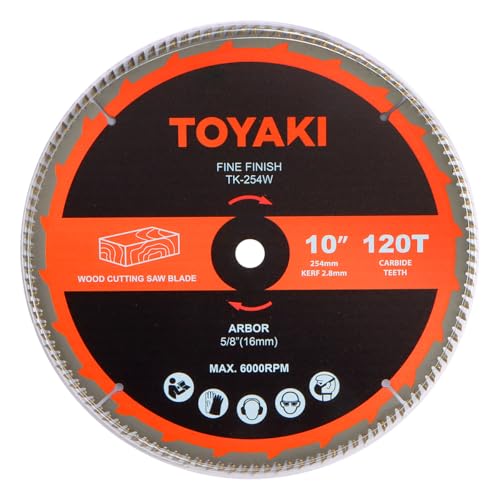 TOYAKI TK-254WBest overall
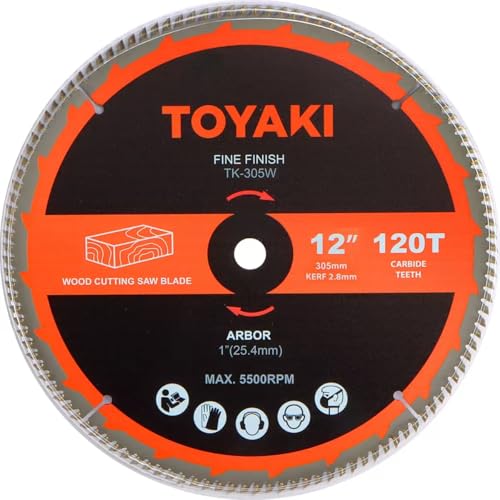 TOYAKI TK-305WTied for largest diameter
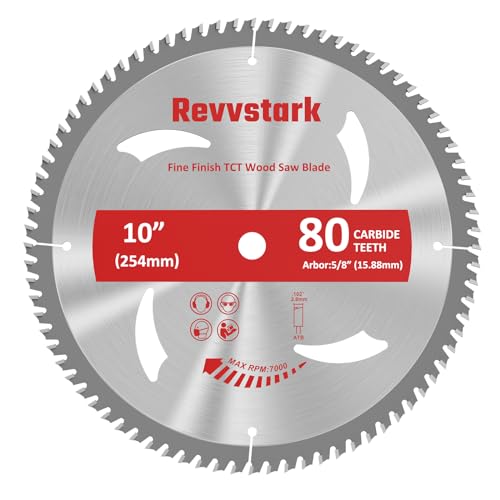 Revvstark aced8abf-b0fd-4386-aca0-7310064ea644Anti-kickback tooth design
The core difference: grain direction
Wood is made of long fibers that run the length of a board. A rip cut runs parallel to those fibers, usually along the longest dimension of the board or sheet. A crosscut runs across the fibers, usually along the shorter dimension.
These two cuts behave very differently. Cutting along the grain is like splitting a bundle of straws lengthwise: the blade pushes out a lot of material in long, stringy chips. Cutting across the grain is like slicing through the ends of those straws, so the blade has to sever each fiber cleanly or the edge will tear and fuzz.
Each blade type is shaped around that difference. That is why a blade that does one job well tends to do the other job poorly.
How the two blades are built
The design differences are easy to spot once you know what to look for. Compare any two blades of the same diameter and you will see the pattern right away.
Exact tooth counts vary by brand and blade size, so check the published specifications on the blade you are considering. The general pattern holds across the board.
| Feature | Ripping blade | Crosscut blade |
|---|---|---|
| Number of teeth | Fewer | Many more |
| Gullets (spaces between teeth) | Deep and wide, for fast chip removal | Shallow and narrow |
| Tooth shape | Flat top, chisel-like, scoops out material | Angled bevels, slice like small knives |
| Cut speed | Fast, with less feed resistance | Slower, with a smoother edge |
| Edge quality | Can leave a rougher face | Clean, with little tear-out across grain |
| Best for | Cutting along the grain | Cutting across the grain and trimming to length |
What goes wrong with the wrong blade
Using a crosscut blade to rip is the more common mistake. With so many teeth and small gullets, the blade cannot clear sawdust fast enough. It heats up, the motor works harder, and the wood can scorch or burn. A bogged-down blade can also pinch the board, which raises the risk of kickback.
Using a rip blade to crosscut gives you the opposite problem. The big, flat-topped teeth tend to tear fibers instead of slicing them, so you get ragged edges and splintering where the blade exits the wood. On veneered plywood, that tear-out can ruin the face of the panel.
In short:
- Crosscut blade ripping: burn marks, slow feeding, extra strain on the saw, higher kickback risk.
- Rip blade crosscutting: rough edges, splintering, chipped veneer.
- Matching the blade to the cut gives a cleaner result and a safer, steadier feed.
Which side of the blade for ripping?
People asking this usually mean one of two things: how to mount the blade, and where to put the wood in relation to it. Here are both.
For mounting, the teeth at the front of the blade, the side facing you, should point downward toward the table as the blade spins. In other words, the blade rotates so the teeth at the top travel toward the back of the saw and the teeth at the front push down into the table. Most blades have an arrow printed on the plate showing the direction of rotation. Match that arrow to the saw's rotation, and make sure the arbor nut is snug before you plug the saw back in.
For the cut itself, the board goes between the fence and the blade. The fence side is the keeper side, held against the fence, and the offcut falls away on the other side. Keep the fence parallel to the blade, feed the board with steady pressure against the fence, and use a push stick to finish the cut. Never rip freehand without a fence.
Where a combination blade fits
A combination blade mixes both designs. It usually groups teeth in sets, with larger gullets between groups for chip clearance and teeth shaped for cleaner cross-grain cuts. It handles both jobs acceptably, but it will not match a dedicated blade at either one.
If you cut mostly small projects and want to avoid swapping blades, a combination blade is a reasonable choice. If you rip a lot of thick stock, a dedicated rip blade makes the work easier on the saw. Dense species put extra load on the blade, so our best table saw blade for ripping hardwood page compares options built for that job.
One more point: a blade with a thicker plate and a larger kerf removes more wood and needs more power from the saw. If your saw is on the small side, a thinner blade may feed more easily. Check the saw's manual for the blade diameter and arbor size it supports.
Safety notes before you cut
A table saw can injure you in a fraction of a second, so build good habits from the start.
Follow these basics every time:
- Unplug the saw before changing a blade or adjusting anything near it.
- Wear safety glasses and hearing protection. Add a dust mask when cutting a lot of wood.
- Use the blade guard, splitter or riving knife, and anti-kickback pawls when the cut allows.
- Set blade height so the teeth rise just above the top of the board.
- Stand slightly to the side of the blade line, not directly behind the board.
- Use a push stick or push block when your hands would pass close to the blade.
- Never crosscut using the rip fence as a stop against a board that can trap the offcut. Use a miter gauge or crosscut sled for crosscuts, and a fence only for rips.
Choosing between them
Start with the cuts you make most. If you mostly break down lumber along its length, a rip blade is the better fit. If you mostly cut parts to length or work with plywood and sheet goods, a crosscut blade gives the cleaner edge. If your work is mixed, a combination blade covers both with a small trade-off.
Keep the blade sharp and clean, too. Pitch buildup on the teeth makes any blade behave like the wrong one, causing burning and heavy feeding. A sharp blade that matches the cut does most of the work for you.
Frequently asked questions
Can I rip with a crosscut blade in a pinch?
It is possible on thin, soft stock, but it is not a good habit. The small gullets clog, the cut burns, and kickback risk goes up. Switch to a rip or combination blade for anything thick.
Do I need a different blade for plywood?
Plywood has face veneers that chip easily, so a blade with many fine teeth gives a cleaner edge. A crosscut-style blade is usually the better match for sheet goods.
How do I know which way the blade should face?
Look for the rotation arrow on the blade plate and match it to the saw's direction. The teeth at the front should move downward toward the table.
Why does my blade burn the wood?
Common causes are a dull or pitch-covered blade, a fence that is not parallel to the blade, feeding too slowly, or using a crosscut blade for a rip cut.