How to Properly Tension a Scroll Saw Blade
Tension a scroll saw blade until it is tight enough that it barely flexes sideways when you push on it, and it gives a clear, high pitched note when plucked. Clamp the blade in both holders, raise the tension lever or turn the knob until the blade feels taut, then fine tune with a test cut. Too loose wanders and wanders off the line, while too tight snaps blades early.
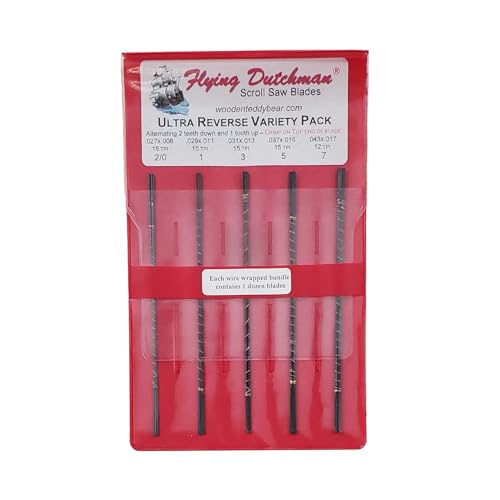 Flying Dutchman Flying Dutchman [unknown model number]Best overall
 Flying Dutchman UR-5Best single-size pack
 Flying Dutchman 191851222Clean bottom edges
Why blade tension matters
A scroll saw blade is a thin strip of steel that moves up and down very fast. Tension keeps it straight during each stroke. Without enough tension, the blade bows, drifts off your line and cuts at an angle.
Too much tension causes the opposite problem. The blade is stressed at both clamps, and it can snap, often at the clamp. Good tension sits between the two, and it is easy to check once you know what to look for.
Before you tension: get the setup right
Tension only works if the blade is seated correctly. Unplug the saw before you touch the blade or clamps. A saw that starts unexpectedly while your fingers are near the blade can cause a deep cut.
Check the blade type against your saw. Most modern saws take pinless (plain end) blades, while some older and entry saws need pin end blades. Our best scroll saw blades page lists both types, and every blade there is 5 in long, so you can match length and end type to your holder.
- Unplug the saw and lower the arm if your model requires it.
- Make sure the teeth point down, toward the table.
- Push the blade fully into the upper and lower clamps before tightening them.
- Keep the blade square to the table, not tilted forward or back.
- Wear safety glasses, because a blade can break and throw fragments.
Step by step: how to tension the blade
The exact lever or knob differs by saw, so check your manual. The order below applies to most models.
- Release the tension lever or loosen the tension knob fully.
- Clamp the blade in the lower holder first, with the teeth pointing down.
- Clamp the blade in the upper holder, keeping it straight and square.
- Flip the lever or turn the knob to apply tension.
- Pluck the blade and push gently on its side to check it.
- Make a short test cut in scrap wood and adjust if needed.
How tight should it be? Three simple checks
There is no single number that fits every saw and blade, so use feel and sound. These checks work on most machines.
The pluck test: with the saw off, pluck the blade like a guitar string. A properly tensioned blade gives a clear, high pitched ping. A dull, low sound means it is too loose.
The side push test: press a finger lightly against the side of the blade. It should barely give. A common rule of thumb among woodworkers is that the blade should move sideways no more than about 1/8 inch, but treat that as a starting point and not a strict rule.
The cut test: feed scrap wood slowly. If the cut bellies or the blade leans, add tension. If blades keep snapping near the clamps, ease it off a little.
Tension by blade size
Smaller blades are more fragile, so they usually need more care. The sizes below come from the blade ranges on our comparison page, and the notes are general guidance.
Whatever the size, let the blade do the cutting. A slow, steady feed puts less stress on the blade and helps tension hold.
| Blade size | Typical use | Tension note |
|---|---|---|
| #2/0 and #1 | Fine detail in thin wood | Fragile, so increase tension gradually and test often |
| #3 and #5 | General work | Check with the pluck and side push tests |
| #7 and larger | Thicker stock | Sturdier, but still needs a firm, even tension |
Signs your tension is wrong
Watch how the blade behaves. The signs are usually clear within a few inches of cutting.
Too loose: the cut wanders, the blade bows, and the kerf is wider at one end. Too tight: blades break often, especially near the clamps, and the saw may feel stiff or noisy.
Tension can also drop as the blade warms up and the clamps settle. Recheck after a few minutes of cutting, and again whenever you swap blades.
Keep tension steady and choose the right blade
Dull or wrong-style blades make tension problems look worse than they are. Reverse tooth blades have teeth pointing up at the bottom that cut on the upstroke and leave a cleaner underside, which is why we call them a good default for wood. You can compare packs on our best scroll saw blades page.
Always use fresh, sharp blades for detailed work, and replace a blade as soon as it cuts slowly or burns the wood. Hearing protection is also a good idea during long sessions, since scroll saws can get loud.
Frequently asked questions
Can I over-tension a scroll saw blade?
Yes. Too much tension makes blades snap, often at the clamp, and it can strain the saw's arms and clamps. Stop adding tension once the blade pings clearly and resists a gentle side push.
Should I retension after changing blade size?
Yes. Each blade seats a little differently, so release the lever, clamp the new blade, and tension it again. Then run the pluck and test cut checks.
Why does my blade go slack while I cut?
Clamps can settle, and the blade can slip if the holder is dirty or not fully tightened. Clean the clamps, seat the blade fully, tighten the clamp screws firmly, and recheck tension after a few minutes.
Does a spiral blade need different tension?
The method is the same. Spiral blades cut in every direction without turning the work, but they leave a rougher kerf, so check tension and take slow cuts.