How to Make Long Cuts With a Circular Saw
Support the board on both sides of the cut line, clamp a straight edge as a guide, and set the blade about a quarter inch deeper than the wood is thick. Push the saw at a steady pace so the shoe stays against the guide the whole way. A sharp blade and a well-supported board matter more than anything else for a straight, safe long cut.
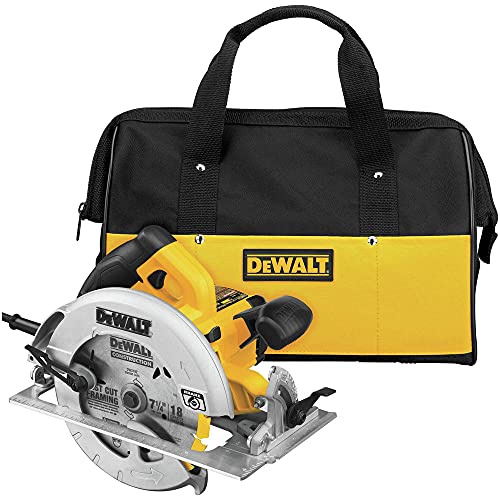 DEWALT DWE575SBWidest bevel with brake
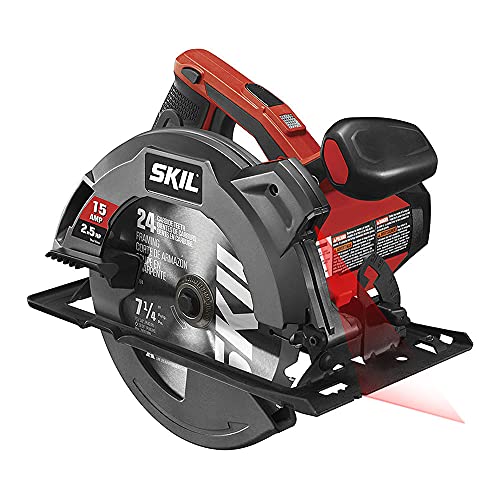 Skil 5280-01Best overall
 Skil 5080-01Light corded option
Why long cuts go wrong
A long cut, often called a rip cut, is harder than a short crosscut. The saw has to travel several feet in a straight line, and any drift shows up as a wavy edge. The board can also sag, pinch the blade, and cause kickback.
Most problems come from three things: poor support, no guide, and a dull blade. Fix those and the cut gets much easier. The rest of this guide walks through each one.
What you need
You do not need special gear, but each item below helps with accuracy and safety.
- A circular saw in good working order. If you are shopping, our best circular saw page compares options side by side.
- A sharp blade suited to the job. See our best circular saw blade comparison for how blade types differ.
- A straightedge for a guide, such as a factory edge of a plywood strip, a level, or a metal ruler stock that will not flex.
- At least two clamps, plus pencil and tape measure.
- Two sawhorses or a pair of 2x4s on a flat surface, and a sacrificial sheet of rigid foam board if you have one.
- Safety glasses and hearing protection. A dust mask helps too.
Step 1: Support the board
Lay the board across sawhorses so that both sides of the cut line are held up. The offcut should not drop away and pinch the blade as you finish the cut.
Long boards need support every few feet. If you only support the ends, the middle sags and closes the kerf, which is the slot the blade removes.
A good trick is to lay the board on a sheet of rigid foam or a pair of scrap boards on the floor, then set the blade depth so it cuts through the board and only slightly into the foam. This supports the whole length and lets you cut without hitting the floor.
Clamp the board so it cannot shift. Keep clamps clear of the blade path.
Step 2: Mark the line and use a guide
Measure at both ends of the board and snap a chalk line or draw a pencil line between the marks. Check that the line is where you want it before cutting.
Next, think about the offset. The saw's blade sits a set distance from the edge of its base plate, so a guide clamped on the cut line will make the blade cut off to one side. Measure from the blade's edge to the edge of the shoe, then clamp the guide that distance from your line.
Also account for the kerf. Decide which side of the line is waste and keep the blade on that side, so your finished piece stays the right width.
Press the saw's base plate against the guide the whole way. If the guide moves, stop and reset it. Make sure the clamps sit outside the saw's path.
Step 3: Set depth and make the cut
Unplug a corded saw or remove the battery before changing the blade depth. Set the depth so the blade extends about a quarter inch below the board. Less blade exposed means less kickback risk and a cleaner cut.
Work through the cut in this order:
- Rest the front of the shoe on the board with the blade clear of the wood.
- Start the saw and let it reach full speed before touching the wood.
- Push forward at a steady pace and keep the shoe flat against the guide.
- Let the saw do the work. If you force it, the blade can bind or burn the edge.
- Stay balanced and shift your feet as you move rather than reaching.
- At the end, keep the saw steady until the blade stops, then lift it away.
| Problem | Likely cause | Fix |
|---|---|---|
| Wavy edge | No guide or guide moved | Clamp a straight guide and recheck the offset |
| Burn marks | Dull blade or slow feed | Switch to a sharp blade and keep a steady pace |
| Blade pinches | Board sags or offcut drops | Add support under both sides of the cut |
| Splintering | Blade too coarse or too much depth | Use a finer blade and set depth correctly |
Corded or cordless for long cuts
Either type can make a long cut. A cordless saw avoids a cord that can snag as you move down the board, which is handy on long runs. A corded saw does not run out of charge halfway through a cut.
If you are leaning cordless, our best cordless circular saw page lists models with their published specifications. Make sure the battery is fully charged before you start so the blade does not slow mid-cut.
Safety notes
Wear safety glasses and hearing protection every time. Keep both hands on the saw and your body to one side of the blade line so you are not in the path of any kickback.
Never cut with the guard pinned open. Keep cords out of the cutting path. Check the wood for nails or screws before you cut, since hitting metal can damage the blade and cause the saw to jump.
Let the blade stop fully before you set the saw down. If the blade binds, release the trigger and wait for it to stop before you try to free it.
Frequently asked questions
Can I make a long cut without a guide?
You can, but a freehand cut is likely to wander. A clamped straightedge is the easiest way to keep the cut straight, and a chalk line alone is not enough for long boards.
How do I stop the board from splintering?
Use a sharp blade with more teeth, keep the shoe firmly on the wood, and consider scoring the line with a utility knife first. Cutting with the good face down also helps on many saws.
What if the blade starts to bind?
Release the trigger, keep the saw still until the blade stops, and then check your support. Insert a thin wedge into the kerf behind the blade if the board is closing on it.
Is it better to cut in one pass or several?
One steady pass is best for most boards. Stopping partway can leave a step in the cut, so plan your position before you start.