How to Install a Sewage Ejector Pump in a Basement
Installing a sewage ejector pump means setting a sealed, vented basin in the basement floor, connecting the fixture drains to it, and piping the pump's discharge up through a check valve and shut-off valve to the main sewer line. Plan on a full day or more, and check your local code first, because many areas require a licensed plumber and a permit for this work. Replacing an old pump is simpler, since the basin and piping are already in place.
 FOTING FT-Q1300215-BLUEBest overall
 LANCHEZ Q800167-1Best 1 HP ejector
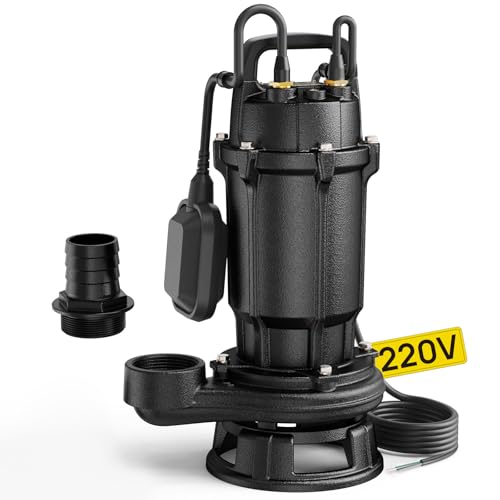 AQUASTRONG SEP100CABest 220V grinder
Check the rules and plan the job first
Before you pick up a tool, call your local building department. Many areas require a permit, an inspection, or a licensed plumber for a sewage ejector install. Skipping this step can cause problems with insurance or a home sale later.
Next, measure the rise from the pump location to the point where the discharge pipe joins the sewer line. The pump's lift rating has to cover that rise with room to spare. Our best sewage ejector pump page lists the lift of each model, from 27 ft on the LANCHEZ 1 HP up to 42 ft on the Schupethauer grinder pump.
Also decide which fixtures will drain to the basin. A basement toilet, shower, and laundry sink are typical. Every fixture below the sewer line needs to reach the basin, and the basin needs its own vent.
Tools and materials you will need
Gather everything before you break the floor. A half-finished hole in a basement slab is not a place you want to be waiting on a store run.
- A sealed sewage basin with a gasketed lid and ports for inlet, vent, and discharge
- The pump, sized for your solids and lift needs
- A swing-style check valve and a shut-off valve rated for sewage
- 2 in discharge pipe and fittings (match the pump's discharge size)
- Vent pipe and fittings that tie into your home's venting system
- Gravel for the base of the basin pit
- Concrete for patching the floor
- A rotary hammer or concrete saw, a shovel, and a level
- Pipe primer, cement, and sealant suited to your pipe material
- Safety glasses, hearing protection, a dust mask, gloves, and boots
Choose a pump that fits the job
Most homes use a standard ejector pump, which passes solids up to 2 in through a 2 in discharge. A grinder pump chops waste with blades, which helps with higher lifts, longer runs, or smaller discharge pipes. If wipes tend to get flushed in your household, a grinder is a safer pick.
Power matters too. Most residential pumps run on a standard 110V or 115V outlet, but some grinders need a 220V supply, which means an electrician. The table below uses published specs from the pumps on our comparison page.
| Pump | Type | Max lift | Power | Cord |
|---|---|---|---|---|
| FOTING 1.5 HP | Ejector, cast iron | 29 ft | Not listed | 10 ft |
| LANCHEZ 1 HP | Ejector, cast iron | 27 ft | Not listed | 10 ft |
| Acquaer 3/4 HP | Ejector, cast iron | 29 ft | 115V | 10 ft |
| Aquastrong 1 HP | Grinder, cast iron | 40 ft | 220V | Not listed |
| Schupethauer 1.5 HP | Grinder, stainless steel | 42 ft | 110V | 30 ft |
Step-by-step installation
The order below works for a typical new install. Your layout may differ, so follow your local code where it conflicts.
- Mark the basin location and cut the slab with a concrete saw or rotary hammer. Keep the opening a little wider than the basin.
- Dig out the soil to the basin depth, then add a layer of gravel and level it.
- Set the basin so its rim sits flush with the finished floor. Check that it is level.
- Connect the fixture drain lines to the basin inlet. Keep the pitch on those lines consistent so waste flows toward the basin.
- Run a vent from the basin to your home's vent system, following code. A sealed basin without a proper vent can trap sewer gas and slow the pump.
- Backfill around the basin, then pour concrete to close the gap in the floor. Let it cure fully.
- Lower the pump into the basin. Lift it by the handle only, never by the power cord. The FOTING model weighs 34.17 lb, so have a helper nearby.
- Attach the discharge pipe to the pump's 2 in outlet. Install the check valve first, then the shut-off valve above it. Point the check valve arrow in the direction of flow.
- Route the discharge pipe up to the sewer line and connect it as your plumber or code directs.
- Arrange the float so it can rise and fall freely without touching the basin wall or the pipe, then fit the gasketed lid.
Wire it safely and test it
Plug the pump into a grounded outlet, and use a dedicated GFCI-protected circuit if your code calls for one. Many models include a piggyback plug for the float switch, so plug that into the outlet first and then the pump into the switch. If your pump needs 220V, hire a licensed electrician.
To test, run clean water into the basin until the float lifts and the pump starts. Check that the pump shuts off at the right level and that water moves through the discharge without leaks. Open the lid only after unplugging the pump.
Thermal overload protection, which several of these pumps include, helps guard the motor if it runs dry or overheats. It is a backup, not a reason to ignore the float setup.
Replacing an existing ejector pump
If you are swapping a failed pump, the job is much shorter. Unplug the unit and close the shut-off valve. Disconnect the union or coupling, then lift the old pump out by its handle or a rope. Never pull it up by the cord.
Compare the old pump's discharge size, basin depth, and float type to the new one. A 2 in discharge is common, but confirm before you buy. Our sewage ejector pump comparison puts discharge size, lift, and solids handling on one sheet, so you can match them quickly.
While the basin is open, inspect the check valve and replace it if it sticks or leaks. Clean out debris, check the gasket on the lid, then reconnect and test the same way as a new install.
Safety notes
Sewage contains bacteria, and the basin can hold sewer gas. Wear gloves and eye protection, ventilate the room, and wash well afterward. Never lean into an open basin.
Always disconnect power before touching the pump or float. Keep cords and plugs out of standing water. Wear hearing protection and a dust mask when cutting concrete, and keep safety glasses on whenever you cut or break the slab.
Frequently asked questions
Can I install a sewage ejector pump myself?
Sometimes, but many areas require a licensed plumber or a permit. Check with your local building department before you start.
Do I need a check valve?
Yes. The check valve keeps waste from flowing back into the basin after each cycle. Install a shut-off valve with it so you can service the pump later.
How often should I inspect the pump?
Check the float, lid seal, and check valve from time to time, and listen for odd noises or frequent cycling. Follow the maker's guidance for your model.
Can I use a regular sump pump instead?
No. A sump pump is not made for sewage solids. Use a pump rated for sewage, such as an ejector or a grinder.