How to Hand Plane the Bottom of a Door
Yes, you can hand plane a wood door, and a sharp block plane or a No. 4 bench plane will do it. Mark the tight spots, take off thin shavings, and plane from each outer corner toward the middle so the wood does not split out. Check the fit often and seal the bare edge when you finish.
 Jorgensen 70700Best overall
 Jorgensen PJ-70710Adjustable mouth block plane
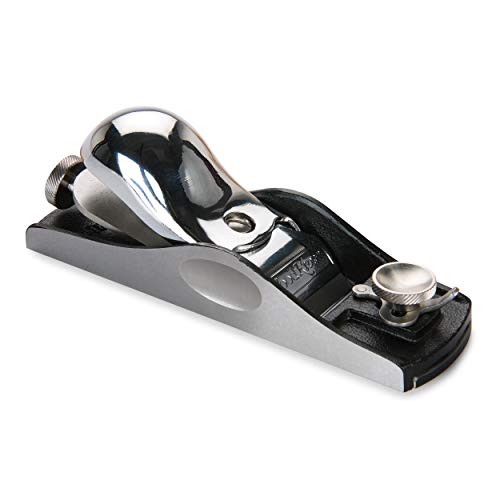 WOODRIVER 151125WWOODRIVER 151125W
Check that your door can be planed
Solid wood doors and most wood veneer doors can be planed. Hollow-core doors have only a thin wood frame at the edges, so there is very little to remove. Steel and fiberglass doors should not be planed with a wood plane at all.
Also look at why the door sticks. If it rubs at the bottom because a hinge screw has pulled loose or the frame has shifted, tightening the hinges may fix it. Planing is the right answer when the door itself is too tall for the opening, or swollen so that it rubs along the floor or threshold.
Pick the right plane
A block plane is the easiest choice for most door jobs. It works well on end grain and fits in one hand, which helps because you are cutting at the corners where the vertical door stiles meet the bottom edge. Our best hand plane page covers the main types if you want to compare specs before buying.
A longer bench plane is better when you need to take off more wood along the whole bottom edge. Its length helps keep the edge straight. The table below uses the published specs for a few planes from that comparison.
| Plane | Type | Length | Weight | Notes for door work |
|---|---|---|---|---|
| Jorgensen No.101 Mini Block Plane | Mini block plane | 3.54 in | 0.55 lb | Small and light, good for light trimming and corners |
| Jorgensen No.60-1/2 Low Angle Block Plane | Low angle block plane | 6.25 in | 1.48 lb | Adjustable mouth, suits end grain |
| Amazon Basics No. 4 Adjustable Bench Plane | No. 4 bench plane | 9.8 in | 2.66 lb | 2 in blade, adjustable mouth, longer sole for a straighter edge |
| KAKURI Japanese Kanna Plane 50mm | Japanese smoothing plane | 9.5 in | 1.46 lb | Cuts on the pull stroke, blade needs hammer setup |
Get the door ready
You can plane a door while it hangs, but it is much easier and safer to take it off. A door on its edge gives you a clear view of the cut and keeps the plane from skipping on the floor side. Doors are heavy and awkward, so get a helper to hold it while you tap out the hinge pins.
Before you plane, find the problem spots. Close the door and look for scuff marks on the bottom edge or the floor. You can also slide a thin piece of cardboard under the door and see where it jams. Mark the tight areas with a pencil.
- Remove the door from its hinges and lay it on its side, or stand it on its hinge edge in a vise or between two clamped sawhorses.
- Pad the surfaces so the finish does not get dented.
- Run a hand along the bottom edge and check for nails, screws, or staples that could chip the blade.
- Draw a pencil line along the bottom edge. This shows you how much wood you are removing.
Set up and sharpen the plane
A dull blade tears the wood and makes you push harder, which is when slips happen. Make sure the blade is sharp before you start. If you use a Western plane, adjust the depth so only a very thin shaving comes off. The Jorgensen planes and the Amazon Basics planes in our comparison list a depth knob or geared adjustment for this.
Set the mouth opening narrow if your plane allows it. A tighter mouth supports the wood fibers just ahead of the blade and reduces tearout. Of the planes in the table, the No.60-1/2 and the Amazon Basics No. 4 Adjustable list an adjustable mouth.
If you use a Japanese kanna, remember it cuts as you pull toward you. The blade is set by tapping it with a hammer, so allow extra time for setup.
Plane the bottom edge step by step
Work slowly. You can always take off more wood, but you cannot put it back. A door usually needs only a small amount trimmed. A gap of about 1/8 inch above the finished floor is a common target, but check what your floor and threshold need.
The corners of the door are where the end grain of the vertical stiles meets the bottom edge. Planing across them toward the outside can split off a chunk of wood. To prevent that, always cut from the outer corner inward.
- Hold the plane flat on the edge with both hands, or one hand for a small block plane.
- Start at one corner and push toward the middle in a smooth, steady stroke.
- Repeat from the other corner toward the middle.
- Keep the plane flat. Do not rock it, or the edge will round over.
- Check the line often and stop when you reach it.
- Test the fit by rehanging the door and swinging it through its full travel.
Finish and protect the wood
Lightly sand the planed edge with fine sandpaper to remove any rough spots, then wipe off the dust. A bare wood edge soaks up moisture from the floor and can make the door swell again. Seal it with the same paint, stain, or clear finish as the rest of the door, and cover the full bottom edge.
Wear safety glasses while you work, since chips can fly when the blade catches a knot or a corner. A dust mask helps when you sand. Keep your fingers behind the blade, and set the plane on its side when you put it down so the cutting edge does not touch the bench.
Frequently asked questions
Can I plane a door without taking it off the hinges?
Yes, but it is harder to hold the plane steady and you cannot see the edge well. A door that is off its hinges and clamped is safer and gives a straighter cut.
Should I plane the top of the door instead?
Only if the door rubs at the top. Planing the side that is actually sticking is the usual fix, and the bottom is the most common spot.
Why did my plane tear the corners?
You probably cut across the end grain toward the outer edge. Plane from each outer corner toward the middle instead, and take thinner shavings.
Do I need to sharpen the blade first?
Yes. A sharp blade cuts cleanly and needs less force. A dull blade tears the wood and is more likely to slip.