How to Clean and Store Table Saw Blades
To clean a table saw blade, unplug the saw, remove the blade, soak it briefly in a pitch-dissolving cleaner or hot soapy water, scrub gently with a soft brush, then rinse and dry it right away. To store it, keep the blade dry, lightly protected against rust, and separated from other metal so the teeth never touch anything hard.
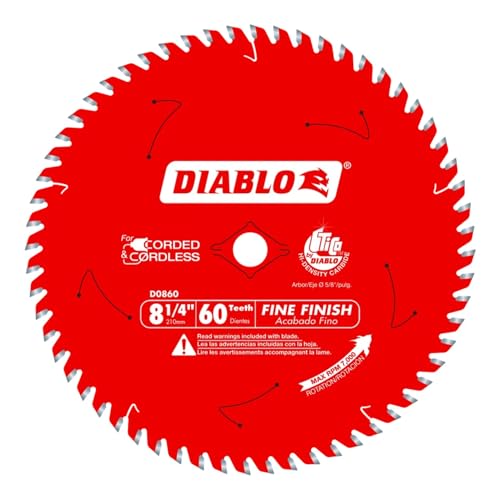 Diablo D0860XBest overall
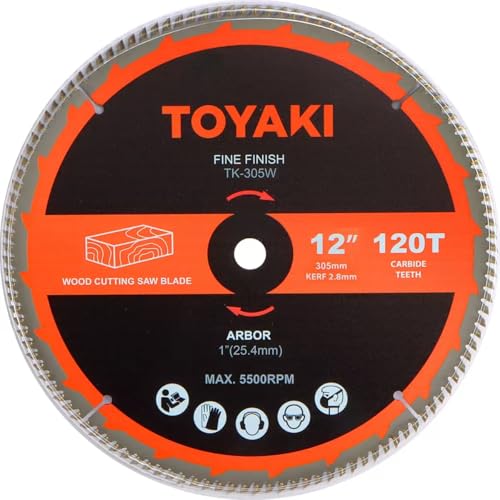 TOYAKI TK-305WMost teeth, 12-in
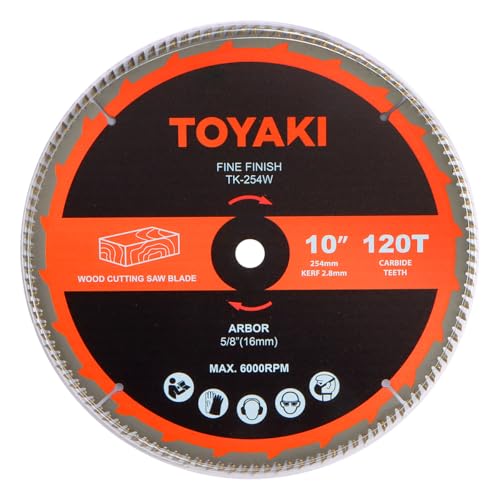 TOYAKI TK-254WFine finish in 10 in
Why blade care is worth a few minutes
Cutting wood leaves a sticky film of resin and sawdust on the blade, called pitch. It builds up on the teeth and the body of the blade. A blade coated in pitch cuts with more friction, so it runs hotter, can burn the wood, and feels like it is dulling faster than it really is.
Often a blade that seems worn out only needs cleaning. Storing blades well matters just as much, because carbide teeth are hard but brittle, and a single knock against another blade or a tool can chip them.
If you are shopping for a replacement because a blade is truly finished, our best table saw blades comparison lays out the published specifications side by side.
Safety first
Cleaning a blade means handling sharp teeth and sometimes strong chemicals. A few habits keep the job safe.
- Unplug the saw before you touch the blade or arbor. Do not rely on the switch being off.
- Wear cut-resistant gloves when lifting or holding the blade, and chemical-resistant gloves when using cleaners.
- Wear safety glasses, since cleaners can splash and pitch can flick off a brush.
- Work in a ventilated area and follow the label on any commercial cleaner. Never mix cleaning products.
- Keep the blade flat on a bench, not leaning on its teeth, so it cannot slide or tip.
What you need
You do not need special equipment. A shallow pan or tray wide enough to lay the blade flat works well, and a plastic container works if the cleaner is not too harsh for it. Pick a pan material that suits your cleaner, since some products should not touch certain metals. Check the cleaner's label.
You also need a soft nylon brush or a fine brass brush, clean rags or paper towels, and a rust-preventive spray or light machine oil. Avoid steel wire brushes and scrapers. They can scratch the blade and damage the carbide tips.
How to clean a table saw blade step by step
Once the saw is unplugged and the blade is removed following your saw's manual, follow this order.
- Lay the blade flat in the pan and add enough cleaner to cover the pitch. Options include a commercial pitch remover, a diluted degreasing cleaner, or very hot water with plenty of dish soap.
- Let it soak for the time the label recommends. For hot soapy water, a few minutes is usually enough. Stubborn buildup may need a little longer.
- Scrub the teeth and the blade body with the soft brush, working away from your hands and following the direction of the teeth.
- Rinse thoroughly with clean water so no cleaner stays on the steel.
- Dry the blade completely right away with a rag, then check the gullets, the small curved spaces between teeth, where water likes to hide.
- Wipe on a thin coat of rust preventive or light oil, then wipe off the excess so it does not attract dust.
Choosing a cleaning method
Different cleaners suit different situations. Whatever you pick, confirm on the product label that it is safe for the blade's coating and carbide, and avoid anything that is not meant for tools.
Many blades have a non-stick coating on the body. Harsh scrubbing or strong cleaners can wear that coating away, so start with the gentlest option and move up only if pitch remains.
| Method | Best for | Watch out for |
|---|---|---|
| Hot water and dish soap | Light, recent pitch | Needs thorough drying to prevent rust |
| Commercial pitch remover | Heavy, baked-on buildup | Ventilation, gloves, and following label directions |
| Diluted degreasing cleaner | Resin plus oil and grime | Do not soak longer than the label allows |
| Soft brush only, dry | Loose sawdust between cuts | Will not dissolve sticky pitch |
How to store table saw blades
Good storage has three goals: keep moisture away, protect the teeth, and keep the blades easy to identify. Start with a dry spot. A garage or shed with big temperature swings can cause condensation, which leads to rust. A closed cabinet or drawer indoors, or a toolbox with a desiccant pack, helps.
Never stack bare blades on top of each other. Teeth rubbing against teeth is one of the quickest ways to chip carbide. Instead, use one of these approaches:
- Keep each blade in its original sleeve or box, which is made to hold it flat and protect the teeth.
- Hang blades on a wall rack or peg, with the arbor hole over a dowel, so no teeth touch anything.
- Place a piece of cardboard or a felt disc between blades if you must stack them flat.
- Label each blade with its use, such as ripping or crosscutting, so you grab the right one and avoid handling teeth more than needed.
Know when to clean and when to replace
Cleaning restores a blade that is gummed up, but it cannot fix real wear. If a clean blade still burns wood, tears out edges, needs extra feed pressure, or shows chipped, missing, or rounded teeth, it is time for sharpening by a professional or a replacement. Never use a blade with a bent body or cracked plate.
When you are weighing a new blade against your saw, check that the diameter and arbor size match. If you are also considering a portable saw for site work, our best jobsite table saw page compares those models, and it helps to look at blade size there before you buy.
If you also own band saws or reciprocating saws, remember that their blades follow different care rules. You can browse our guides to the best band saw blades for that equipment.
Frequently asked questions
Can I use oven cleaner on a saw blade?
It is best to avoid it. Oven cleaners are very caustic and can damage the blade's coating and the brazing that holds carbide tips in place. Use a product made for saw blades or a mild degreaser.
How often should I clean my blade?
Clean it when you see visible pitch on the teeth or notice burning or extra resistance in your cuts. Cutting resinous woods or sheet goods with glue means you will need to clean more often.
Is it okay to leave the blade on the saw between jobs?
For short breaks, yes. For long storage, remove it, clean it, protect it against rust, and store it away from the saw so the teeth stay safe from accidental contact.
Should I wipe down a new blade before using it?
Many new blades ship with a light protective film. Wipe it off with a clean rag before mounting the blade, following the maker's instructions.