How to Choose the Right Welding Glove Size and Fit
Measure around the widest part of your palm, then pick the size your maker's chart assigns to that number. A welding glove should fit snugly across the palm, leave about a finger-tip of room at the ends of your fingers, and let you make a full fist without the leather pulling. Size labels differ between brands, so always check the chart for the specific glove.
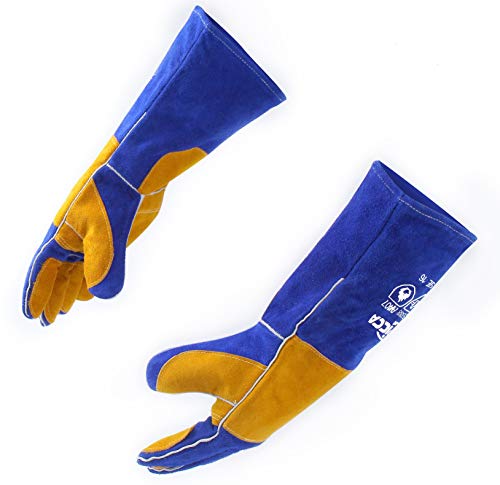 RAPICCA 7169a460-6cc9-4f72-b127-964f3fc0117aBest overall
 TICONN Ticonn-1702Highest listed heat rating
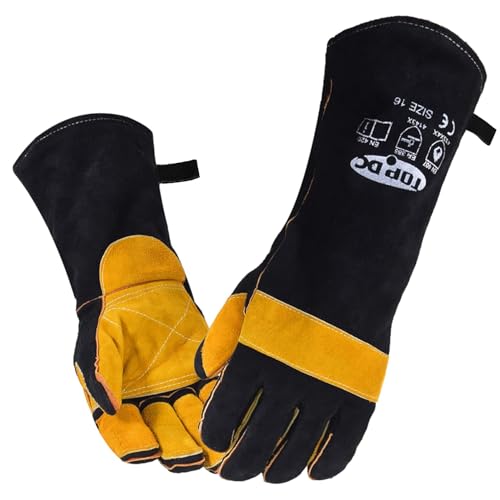 TOPDC TD-GL16Most pairs included
Start by measuring your hand
Sizing is simple if you do it before you shop. Use a soft tape measure, or a strip of paper you can mark and then hold against a ruler. Measure your dominant hand, since it is often slightly larger.
Wrap the tape around the widest part of your palm, just below the knuckles and across the base of the thumb. Leave the thumb out of the loop. Keep the tape snug but not tight, and write the number down in inches.
- Hold your hand flat with fingers together.
- Wrap the tape around the palm, below the knuckles, with the thumb outside the loop.
- Note the measurement in inches.
- Measure your middle finger from the base to the tip as a second check on finger length.
- Compare both numbers with the maker's size chart, not a generic one.
Match the number to a size, and read the chart carefully
Most US gloves use small, medium, large and extra large, and most makers tie those labels to palm circumference. The ranges are not standard across brands, so a medium from one company can fit like a large from another.
If your palm number falls between two sizes, your finger length usually breaks the tie. Long fingers point toward the larger size. Short fingers on a wide palm point toward the smaller one.
One thing to know about the gloves we compare: the listings give glove length and cuff length, but the product data we have does not include hand-size charts. The 16 in length on several models describes the whole glove, not your hand size. One listing, for the WZQH glove, also notes that its size was measured by hand and may have a slight error. Check the seller's chart and allow for that.
How a welding glove should fit
A good fit is snug in the palm and relaxed in the fingers. Leather stretches a little with wear, and a cotton liner packs down over time, so a glove that feels slightly firm on day one is usually right.
Check these points when you try a pair on or compare reviews and charts:
- Palm and back of hand: no wrinkles bunching across the palm, and no pulling when you close your fist.
- Fingertips: about a fingertip's width of space past your longest finger. Fingertips pressed against the end can transfer heat directly to your skin.
- Thumb: the thumb should bend freely and not get squeezed against the seam.
- Wrist: the opening should close or sit firmly so spatter cannot slip in, but it should not cut off circulation.
- Grip: you should be able to hold a torch, stinger or MIG gun without gripping harder than normal.
Too tight versus too loose
A tight glove tires your hand quickly and restricts blood flow. It also presses the liner flat against your skin, which cuts down on the insulation that keeps heat out. Seams can strain and split when the leather has no slack.
A loose glove has its own problems. Extra material at the fingertips makes it hard to feel the trigger or the rod, and it can snag on the work. A baggy glove can also let hot spatter settle in folds against your skin.
If you are between sizes and doing heavy stick or flux-core work, the slightly roomier size is usually easier to live with, because thicker leather and more insulation take up space inside the glove. For fine work, go snug.
Fit changes with your welding process
The right amount of snugness depends on what you do. Thick gloves built for stick and flux-core work leave more air and padding around your hand, so they can feel bulkier by design. TIG gloves are thinner and closer fitting so you can feed filler rod by feel.
Our best welding gloves page lists these differences in published specs. The table below pulls a few of them together for fit decisions.
| Glove type from our data | Length and cuff | Weight | Fit implication |
|---|---|---|---|
| 16 in gauntlet style (RAPICCA, TICONN, TOPDC, WZQH) | 16 in glove, 7.5 in sleeve | 0.5 lb to 1.19 lb | Room for liner and padding; long cuff covers the forearm |
| TICONN 1702 | 16 in, 7.5 in sleeve | 1.19 lb | Heaviest here, with 2.4 mm cowhide; expect a bulkier feel |
| TOPDC TD-GL16 | 16 in, 7.5 in sleeve | 0.5 lb each, two pairs | Lighter, with 1.2 mm cowhide; less bulk for long sessions |
| Caiman 1540 TIG | 4 in cuff | 0.4 lb | Close fit with goatskin palm for filler rod control |
Check cuff length and sleeve overlap
Fit is not only about the hand. Sparks and spatter often land on the wrist and forearm, so how the glove meets your sleeve matters. A 7.5 in sleeve on a 16 in glove reaches well up the forearm, which suits overhead and out-of-position stick work. A shorter cuff, like the 4 in cuff on the Caiman TIG glove, gives more wrist movement but leaves more skin exposed.
Wear the shirt you will weld in when you test the fit. Cuffs should overlap your jacket sleeve, not sit under it, so spatter rolls off instead of funneling in. If the cuff gapes, an elastic band or strap at the opening can help it stay put, and the TICONN listing mentions an adjustable elastic band for this purpose.
Safety notes and when to size up or down
Never use a wet or damp glove around electrical work. Moisture conducts electricity and can also turn to steam against your skin when it meets heat. Replace gloves when leather is cracked, thin or burned through, or when seams open up, because a worn glove no longer protects you even if the size is right.
Keep gloves dry, and let them air out between jobs. Do not wear gloves that have picked up oil or solvent, since these can ignite. Welding also calls for eye protection such as a proper helmet and shade, and hearing protection when you grind. Pair gloves with long sleeves and a jacket so there is no gap at the wrist.
When you are ready to compare specific models, start with our best welding gloves comparison, then use your measurements to choose the size for the one you like.
Frequently asked questions
Should welding gloves be a size bigger than regular work gloves?
Not necessarily. Use the maker's chart and your palm measurement. Some people choose the roomier size for thick stick gloves, but a large glove can hurt your control.
Can I wear a thin liner glove under welding gloves?
Some welders do, but it changes the fit. A liner adds bulk, so you may need a larger size. Make sure it is not synthetic, since some synthetics melt under heat.
Do welding gloves stretch or shrink?
Leather softens and molds to your hand with use, so a snug pair often gets more comfortable. Wetting leather and drying it hot can stiffen or shrink it, so let gloves dry naturally.
Do women and men need different glove sizes?
Sizing follows hand measurements, not gender. Check whether the maker offers narrower or smaller sizes, and use your palm and finger numbers to choose.
How do I know when a glove is too worn to use?
Look for thin or cracked leather, stiff burned patches, open seams and a liner that is pulling through. If you can see through a spot or feel heat sooner than before, replace the pair.