How to Bleed and Refill a Floor Jack With Oil
To bleed a floor jack, lower the saddle all the way, open the release valve, remove the oil fill plug, and pump the handle several full strokes to push out trapped air. Then top off with hydraulic jack oil until the level reaches the bottom of the fill hole, close the valve, and test the lift without a load. Always use oil made for hydraulic jacks, and never go under a car held only by the jack.
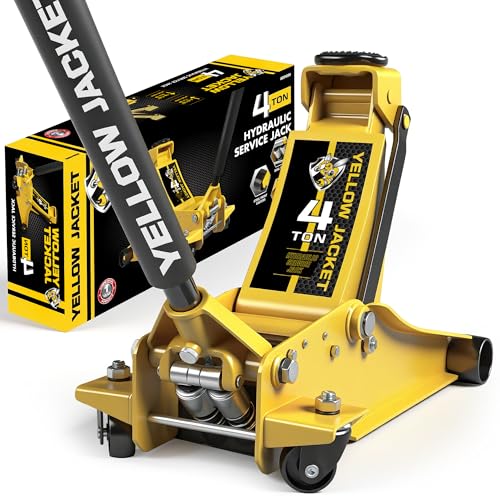 YELLOW JACKET AS84009Best overall
 BIG RED AT84007RBest heavy-duty steel
 SATA 3T AluminumBest aluminum jack
What floor jack oil is and why it matters
Floor jack oil is a light hydraulic oil. It is the fluid the pump pushes into the cylinder to raise the ram. Because liquid barely compresses, the jack can lift thousands of pounds with modest handle effort. Most jack makers call for a hydraulic or jack oil in a light grade, and your manual will name the exact type.
Hydraulic jack fluid is not the same as motor oil, brake fluid or cooking oil. Brake fluid can attack the rubber seals inside the jack. Motor oil can be too thick or contain additives the seals were not designed for. If your manual lists only one type of fluid, use that one and nothing else.
Air is the other half of the story. Unlike oil, air compresses. If air gets into the system, the pump squeezes the bubble instead of pushing the ram, and the jack feels soft or lifts only part way.
Signs your jack needs bleeding or a refill
Air usually gets in after the jack is stored on its side, tipped over, or carried upside down. Low oil can also let the pump draw in air. Watch for these symptoms:
- The handle feels spongy and pumps easily without much lift
- The saddle rises a little, then stops or sinks back down
- The jack will not reach its full height
- The jack lifts slowly or only with many strokes
- Oil is visible around the cylinder, which points to a leak rather than air alone
What you need before you start
The job takes a few basic items and a clean, flat workspace. Dirt is the enemy of any hydraulic system, so wipe the jack down first.
Gather the following:
- Fresh hydraulic jack oil in the type your manual specifies
- A small funnel or a squeeze bottle with a narrow spout
- A flat-blade or hex tool that fits the fill plug
- Clean rags and a drip pan
- Safety glasses and gloves
- The jack handle and your owner's manual
How to bleed a floor jack, step by step
The exact layout varies by model, so check your manual for the location of the fill plug and release valve. On most floor jacks, the steps look like this:
Work with the jack unloaded, on level ground, with nothing on the saddle.
- Open the release valve by turning the handle counterclockwise, then lower the saddle as far as it will go.
- Wipe the area around the oil fill plug so no grit falls in, then remove the plug.
- With the release valve still open, insert the handle and pump it through ten to twenty full strokes. This pushes trapped air out through the open fill hole.
- Close the release valve by turning it clockwise until snug. Do not overtighten.
- Pump the jack up to full height, then open the release valve slowly to lower it. Repeat two or three times.
- Replace the fill plug once the lift feels firm and the saddle rises evenly.
How to refill the oil
Check the level with the jack on a flat surface and the ram fully retracted. With the saddle all the way down, the oil should sit at or just below the bottom edge of the fill hole. Some manuals give a slightly different mark, so follow yours if it says otherwise.
If the level is low, pour in oil slowly through the funnel. Stop when it reaches the right height. Overfilling can leave no room for the fluid to move as the ram retracts, and it can force oil out of the vent.
Cycle the jack up and down a few times, then recheck the level and top off if needed. Wipe away any spills before using the jack, since oil on the frame or saddle makes the jack slippery to handle.
If you need to drain old oil, tip the jack so the fill opening faces down over a pan, and dispose of the used oil at a local recycling or collection site. Do not pour it on the ground or down a drain.
If the jack still will not lift
Bleeding and refilling fix the most common problems, but not all of them. If the jack still sinks under load or will not rise, the cause may be worn seals, a dirty or damaged valve, or an internal leak. A jack that leaks oil from the cylinder or pump body is not safe to rely on.
Do not adjust the overload valve. It is set by the manufacturer to stop the jack from lifting beyond its rating, and tampering with it removes that protection. If you are shopping for a replacement, our best floor jack page lines up capacity, height range and pump type side by side.
Drivers with lowered or sporty cars may want a lower starting height, which our best low profile floor jack page covers. If carrying the jack is the bigger problem, see the best aluminum floor jack comparison for lighter frames.
Safety notes
A floor jack is for lifting only. It is not meant to hold a vehicle while you work. Set jack stands under solid points on the frame before you go under the car, and lower the weight onto the stands.
Wear safety glasses, because oil can spray when a plug is removed or the system is under pressure. Keep the work area on hard, level ground, and keep hands clear of the saddle and pinch points. Wipe up spilled oil right away to prevent slips.
Frequently asked questions
Can I use motor oil in a floor jack?
It is best not to. Motor oil is not made for jack seals and may be the wrong thickness. Use hydraulic jack oil or whatever fluid your manual lists.
How often should I check the oil level?
Check it when the jack feels weak, after it has been stored on its side, and as part of any yearly tool check. A quick look takes only a minute.
Why does my jack sink slowly after lifting?
Slow sinking often points to a worn seal, a dirty release valve, or a leak. Bleeding may help if air is the cause, but a jack that keeps sinking should be repaired or replaced.
Should I store my floor jack upright?
Yes. Keep it level with the saddle fully lowered and the handle in place. This reduces the chance of air entering the system.