How Long Does It Take to Sharpen a Knife?
Most kitchen knives take about 1 to 5 minutes to sharpen, and a quick touch-up can take under a minute. A pull-through or electric sharpener is the fastest, while a guided manual kit or whetstone takes longer because you control every stroke. The knife's starting condition matters as much as the tool.
 WORK SHARP WSGFS221Best overall
 Chef's Choice 0101500Electric 15° edge converter
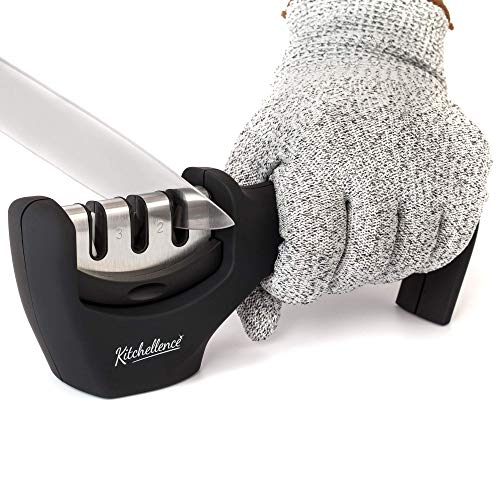 KITCHELLENCE KS37 PSafest for beginners
The short answer by sharpener type
Time depends mostly on the tool. A pull-through sharpener has fixed slots, so you only draw the blade through a few times. An electric sharpener has a motor and guides that do most of the work. A guided manual kit holds the angle for you but asks you to make many strokes on each stone.
The times below are rough planning estimates from general sharpening practice, not published specifications. Your knife, your skill and the steel all shift them.
Product specs back up the quick end. One electric 15° sharpener on our spec sheet lists about 1 minute for a first sharpening and about 10 seconds for resharpening. A three-stage pull-through kit lists restoring knives in a matter of seconds.
| Sharpener type | Typical time per knife | Best for |
|---|---|---|
| Pull-through | Under 1 minute for a touch-up | Quick, regular upkeep |
| Electric | About 10 seconds to a few minutes | Hands-off sharpening |
| Guided manual kit | About 5 to 15 minutes | Angle control and finer edges |
| Whetstone | About 10 to 30 minutes | Skilled users who want full control |
What changes how long it takes
Two knives can take very different amounts of time on the same sharpener. The biggest factor is how dull the blade is. A knife that still cuts paper-thin tomato skin with a little pressure only needs a light touch. A knife that crushes the tomato needs real metal removal.
Damage matters too. A chipped or rolled edge needs a coarse stage first. Coarse abrasives cut fast, but you then need finer stages to smooth the scratches they leave. More stages means more time, and a better finish.
- Dullness: a slightly dull knife may need only a few passes, while a very dull one needs many.
- Chips or a bent edge: these need a coarse stage before you refine.
- Angle change: converting a 20° edge to 15° removes more steel than a simple touch-up.
- Steel hardness: harder steel wears down more slowly on the abrasive.
- Serrated edges: each tooth needs its own pass with a rod, so they take longer than a straight edge.
- Your experience: a first session is usually slower than your tenth.
Pull-through and electric: the quick routes
If speed matters most, start here. Pull-through models use fixed slots, so there is little to set up. You place the blade in the slot and pull it through with light, even pressure. Many have a coarse slot to repair the edge, a medium slot to sharpen and a fine slot to polish.
Electric sharpeners go further. Spring guides or fixed slots set the angle, and the motor drives the abrasive. That is why a listed resharpening time of about 10 seconds is possible on one of our picks. The tradeoff is counter space and a heavier unit.
Both types work best when you sharpen often. A few quick passes every few weeks keeps the edge in shape and avoids long repair sessions. For a side-by-side look at stages, angles and weight, see our best knife sharpener comparison.
Guided kits and stones: slower, but more control
A guided manual kit clamps the knife or sets a guide so the angle stays consistent. You then work through stones from coarse to fine. One guided kit on our page lists a coarse 320 grit diamond plate and a fine 600 grit plate, plus a ceramic rod and an angle range of 15° to 30°. That range lets you match thin kitchen knives and tougher hunting blades, but each knife takes more setup and more strokes.
Plan on more time for the first session. You need to set the angle, learn the pressure and check the edge as you go. After a few knives it gets faster. People who sharpen by hand with stones often aim for a short session of several minutes per knife, then stop and test the edge instead of guessing.
The extra minutes buy finer control over the edge. If you only want a working edge on everyday knives, a quicker type may suit you better.
A simple routine you can follow
Whatever tool you use, a steady routine keeps the time short and the results consistent.
- Check the edge. If it slides over a tomato skin, it is dull and needs sharpening.
- Pick the coarsest stage only if the edge is chipped or very dull. Otherwise start at the medium stage.
- Keep the same angle and pressure for every pass. Let the abrasive do the cutting.
- Work in short sets, then wash and dry the blade and test it on paper or a tomato.
- Finish on the fine stage to polish, then wipe off metal dust and dry the knife.
Safety while you sharpen
A sharpened knife is more dangerous than it looks, and a slipping sharpener is the usual cause of cuts. Set a pull-through or guided kit on a stable surface. A non-slip base helps, and a cut-resistant glove is wise if you are new to it. Some kits on our page include one.
Keep fingers behind the blade's edge and out of the slot. Never rush the last few passes. With electric sharpeners, keep cords and the motor away from water, and unplug the unit before cleaning. Brush away metal dust rather than blowing on it, and avoid touching the edge to test it.
How long does a sharpener last?
There is no single number, because lifespan depends on the abrasive, how often you use it and how much pressure you apply. Diamond abrasives cut steel fast and tend to stay effective for longer than softer materials. Ceramic hones and finishes but can wear or chip if dropped. Leather strops last well if kept clean and dry.
Replace a sharpener when it takes noticeably longer to produce the same edge, when slots look worn or clogged, or when parts crack or loosen. Cleaning off metal dust often restores performance first. Some makers list a warranty, and several products on our page list 3 years, but a warranty is not the same as a lifespan. Check the spec sheet before you buy, and compare options on our best knife sharpener page.
Frequently asked questions
How often should I sharpen my kitchen knives?
Sharpen when the knife starts to crush tomatoes or slip on onion skin. For home cooks that is often every few weeks to months, depending on use. A honing rod between sessions helps the edge last longer.
Can I sharpen a knife too much?
Yes. Every pass removes steel, so aggressive coarse sharpening on a knife that only needs a touch-up wears the blade faster. Use the coarse stage only for damage or very dull edges.
Do serrated knives take longer to sharpen?
Usually, yes. Each scallop needs its own pass with a rod made for serrations. Confirm your sharpener lists serrated support, since straight-edge-only models are not made for them.
How do I know when the knife is sharp enough?
Test on a tomato or a sheet of paper. A sharp edge slices without pushing hard or tearing. If it still catches or slides, do a few more passes on the medium or fine stage.