How Does a Band Saw Work and What Is It Used For?
A band saw drives a continuous loop of toothed steel blade around two or three wheels, so the teeth always move downward through the work and press it onto the table. That makes it the go-to saw for curves, resawing thick boards into thinner ones, and cutting irregular or round stock. Woodworkers use it most, but with the right blade and speed, band saws also cut metal, plastic and pipe.
 Jet 714400KBest overall
 QD-KYOHO QBS-14"Widest throat capacity
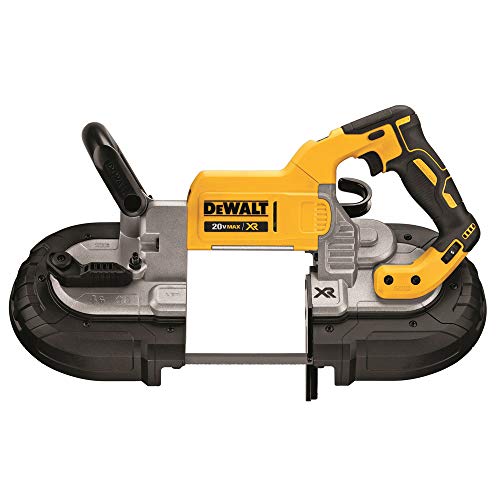 DEWALT DCS374BBest portable cordless
How a band saw works
The blade is a long, thin ribbon of steel welded into a loop. It stretches around an upper and a lower wheel. A motor turns the lower wheel, and the blade follows. Between the wheels, the blade passes through a slot in the table, where the cutting happens.
Because the blade moves in one direction, the teeth push the work down against the table instead of lifting it. This is one reason a band saw feels steadier than a jigsaw. The narrow blade also removes very little wood, so you waste less material and need less motor power for deep cuts.
The blade is held in place by tension and guides. A tension knob stretches the loop so it stays straight, and a tracking knob tilts the upper wheel so the blade rides in the center of the tire. Guides above and below the table keep the blade from twisting. For example, the Jet JWBS-14SFX uses independently adjustable ball-bearing blade guides and runs blades from 1/8 in to 3/4 in wide.
The parts that decide what it can cut
Three measurements tell you most of what a band saw can do. Cut height (also called resaw height) is how tall a board you can slice on edge. Throat width is the distance from the blade to the frame behind it, which limits how wide a piece you can swing around during a curve. Table size affects how well large boards are supported.
These numbers vary a lot between saws. Here are a few examples from the published specs on our comparison page:
| Saw | Cut height | Throat width | Notes |
|---|---|---|---|
| Jet JWBS-14SFX (14 in floor model) | 13 in | 13.5 in | 360 sq in cast iron table, 272 lb |
| Jet JWBS-14CS (14 in floor model) | 6 in, up to 12 in with optional riser | 13.5 in | 120 lb, 1 blade included |
| RIKON 10-3062S (10 in benchtop style) | 5 in | 9.625 in | 77.5 lb, two blade speeds |
| DEWALT DCS374B (portable, cordless) | 5 in | Not listed | 16.98 lb, handheld |
What a band saw is used for
Curves are the classic job. A narrow blade can follow a tight line, so you can cut chair parts, cabriole legs, signs and toy shapes. Wider blades suit gentle curves and straight cuts, while a 1/8 in blade handles tight scrollwork.
Resawing is the other big one. You stand a board on its edge and slice it through its thickness. That lets you make thin boards from thick stock, bookmatched panels, or your own veneer. Taller cut height helps here, which is why saws with 12 in or more of capacity are popular for this work. Blade choice matters a great deal for resawing, and our guide to the best band saw blade for resawing explains what to look for.
Here are other common jobs:
- Rough-cutting stock to shape before planing or sanding
- Cutting tenons, dovetail waste and other joinery cuts
- Trimming round or odd-shaped pieces with a suitable jig or fence
- Cutting bevels with a tilting table (the Jet and RIKON saws above tilt to 45 degrees)
- Cutting pipe, bar and plastic with a portable or metal-rated saw
Band saw vs. other saws
A table saw is great for long, straight rips and repeatable cuts. A jigsaw can cut curves, but the blade is short and tends to wander in thick wood. A band saw fills the gap. It makes curves in thick stock, makes deep cuts, and does it with a smooth, steady motion that is also easier on the ears than many alternatives.
A band saw is not a precision joinery tool on its own. Cuts usually leave a slightly textured surface, so plan on a little cleanup with a plane, sander or spindle sander. Think of it as the saw that gets you close, fast and with little waste.
Wood saws, metal saws and portable saws
Not every band saw is built for every material. Some are sold for wood only. The Jet JWBS-14CS, for instance, is listed as a woodworking saw and is not designed for metal, bone or meat. Cutting metal calls for slower blade speeds, finer teeth and a blade made for the job.
If you want to cut metal, look at saws designed for it. Our best band saw for metal page compares them, and the best band saw blades for metal page covers the blades. Portable handheld band saws, like the cordless DEWALT models in our lineup, are meant for pipe, conduit and stock on a jobsite. They are handy, but they do not replace a stationary woodworking saw.
If you are choosing a saw for a woodworking space, start with our best band saw for home workshop comparison. It lines up capacity, table size, weight and warranty so you can match a saw to your space.
Using a band saw safely
A band saw blade is exposed between the guides, so good habits matter. Always unplug the saw before changing blades or making adjustments inside the wheel covers.
Follow these basics every time:
- Wear eye protection and hearing protection, and a dust mask when cutting wood.
- Set the upper guide just above the workpiece so only the needed part of the blade is exposed.
- Keep your fingers out of the line of the blade and use a push stick for narrow pieces.
- Feed the work gently and let the blade cut. Forcing it can bend or break the blade.
- Do not cut round stock freehand unless you have a jig, since it can roll and pinch the blade.
- Wait for the blade to stop before clearing scraps from the table.
Choosing a blade
Blade width, tooth count and tooth shape change how the saw behaves. Narrow blades turn tight curves. Wide blades cut straighter and are better for resawing. Fewer, larger teeth clear sawdust faster in thick wood, while finer teeth leave a smoother cut in thin stock.
Many saws ship with one blade or none, so plan on buying a few. The Jet JWBS-14SFX, for example, is sold without a blade. Our best band saw blades page compares options by size and use, which helps you match a blade to your saw and your projects.
Frequently asked questions
Why does my band saw blade wander off the line?
The usual causes are a dull blade, too little tension, a blade that is too wide for the curve, or pushing the wood too hard. Check the tension, guide settings and blade sharpness before anything else.
Can I cut metal on a woodworking band saw?
Only if the manufacturer says the saw is designed for it. Some woodworking models are listed as wood only. Metal also needs slower speeds and a blade made for metal.
What size band saw should I get?
It depends on your space and projects. Smaller 10 in saws fit small shops, while 14 in saws offer a wider throat and more cutting height, especially if they accept a riser.
Why do some band saws have two speeds?
Different materials cut best at different blade speeds. A lower speed suits denser materials, while a higher speed suits softer ones. Two-speed saws like the RIKON 10-3062S give you that choice.