How to Wear a Face Shield Properly
Put the shield on over safety glasses, set the headband snug on your forehead, and tilt the visor so it covers your whole face from forehead to below the chin with no gap at the sides. Check that you can see clearly and turn your head freely before you start work. A face shield is extra protection for your face, not a replacement for eye protection underneath.
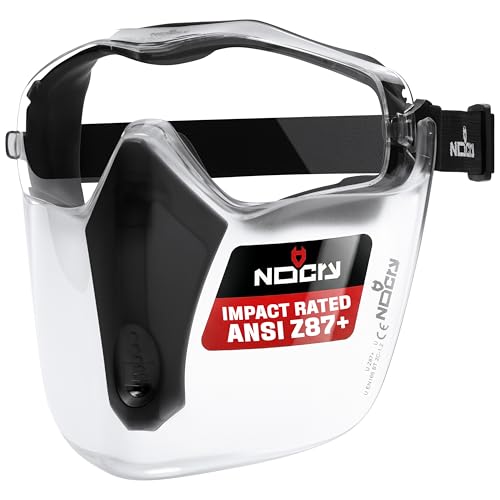 NOCRY UltraShield Pro MaskBest overall
 Blue Eagle B1BL+FC48Spare visor included
 NOCRY FaceArmor ProCoated shield for glasses
Start with the right shield for the job
A shield only protects you if it suits the task. For grinding, cutting, woodworking, or yard work, look for ANSI Z87.1 impact certification on the product. A shield with no listed standard is a poor choice for those jobs. Our best face shield comparison lists the standards each model publishes, so you can check before you buy.
Coverage matters too. Chin and side guards help with splashes and debris from the side, while a bare visor covers less. If you are not sure what a shield is rated for, read the maker's instructions and do not guess.
Check it before every use
A quick look takes less than a minute and catches most problems before they reach your face.
- Look for cracks, deep scratches, or cloudy spots in the visor. Replace a damaged visor.
- Peel off any protective film on the window. Some shields ship with one, and it blurs your view if left on.
- Check that the headband, pins, and brackets are tight and not cracked.
- Make sure the headband is clean and the sweatband is not soaked through.
- Confirm the visor moves freely and locks in place.
Step by step: putting it on
Follow the same order each time and the fit will become automatic.
- Put on your safety glasses or goggles first. They are your main eye protection. The shield goes over them.
- Loosen the headband all the way using the ratchet dial or knob.
- Lower the shield over your head with the visor flipped up, and seat the headband so it sits across your forehead, not on top of your hair or on your brow bone.
- Turn the dial until the band is snug and does not slide when you nod. It should be firm, not tight enough to give you a headache.
- Lower the visor. The top edge should sit at your hairline or above, and the bottom should reach below your chin.
- Adjust the tilt so the visor stays clear of your nose and any respirator, while leaving no gap between the visor and your face.
- Shake your head gently and look up and down. If the shield shifts or the view blurs, readjust.
Adjusting for comfort and clear view
Most of the shields on our comparison page use a ratchet dial for the headband. The Jackson Maxview lists an oversized knob that is easy to turn even with gloves on, which helps if you need to adjust mid-job.
Tilt control varies. The NOCRY FaceArmor Pro lists 4 visor angle positions, and the Honeywell UVEX Bionic S8500 lists 2,784 total possible positions that move the visor nearer or farther from your face. More range lets you find a spot that clears glasses or a respirator without leaving gaps.
Fogging is the most common complaint. Anti-fog coating helps, and a bit of space between the visor and your face lets air move. If the shield still fogs, lift it briefly in a safe spot and let it clear instead of working blind.
Wearing it with glasses, respirators, and other gear
Fit changes when you add other protection. Here is what the published specs say about a few shields, and what to check yourself.
Weight also plays a part. Among models that list it, weights run from 0.65 lb to 1.75 lb. A heavier shield can pull on your neck over a long shift, so a snug band and a good tilt matter more.
| Shield | Fit detail from the data | Weight |
|---|---|---|
| NoCry UltraShield Pro Goggle and Shield | Goggle and shield combo, lists fits over glasses | Not published |
| NOCRY FaceArmor Pro | Lists fits over glasses, ratchet dial, 4 visor angle positions | 0.67 lb |
| Jackson Maxview | Lists fits over glasses, ratchet dial, designed for use with safety glasses | 1.75 lb |
| Honeywell UVEX Bionic S8500 | Ratchet dial, 2,784 tilt positions, washable headband | 1.3 lb |
| Blue Eagle Clear Full Face Shield | Ratchet dial, replaceable visor, one extra visor included | 0.66 lb |
Common mistakes to avoid
Most fit problems come from a few habits that are easy to fix.
Wearing the shield loose is the biggest one. A loose band lets the visor swing and leaves gaps at the sides. Wearing it too high is another, since the chin and throat end up exposed. Using a shield as your only eye protection is a third. Splashes and debris can travel up from below or around the edge, so keep glasses or goggles on underneath.
Also avoid using a scratched or yellowed visor because you are in a hurry. It distorts your view and may be weaker than a fresh one. If your model has a replaceable visor, swap it out.
Cleaning, storage, and safety notes
Clean the visor with mild soap and water and a soft cloth. Harsh solvents and rough paper towels can scratch or cloud polycarbonate. Let it dry, then store it where the visor will not get crushed or sit in direct sun for long periods.
Keep these safety points in mind:
- Wear hearing protection when grinding, sawing, or using loud tools. A face shield does not protect your ears.
- Do not use a regular clear shield for welding or torch work unless the maker says it is rated for it. Welding needs the right shade of lens.
- Stay clear of live electrical work unless the shield is specifically rated for it.
- When working at heights, make sure the shield does not block your view of your footing.
- If a hard impact hits the shield, replace the visor even if it looks fine.
Frequently asked questions
Do I still need safety glasses with a face shield?
Yes, in most cases. A shield is secondary protection. Safety glasses or goggles underneath guard your eyes if something gets around the edge.
How tight should the headband be?
Snug enough that the shield stays put when you nod or shake your head, but not so tight that it leaves marks or causes a headache.
Why does my face shield keep fogging?
Breath and body heat create condensation behind the visor. An anti-fog coating helps, as does adjusting the tilt so air can move between your face and the visor.
Can I wear a face shield over a respirator?
Often yes, but check the maker's notes. Some shields, such as the Jackson Maxview, list a fit with respirators. Adjust the tilt so the visor clears the respirator without gaps.
When should I replace the visor?
Replace it when it is cracked, deeply scratched, cloudy, or after a hard impact. A replaceable visor makes this easier.