Exhaust Clamp vs Welding: Which Should You Choose?
Choose a clamp if you want a joint you can take apart again, you do not have welding gear or experience, or you are working in a tight spot under the car. Choose welding if the joint is meant to be permanent and you can lay down a clean, fully sealed bead. A well-sized band clamp is a sound repair, but a good weld is still the most permanent seal.
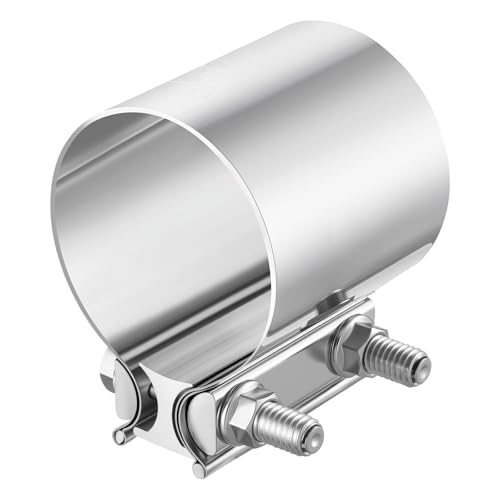 EVIL ENERGY 473SU5TBest overall
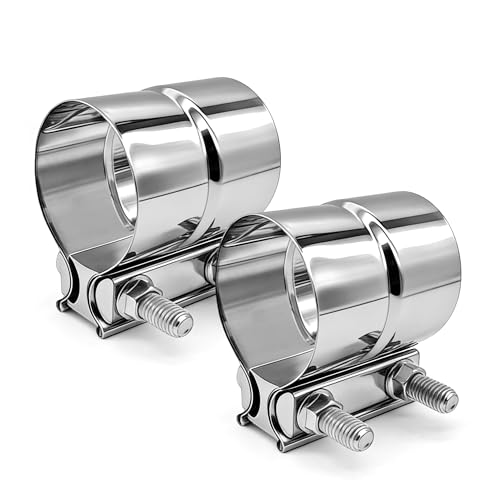 SKYMIRO CPBJ-3IN-2Best double-layer band
 SKYMIRO CPSC-25IN-1Best butt joint clamp
The short version
Both methods can give you a quiet, leak-free exhaust. They just suit different jobs. A clamp is a mechanical joint that you tighten with a wrench. A weld fuses the metal into one piece.
Most of the debate comes down to three things: how long you want the joint to last, whether you may need to remove it later, and what skills and equipment you already have. The rest of this guide walks through each one so you can match the method to your repair.
When a clamp is the better choice
Clamps shine when access, flexibility or simplicity matter more than a permanent bond. A modern band-style clamp is not the same thing as an old U-bolt clamp. The U-bolt type crushes the pipe and often leaks, while a band clamp spreads its force around the full circle of the pipe.
If you are shopping, our best exhaust clamp page puts several band clamps on one spec sheet so you can compare size, band width and materials.
- You need to remove the joint later, for example to swap a muffler or catalytic converter.
- You do not own a welder or have not practiced welding thin exhaust tubing.
- The joint sits where you cannot safely strike an arc, such as near fuel lines or a tank.
- You want a repair that a home mechanic can finish with basic hand tools.
- The system may need to flex slightly, since a bolted joint has a little give.
When welding is the better choice
Welding is the stronger answer when you want the joint to stay put for good. A continuous weld has no hardware to loosen and no band to rust through, and it can be shaped around odd angles where a clamp will not sit flat. That is why many exhaust shops prefer to weld custom systems and long-term repairs.
The catch is skill. Exhaust tubing is thin, so it is easy to blow a hole through it or leave a pinhole in the bead that leaks. A weld also cannot be undone without cutting, which makes later service harder. If you are weighing equipment for the job, our best welding for exhaust page compares options built for this kind of work.
Welding also makes sense when the pipe is badly pitted or out of round. A clamp needs a clean, round surface to seal, while a weld can bridge small flaws once the metal is cut back to solid material.
Clamp vs weld side by side
Here is how the two methods compare on the points that matter most to most drivers.
Neither column is a clear winner. The better method is the one that fits the repair in front of you.
| Factor | Band clamp | Weld |
|---|---|---|
| Permanence | Removable and reusable | Permanent unless cut apart |
| Skill needed | Basic hand tools | Welding skill and practice |
| Equipment | Wrench and sockets | Welder, helmet, gloves, cutting tools |
| Leak risk | Depends on correct sizing and tightening | Depends on weld quality |
| Future service | Easy to unbolt | Requires cutting and re-welding |
| Flex under vibration | A little give at the joint | Rigid joint |
How to make a clamp seal properly
Most clamp leaks come from the wrong size or poor prep, not from the clamp itself. Our clamp page makes the point that a clamp even slightly off in size will not seal, so measure carefully before you buy.
Clamps on that page fit 2.5, 2.75 or 3 in pipe, with bands that run 3 to 3.5 in wide where listed. As one example, the EVIL ENERGY 3 in lap clamp lists a torque spec of 63 N·m and includes a gasket, while the SKYMIRO 2.5 in butt joint clamp uses a dual-layer 304 stainless band that is 3.5 in wide. Always follow the torque figure that comes with your own clamp.
- Measure the outside diameter of the pipe with calipers or a tape. Do not guess from the part description.
- Pick the joint type. A lap clamp seals where one pipe slides into another, and a butt clamp joins two same-size pipes end to end.
- Clean the pipe ends of rust, scale and old sealant so the surface is smooth and round.
- Fit the pieces together fully before you slide the clamp into place, and center the clamp over the joint.
- Tighten the bolts evenly in small steps, then bring them to the listed torque.
- Start the engine and check for leaks, then recheck the tightness after a few heat cycles.
Safety notes
Exhaust work involves heat, tight spaces and, with welding, sparks and fumes. Take these precautions whichever method you choose.
- Let the exhaust cool fully before touching it. Pipes and mufflers stay hot long after the engine stops.
- Support the vehicle on jack stands on level ground. Never rely on a jack alone.
- Wear safety glasses when cutting, grinding or working under the car, and hearing protection around grinders and saws.
- Before welding, disconnect the battery, protect nearby wiring, hoses and fuel lines, and keep a fire extinguisher close.
- Use a proper welding helmet, gloves and flame-resistant clothing, and weld in a well-ventilated space. Never weld near a fuel tank or fuel vapors.
- Coated or galvanized metal can give off harmful fumes when heated, so grind off coatings first and ventilate well.
- Run the engine only outdoors or with proper exhaust extraction, since exhaust gas contains carbon monoxide.
How to decide
If you are repairing a single joint, expect to service the part again, or do not weld, a quality stainless band clamp is a practical choice. Match the size and joint type carefully and it can hold up well.
If you are building a custom system, fixing a badly worn section, or want a joint you never plan to touch, welding is the stronger route. If you do not weld yourself, a shop can handle it, and a clamp can still serve as a temporary fix until then.
Many builds use both. Welded joints go where the system will not be disturbed, and clamps go at points you may need to open later, such as near the muffler or catalytic converter.
Frequently asked questions
Can I clamp over a hole or crack in a pipe?
A band clamp is meant to seal a joint, not to patch damaged tubing. If the pipe itself is cracked or rotted, cut out the bad section and replace it, then join the new piece with a clamp or a weld.
Do exhaust clamps need to be replaced when I take the joint apart?
Not always. Some band clamps are described as reusable, but check the band, bolts and sealing block for stretching, rust or damage first. Replace the gasket or clamp if anything looks worn.
Does stainless steel matter for a clamp?
Yes. Stainless bands, especially 304 stainless, resist rust and heat far longer than plain steel, which helps the clamp stay tight and sealed over time.
Can I weld stainless exhaust tubing with any welder?
Not always. Stainless and mild steel need the right process and filler, and thin tubing needs good heat control. Check what your welder supports before you start.