Do You Need to Pre-Drill for Drywall Screws?
No, you usually do not need to pre-drill for drywall screws. Their sharp points and coarse threads are made to bite straight into wood and light-gauge metal studs. Pre-drilling only helps in a few cases: very hard or dry wood, screws close to an edge, or fastening into something that can split.
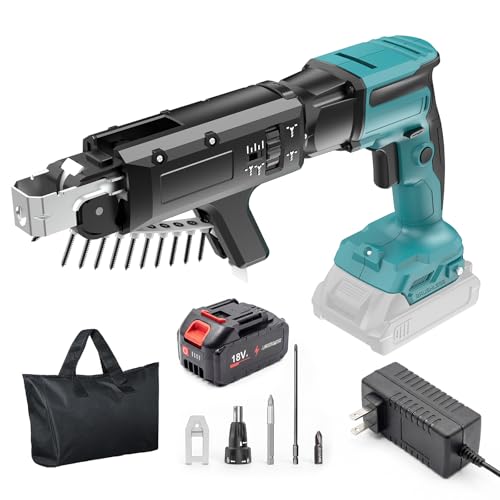 Funnywhale iScrewgun1017Best overall
 Senco 10F0001NBest corded auto-feed
 Senco 10C0002NBest cordless Senco
Why drywall screws usually skip the pilot hole
Drywall screws are built for speed. The sharp point starts the hole by itself, and the thread pulls the board tight against the framing. The head is shaped like a bugle so it can sink into the paper face without cutting it. That design is the reason most hangers drive screws straight in with no drilling first.
Pre-drilling the drywall itself adds almost nothing. Gypsum is soft, so the screw passes through the board with little resistance. The part that does the real holding is the framing behind it, and in most homes that framing is softwood or thin steel. Both accept a drywall screw without help.
If a screw is hard to start, the cause is usually the wrong screw type, a dull bit or a framing member harder than expected. A pilot hole is one fix, but check those other causes first.
When a pilot hole does help
There are a few real exceptions. In these cases, a small pilot hole through the stud saves frustration and prevents damage.
Always size a pilot hole smaller than the screw's thread so the threads still grip. A bit that matches the narrow core of the screw is the usual starting point.
- Hardwood or very dense lumber studs, where the screw can stall or snap.
- Screws placed very close to the end or edge of a board, where wood tends to split.
- Old, dry framing that has become brittle.
- Thick or heavy-gauge steel framing, where a drywall screw may not start. Self-drilling screws made for steel are often the better answer here.
- Fastening drywall to trim, furring or other thin pieces that can crack.
Quick guide by situation
This table sums up the common cases. Treat it as a starting point and adjust to the material in front of you.
| Situation | Pre-drill? | Notes |
|---|---|---|
| Drywall to softwood studs | No | Drive straight in with the right screw length. |
| Drywall to light-gauge steel studs | No | Use screws made for metal framing. |
| Drywall to hardwood framing | Yes | Drill a pilot hole smaller than the thread. |
| Screws near a board end or edge | Often | A pilot hole helps prevent splitting. |
| Heavy-gauge steel | Usually | Consider self-drilling screws instead. |
| Hanging items on drywall alone | Depends | Follow the anchor's instructions. |
Setting the screw without tearing the paper
For drywall work, the bigger question is not whether to pre-drill. It is how deep to drive. A screw should sit just below the paper face without breaking through the paper. If the paper tears, the screw loses holding strength and you need extra joint compound to cover the damage.
A clutch or depth setting does most of the work here. Our best screw gun for drywall page lists depth-sensitive noses, tool-free adjustments and depth locks, because depth control matters more than raw speed on a full room of board.
If you drive screws by hand with a standard drill, practice on a scrap piece first. Stop as soon as the head dimples the paper. If you overdrive one, back it out and place a new screw nearby instead of leaving a weak one in place.
What about anchors in drywall alone?
If you are hanging a shelf or a mirror where there is no stud, pre-drilling depends on the anchor. Plastic expansion anchors and toggle bolts need a hole sized to the anchor, so follow the package directions. Some self-drilling anchors have a sharp tip and thread that cut their own way in, and these do not need a hole.
Whatever you choose, check the weight rating on the anchor package and stay under it. For anything heavy, find a stud instead. Drywall by itself holds very little weight over time.
Choosing between a drill and a screw gun
A standard drill with a Phillips bit can drive drywall screws, and it is the right tool when you also need to drill pilot holes, mix materials or work on small repairs. Our best drill page is a good place to compare options if you want one tool for many jobs.
For hanging a whole room, a dedicated screw gun makes more sense. On our drywall screw gun page, the guns range from 4.41 lb to 7 lb, which matters when you hold them overhead for long stretches. The page also lists auto-feed models that load collated screw strips for you, which keeps your pace steady on long runs.
Whichever tool you use, a sharp, properly seated bit helps. A worn bit slips, chews up the screw head and raises the chance of tearing the paper.
Safety notes before you start
Drywall work looks simple, but a few habits keep it safe. Take these steps before you drive the first screw.
- Wear safety glasses. Screws can snap, and bits can slip or throw debris.
- Wear a dust mask or respirator when you cut or sand drywall, since the dust is fine and irritating to breathe.
- Use hearing protection for long sessions with corded or high-speed tools.
- Check for wiring and pipes before driving screws into a wall you did not frame. Turn off power to nearby circuits if you are unsure.
- Use a stable ladder or scaffold for ceilings and high walls, and never overreach.
- Wear gloves around metal studs, since their edges can be sharp.
Frequently asked questions
What size pilot hole should I drill if I need one?
Choose a bit slightly narrower than the screw's thread, close to the size of the screw's inner shaft. That leaves enough wood for the threads to grip while still relieving pressure that could split the framing.
Why do my drywall screws keep breaking?
Common causes are driving too fast into dense wood, using a worn bit that slips, or overdriving after the head is seated. Slow down, use a fresh bit and consider a small pilot hole in hard framing.
Should I fix a screw that tore the paper?
Yes. Back it out and drive a new screw about an inch away, then cover the damaged spot with joint compound. A screw that broke through the paper holds poorly.
Do ceiling screws need different treatment than wall screws?
The pilot hole rules are the same. Ceilings call for more care with screw spacing and depth, since the board's weight pulls on every fastener. Work from a stable platform and keep your tool light.