Can You Hand Plane Plywood, MDF, or Epoxy?
Yes, you can hand plane all three, but each one is harder on the tool than solid wood. Plywood and MDF contain glue that dulls steel quickly, and cured epoxy is hard and brittle. Use a sharp blade, take light cuts, plane edges rather than faces, and wear a respirator and eye protection.
 Jorgensen 70700Best overall
 Jorgensen PJ-70710Adjustable mouth block plane
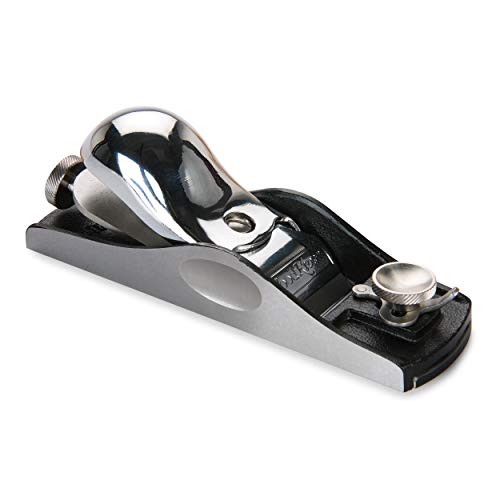 WOODRIVER 151125WWOODRIVER 151125W
The quick verdict for each material
None of these materials is off limits, but none behaves like a clean board of pine or maple. The glue in plywood and MDF, and the hardness of cured epoxy, wear an edge faster than wood fibers do. Expect to stop and sharpen more often.
The table below sums up what to expect before we go into detail.
| Material | Hand planing works? | Main problem | Best use of a plane |
|---|---|---|---|
| Plywood | Yes, mostly on edges | Glue layers dull the blade, thin face veneer can tear or be planed through | Trimming edges flush, fitting panels |
| MDF | Yes, with a sacrificial blade or frequent sharpening | Abrasive glue and resin, very fine dust, edges can crumble | Small edge cleanup, light chamfers |
| Cured epoxy | Yes, once fully hard | Brittle chipping, gumming if not cured, hazardous dust | Leveling small drips and high spots |
Planing plywood
Plywood is made of thin layers with the grain running in alternating directions. A plane has to cut across several grain directions in one pass, so the blade meets resistance and the edge dulls sooner than it would on solid wood.
The edge is where a plane makes the most sense. Plane from the corners toward the middle so you do not blow out the outer veneer at the end of the stroke. Take thin shavings, and keep the blade sharp enough that it slices instead of tearing.
The faces are riskier. The top veneer is very thin, and a plane can cut through it or lift it in patches. If you need to level a face, a scraper or sanding block is a safer choice than a plane.
A low angle block plane works well on plywood edges because the shallow cutting angle shears the fibers more gently. Skewing the plane a little as you push also helps the cut.
Planing MDF
MDF has no grain, so you will not get the tear-out you see in wood. The catch is what holds it together. The wax, resin and glue binding the fibers are abrasive, and they take the edge off a steel blade fast.
Because of that, many woodworkers keep one older blade for MDF and save their best blade for wood. Honing more often is a simpler option if you only have one.
MDF edges are softer than the faces and can crumble if you push too hard or plane against an unsupported corner. Clamp the board, support the far end, and use light passes.
The bigger issue is dust. MDF dust is extremely fine and stays in the air. Planing makes shavings rather than powder, which is better than sanding, but you will still make some dust when you sharpen or clean up the edge. Work outdoors or with good ventilation, and wear a respirator rated for fine dust.
Planing epoxy
Epoxy planes well only when it is fully cured. If it feels waxy, tacky or soft, the blade will smear and gum up instead of cutting. Check the cure time on your product and give it extra time in a cool room.
Once cured, epoxy is hard and somewhat brittle. A plane can shave down drips, edges and high spots, but it may chip near thin edges or where the epoxy meets wood. Take very fine shavings and work with the cut moving toward solid material, not off a thin lip.
Epoxy that is cast into a wood project, like a river table, is usually better leveled with a router sled or sander and then finished with a plane only on the wood portions. Hard epoxy dulls an edge quickly, so use a blade you are willing to resharpen afterward.
Cured epoxy dust and shavings can irritate skin and airways, and some people become sensitized to epoxy over time. Wear gloves, a respirator, and eye protection, and sweep up the shavings instead of blowing them around.
How to set up your plane for these materials
The same habits help with all three materials. Follow these steps for the cleanest result.
- Sharpen the blade just before you start, and expect to touch it up partway through.
- Set the blade for a very fine cut. You can always take a second pass.
- Clamp the work firmly so it cannot shift or vibrate.
- Plane edges and end grain first. Avoid faces unless you have no other option.
- Start from the corners and work inward to avoid chipping the far edge.
- Skew the plane slightly to get a slicing cut.
- Stop when the blade starts leaving marks or scratches, then resharpen.
Which plane suits the job
For edge work on these materials, a block plane is the natural pick. Our best hand plane comparison lists the options by length, weight, blade steel and adjustment features, so you can match one to your work.
The Jorgensen No.101 Mini Block Plane (70700) is the shortest plane on that page at 3.54 in and weighs 0.55 lb. It has an O1 tool steel blade and a 20° bed, giving a 45° effective angle. That makes it easy to hold for trimming a small edge, though it has no adjustable mouth.
The Jorgensen No.60-1/2 Low Angle Block Plane (PJ-70710) is longer at 6.25 in and weighs 1.48 lb. It combines an O1 tool steel blade with an adjustable mouth, which lets you narrow the opening for thin shavings. A tight mouth helps support the fibers near the cut, which is useful on plywood edges.
If you need to flatten a larger panel edge, the Amazon Basics No. 4 Adjustable Bench Plane has a 2 in blade, an adjustable mouth and a 9.8 in cast iron body. The extra length helps keep a long edge straight. You can see the full specs side by side on our hand plane comparison.
Safety notes
Hand planes are simple tools, but these materials add a few extra risks. Keep these points in mind.
- Wear safety glasses. Chips from brittle epoxy and splinters from plywood edges can fly.
- Wear a properly fitted respirator when planing MDF or epoxy and when cleaning up the dust.
- Use gloves with epoxy, and wash your hands afterward.
- Keep your free hand behind the blade, and never reach across the sole while cutting.
- Clamp work down so it cannot slip into your hand.
- Handle sharp blades carefully when you remove them for honing.
When to use another tool instead
A plane is not always the best answer. For large plywood or MDF faces, a sanding block, scraper or router bit usually gives a flatter, cleaner surface with less wear on your plane blade. For big areas of epoxy, sanding is often more practical.
Use the plane for small, controlled jobs: shaving an edge to fit, easing a corner, or knocking down a ridge. That is where hand planing these materials makes sense.
Frequently asked questions
Will planing MDF ruin my blade?
It will not ruin it, but it dulls the edge faster than wood does. You can restore the edge by sharpening, or keep a spare blade for MDF.
Can I plane plywood with a bench plane?
Yes, on the edges. Set a very fine cut and keep the blade sharp. Avoid planing the faces, since the surface veneer is thin.
How long should epoxy cure before planing?
Follow the cure time on the product label, and wait longer if the room is cold. If the surface is still tacky or soft, it is not ready.
Is a low angle plane better for these materials?
It often helps on plywood edges because it shears fibers gently. It does not stop abrasive glue from dulling the blade, so keep sharpening.
Should I use a power sander instead?
For large faces, usually yes. A plane is better for small edge and corner work where you want control.