Are Knobs or Pulls Better for Kitchen Cabinets?
Neither is better everywhere. Pulls usually work best on drawers and large doors because two mounting points and a bar give you a stronger grip, while knobs suit small doors and a lighter look. Many kitchens mix both, with pulls on drawers and knobs on doors, as long as the hole layout on your cabinets allows it.
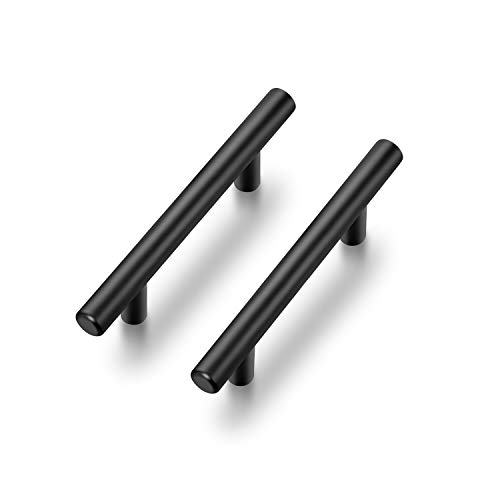 Ravinte Best overall
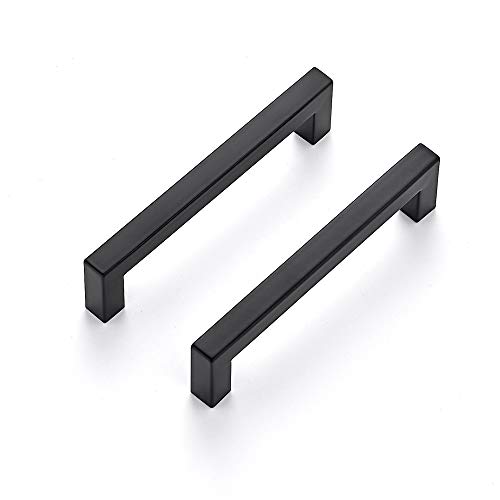 Ravinte JFX5HS30Deepest projection listed
 JOY DECOR JDKXYN1BSSingle-hole white knobs
The short comparison
Pulls and knobs do the same job, but they feel and install differently. A pull is a bar you grip with your fingers. A knob is a small piece you pinch or cup. In everyday talk, "handle" usually means a pull, so "cabinet pulls vs handles" is mostly a naming question rather than a different product.
Here is how they compare on the points that matter most in a kitchen.
| Point | Knobs | Pulls |
|---|---|---|
| Mounting | One screw hole | Two screw holes |
| Grip | Pinch or cup with fingers | Wrap fingers around a bar |
| Best on | Small doors, upper cabinets | Drawers, wide doors, pantry doors |
| Look | Small and traditional | Linear and modern, or classic bars |
| Hole spacing to match | None | Center-to-center must match exactly |
| Swap difficulty | Needs drilling or filling to become a pull | Needs drilling or filling to become a knob |
When knobs are the better choice
Knobs work well on small, light doors where one point of contact is enough. They take up little space, so they suit narrow door frames and detailed door styles where a long bar would crowd the design.
Their size is the tradeoff. A knob gives you less to hold, and on a heavy drawer full of pots, a pinch grip can feel awkward. People with sore hands or arthritis often find a bar easier to use, though comfort is personal and worth thinking about before you buy.
For a sense of scale, the JOY DECOR white round knobs on our best cabinet pulls page list a diameter of about 1.18 in and a height of 7/8 in. That is a compact target for your fingers, and it comes in a pack of 18 with two screw lengths included.
When pulls are the better choice
Pulls make sense on drawers, wide doors and anything heavy. The bar spreads the force across your fingers, and two screws hold it more firmly than one. A drawer pull also stays centered and square on a wide drawer front, where a lone knob can look lost.
Size and projection change how a pull feels. Projection is how far it sits off the door. Among the models that list it on our best cabinet pulls page, projection runs from 1 in to 1.4 in. The Ravinte square bar pulls list 1.4 in, which leaves more room for your fingers, while a slimmer pull sits closer to the door.
Length matters too. The Ravinte matte black T-bars are listed at 5 in overall with 3 in hole spacing. The Amerdeco matte black pulls list 6.4 in overall with 5 in spacing, so they cover more of the drawer front.
Mixing knobs and pulls
Many kitchens use both. A common pattern is knobs on doors and pulls on drawers, because drawers carry weight and doors are lighter. Another is pulls on lower cabinets, where you reach down and pull, and knobs above eye level. These are style habits, not rules, so choose what feels right when you open each one.
Keep the finish identical across both types so the set still looks like one kitchen. A matte black knob next to a satin nickel pull tends to look like a mistake rather than a choice.
- Use the same finish on every piece, even when the shapes differ.
- Keep one style family, such as round knobs with round-bar pulls.
- Place hardware at consistent heights from door to door and drawer to drawer.
- Do not mix more than two shapes, or the layout gets busy.
Check your holes before you shop
The most practical limit is what you already have. If your cabinets are drilled for two-hole pulls, you can replace them with pulls of the same spacing without touching the doors. Going to knobs means filling one hole and living with a visible patch or a fresh paint job. Going from knobs to pulls means drilling new holes, which is harder to undo.
Measure from the center of one screw hole to the center of the other, not edge to edge. Our best cabinet pulls page lists common spacing of 3 in and 5 in. A pull with the wrong spacing will not mount.
- Measure center-to-center on an existing pull and write the number down.
- Confirm the hardware type in the spec sheet: pull or knob.
- Check screw length against your door and drawer thickness. Some sets, like the homdiy pulls, include 1 in and 1.57 in screws.
- Count your openings, then compare to pack size. Packs on our page range from 10 to 30 pieces.
- Order one extra if you can, since a damaged piece is hard to match later.
Finish and color choices
Once you pick the shape, finish is the next decision. Kitchens bring moisture and daily handling, so check the material and read any durability line as a maker statement. None of the products on our page list a finish durability rating. Materials include stainless steel in most of the lineup and zinc alloy in the Ravinte champagne bronze T-bars.
Color should work with your cabinet paint and your appliances. Matte black and nickel are both listed in several packs on our page. If your cabinets are white, our best hardware for white kitchen cabinets page narrows the choices by color and style. If you are repainting too, our best paint for kitchen cabinets guide covers that step, and it is easiest to paint before you install new hardware.
Installing safely
Swapping hardware is a simple job, but a few precautions help. Use a drill only on solid, dry cabinets, and wear safety glasses when drilling or driving screws because wood chips and metal shavings can fly. If you are drilling new holes, use a template and mark with tape so you do not drill through the front of the door.
If you use a corded drill near a sink, keep the cord away from water and wiring. Turn off power to any under-cabinet lighting or outlets in the area before you work close to them. Use a stable step stool for upper cabinets, not a chair or a box.
Frequently asked questions
Are pulls easier to use than knobs?
For most people, yes on drawers and heavy doors, since a bar lets you use more fingers. Knobs are fine on light doors.
Can I put knobs on drawers?
You can, and many kitchens do. On wide or heavy drawers, a pull or two knobs often feels steadier than a single knob.
Can I replace knobs with pulls without drilling?
No. A pull needs two holes at a set spacing, so you would need to drill the door or drawer front.
Do knobs and pulls need to match?
They should share a finish and a style family. The shapes themselves can differ.