#1
Liouhoum 936HLiouhoum 80W LCD Digital Soldering Iron Kit
80 W ceramic iron with PID control, auto sleep and a 2-year warranty.
- Power
- 80 W
- Max temperature
- 480 °C
- Heat-up time
- 30 s
The best soldering iron for most people heats fast, holds its set temperature, and fits both hobby and general electronics work. Power in watts shows how much heat the iron can supply. Heat-up time shows how long you wait. Temperature range decides which solders and jobs it can handle. Digital control and auto sleep add steadiness and safety. Form matters too: a corded pen is light and portable, while a station keeps the iron and controls in one place. We put 33 products on one spec sheet so you can compare them.
Quick answer
Ranked from 33 soldering irons that met our standard, compared on temperature control type, power (W), heat-up time (s).
As an Amazon Associate I earn from qualifying purchases. Links to retailers on this site are affiliate links; we may earn a commission at no extra cost to you.
80 W ceramic iron with PID control, auto sleep and a 2-year warranty.

Lists 5 tips, a stand, sponge, solder wire and flux paste with an 80 W iron.

Ranked #3 with a Best Score of 57.
| Spec | ||||||||||
|---|---|---|---|---|---|---|---|---|---|---|
| Best Scoreout of 100 | 61 | 64 | 57 | 53 | 54 | 53 | 54 | 49 | 47 | 44 |
| PowerW | 80 W | 80 W | 60 W | 200 W (best in row) | 100 W | 70 W | 70 W | 100 W | 60 W | 130 W |
| Temperature range°C | 180–480 | 180–480 | 200–450 | 100–450 | 180–500 | 100–450 | — | 180–480 | 90–480 | 200–480 |
| Max temperature°C | 480 °C | 480 °C | 450 °C | 450 °C | 500 °C (best in row) | 450 °C | — | 480 °C | 480 °C | 480 °C |
| Heat-up times | 30 s | 20 s | 15 s | 1 s (best in row) | 15 s | 28 s | 15 s | — | — | — |
| Type | Corded pen | Corded pen | Corded pen | Soldering station (best in row) | Corded pen | Soldering station (best in row) | Soldering station (best in row) | Soldering station (best in row) | Soldering station (best in row) | Soldering station (best in row) |
| Digital temperature display | Yes | Yes | — | Yes | Yes | Yes | Yes | Yes | Yes | Yes |
| Temperature control | Digital/PID | Digital/PID | — | — | — | Digital/PID | Digital/PID | — | Digital/PID | Digital/PID |
| Auto sleep/standby | Yes | — | — | Yes | — | Yes | Yes | Yes | Yes | Yes |
| Tips includedpcs | — | 5 pcs | 5 pcs | 9 pcs (best in row) | — | 1 pcs | 3 pcs | 5 pcs | 6 pcs | 5 pcs |
| Heating element | Ceramic | Ceramic | Ceramic | — | Ceramic | — | — | — | — | — |
| ESD safe | — | — | — | — | — | Yes | — | — | — | — |
| Weightlb | 0.28 lb | — | 0.11 lb (best in row) | — | 0.61 lb | 3.09 lb | — | 1.90 lb | 1.96 lb | 1.98 lb |
| Warrantyyr | 2 years (best in row) | — | — | — | — | — | — | — | 1 year | 1 year |
We reviewed 43 soldering irons and kept only the 33 that pass every check below. Those are ranked by a Best Score built from spec fit for this job, warranty, sales rank.
These reviews are based on specifications and listing information. Each one explains what the specs mean for hobby and general electronics soldering.
Liouhoum 936H leads our ranking for all-around use
The Liouhoum 936H leads our ranking. It has an 80 W ceramic heater and heats up in 30 seconds. Ceramic elements warm quickly, which helps when you switch between small joints and larger pads. The temperature range runs from 180 to 480 °C, which suits both hobby and general electronics work.
Control is its strongest point. It uses digital PID control with an LCD, so you can read and set the temperature. Auto sleep lowers the heat when the iron rests on its stand. It also remembers your last temperature setting. The maker lists a 2-year warranty, the longest among the models that list one.
At 0.28 lb it is a light corded pen, easy to carry and store. The heat-resistant handle helps keep your grip cool. The maker does not publish a tip count, so check the box contents before you buy. It suits circuit boards, home DIY and appliance repair.
VerdictA balanced pen iron with digital control, auto sleep and a long warranty that earns the top spot.
Q-MING 80W heats in 20 seconds with 5 tips
The Q-MING 80W-BLUE ranks second. It matches the Liouhoum on power at 80 W and on temperature range at 180 to 480 °C. It heats up in 20 seconds, which is faster than the Liouhoum at 30 seconds. Digital PID control and an LCD let you set and read the temperature.
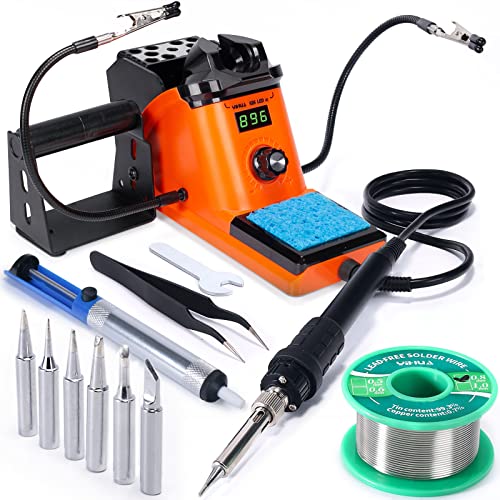
This is a kit, and the extras matter for a first iron. It lists 5 tips, plus a simple stand, sponge, solder wire and flux paste. That is enough to start soldering without extra shopping. The listing also mentions four ventilation holes and an anti-scalding handle, which help keep the handle cooler on longer repairs.
The maker does not publish weight, auto sleep or a warranty for this model. That leaves a few gaps next to the Liouhoum. The maker also does not list ESD safety, which matters for sensitive boards. It is still a sound pen iron for beginners, circuit boards, appliance repair and general DIY.
VerdictA fast-heating, well-equipped starter kit that gives up only the extras the maker leaves unlisted.
Q-MING 60W is the lightest iron at 0.11 lb
Weight is where this model stands out. A light pen is easier on your hand during long sessions. It also heats up in 15 seconds with a ceramic core, so waiting time stays short.
The 60 W rating is the lowest of our five reviewed models, so larger joints may call for a stronger iron. The range is 200 to 450 °C. Those limits fit small electronics and hobby repairs. The maker lists no auto sleep.
The kit lists 5 tips, a simple stand, a sponge, 0.6mm solder wire and flux paste. It also has an on/off switch, which helps save energy. As a corded pen, it needs no base unit, so it takes little bench space. The maker does not list a digital display or a warranty.
VerdictA very light, quick-heating starter kit that suits small electronics rather than heavy work.
FNIRSI DWS-200 is a 200 W station for finer work
The FNIRSI DWS-200 is a soldering station, not a simple pen iron. The listing gives a heat-up time of 1 second, the lowest listed. That suits users who solder often and want little wait between joints.
It comes with two handles, the F210 for precision work and the F245 for SMDs and high-power jobs, plus 9 tips in total. That is the most tips included among the models that list it. A 2.8 in screen shows temperature as a value, a curve or both, and it stores 3 preset temperatures.
Temperature runs from 100 to 450 °C, and auto standby starts when you set the iron in its stand. The maker does not publish weight or a warranty. The 450 °C ceiling is lower than the 480 and 500 °C of some picks here, though it starts lower at 100 °C.
VerdictA powerful station for frequent or precision work that is more than a casual hobbyist needs.
Q-MING SIK100 reaches 500 °C in a corded pen
Its range starts at 180 °C. More headroom helps with larger joints. With 100 W and a ceramic core, it heats up in 15 seconds, so you spend little time waiting between joints.
It has an LED temperature display, a °C and °F switch and a password lock to keep children and pets from using it by accident. Four ventilation holes and a steel tube design help the handle stay cooler. At 0.61 lb it is heavier than the other pen irons that list weight.
The listing does not state a temperature control type, tip count, auto sleep or warranty. That makes it harder to judge steadiness than the PID-listed Liouhoum and Q-MING 80W. It fits PCB work, phone repair and home appliances, and the listing frames it for beginners and welders alike. Check the box contents first.
VerdictA hot, fast pen iron with a child lock, held back by gaps in the published specs.
Best among the reviewed tools
Power in watts shows how much heat an iron can supply. A 60 W iron suits small electronics. Larger pads and thick wires call for more, such as 80 W or 100 W. Stations like the 200 W FNIRSI go higher for frequent heavy work.
A set temperature that stays put gives cleaner joints. Digital PID control, listed on the Liouhoum and Q-MING 80W-BLUE, adjusts heat to hold your setting. An LCD or LED display lets you read it. Without a listed control type, you cannot confirm how steady an iron will be.
Heat-up times in the data range from 1 second to 110 seconds among the models that list them. Faster means less waiting between joints. Auto sleep lowers heat when the iron sits on its stand, which extends element life and saves energy.
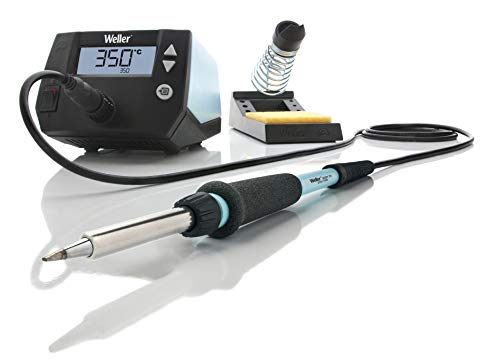
A corded pen is light and easy to store. The Q-MING 60W weighs 0.11 lb. A station keeps the iron, controls and stand together, but it takes bench space. The Weller WE1010NA weighs 3.09 lb. Pick the format that fits your desk.
For small electronics work, the 60 W Q-MING and the 80 W Liouhoum cover the basics. Choose 100 W or more, such as the Q-MING SIK100 or the 200 W FNIRSI, if you solder larger joints often or want more reserve.
Set it by your solder and the job. Listings here give ranges such as 180 to 480 °C, and the Q-MING SIK100 goes to 500 °C. Check your solder's data sheet for its recommended temperature, then use the lowest setting that makes a good joint.
A station adds a base unit with controls and often a stand, which suits frequent work at a bench. A pen iron is lighter and easier to carry. Weight shows the gap: 0.28 lb for the Liouhoum pen and 3.09 lb for the Weller WE1010NA station.
It is not required, but it helps. Auto sleep lowers the heat when the iron sits unused, which the Liouhoum listing says extends heating core life. It also cuts the chance of leaving a hot tip unattended. The Q-MING 80W-BLUE and 60W do not list it.
Your own selection is kept in the link, so friends see the same side-by-side.