Wood Chipper vs Shredder: What Is the Difference?
A wood chipper uses sharp blades to slice woody branches into uniform chips, while a shredder uses flails or hammers to tear soft material like leaves, stalks and small prunings. Pick a chipper if you cut limbs and need to reduce them fast. Pick a shredder if most of your waste is leafy and green. Many home machines combine both with two separate chutes.
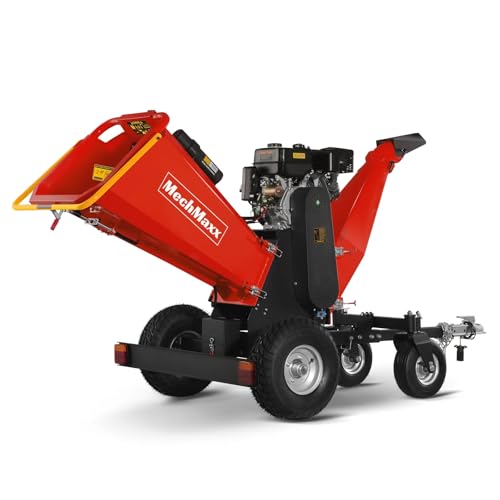 MechMaxx B150Best overall
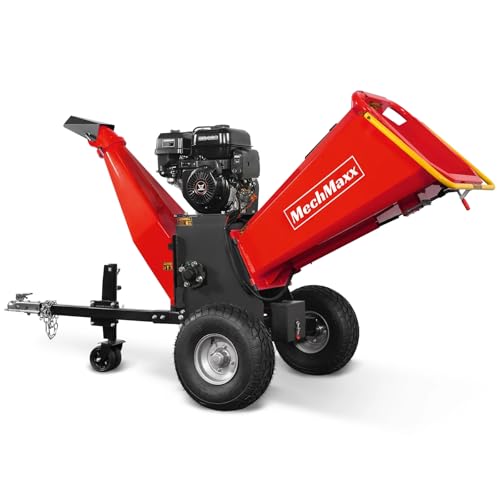 MechMaxx P4206Published 20:1 ratio at 6 in
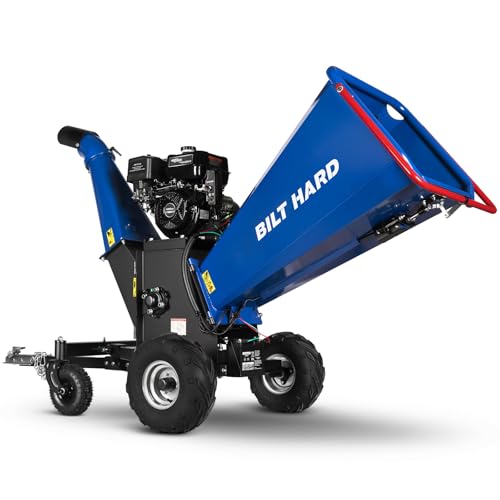 BILT HARD TL-TRA-0423-N2-0709Towable with 2-in hitch
The core difference: cutting vs tearing
A chipper works like a very strong knife. Branches are pulled into a spinning disc or drum with blades, and the wood is sliced into chips of fairly even size. This design is made for solid, woody stems.
A shredder works more like a blender. Swinging flails or hammers beat the material and tear it into ragged pieces. That suits leaves, garden trimmings and thin stems, which tend to wrap around blades instead of being cut cleanly.
The result differs too. Chips are blocky and good for paths and play areas, or as a layer on garden beds. Shredded material is finer and softer, so it breaks down faster in a compost pile.
Chipper, shredder and chipper-shredder compared
Some machines do both jobs. A chipper-shredder usually has two openings: a narrow chute for branches that get chipped, and a wider hopper for leafy waste that gets shredded. Our best wood chipper page lists one electric model with a dual chute that has separate openings for small and larger branches up to 1.8 in.
Here is how the three types line up.
| Type | How it reduces material | Best for | Weak spot |
|---|---|---|---|
| Chipper | Blades slice wood | Branches and limbs | Leaves and wet green waste can clog the chute |
| Shredder | Flails or hammers tear material | Leaves, stalks, soft prunings | Thick, hard wood |
| Chipper-shredder | Blades for one chute, flails for the other | Mixed yard waste | Handles each job less aggressively than a dedicated machine |
Mulcher, forestry mulcher, stump grinder and hammer mill
These terms get mixed up with chippers, but they are different machines.
A garden mulcher is usually just a shredder or leaf mulcher. It chops leaves and soft waste into small pieces to spread on beds. When people compare a chipper with a mulcher, they usually mean this type.
A forestry mulcher is a different class. It is a heavy attachment for a tractor or tracked carrier with a spinning drum and teeth. It grinds brush and small trees where they stand, so you do not cut and feed anything by hand.
A stump grinder does one task: it removes a stump. A spinning wheel with cutting teeth grinds the wood below ground level. It does not accept branches, and a chipper cannot grind a stump.
A hammer mill uses fast-swinging hammers to pulverize material against a screen. It is common in farm and industrial work for grain, feed and bulk waste. It makes a fine, crushed product rather than chips, and it is usually too large and loud for a home yard.
- Chipper: branches into chips
- Shredder or garden mulcher: leaves and soft waste into fine pieces
- Forestry mulcher: standing brush and small trees ground in place
- Stump grinder: stumps ground below the surface
- Hammer mill: bulk material crushed to a fine product
How to choose for your yard
Start with what you actually have to deal with. Look at the material you handle in a typical season, not the one big job you might do once.
Then work through these questions:
- Mostly branches and limbs: choose a chipper and match its branch rating to your thickest cuts.
- Mostly leaves, garden waste and thin stems: a shredder will clog less and finish the job faster.
- A mix of both: consider a chipper-shredder with separate chutes.
- A stump to remove: hire or rent a stump grinder, since a chipper cannot do the work.
- Acres of overgrown brush: a forestry mulcher is the right class of equipment, and it is usually a job for a professional crew.
Match capacity and power to the job
If a chipper is the right fit, branch capacity is the first number to check. In the data on our wood chipper comparison, the maximum branch diameter runs from 1.8 in on electric models to 6 in on the largest gas ones. The listed gas engines range from 209cc to 420cc.
Makers often rate capacity on soft wood. One 6 in model's listing says dry hardwood will give results below the advertised size, so leave some margin if you cut dense limbs.
Electric chippers suit a small yard near an outlet. The electric model listed above uses a 15A motor at 4000 RPM and a 21:1 reduction ratio. Its maker advises against feeding it leaves, old roots, bamboo, dry hay or straw, or frozen branches. That is a good reminder that even a combined machine has limits, and a true shredder is the better tool for leafy waste.
For thick limbs or land without power, gas models make more sense. They also weigh far more. Listed weights run from 22.7 lb to 441 lb, so check for towable wheels and a hitch before you commit.
Safety notes for any of these machines
Chippers and shredders pull material in fast, and they can injure you in seconds. Treat them with the same respect as any power tool.
Wear safety glasses or a face shield, hearing protection, close-fitting clothes, gloves without loose cuffs, and sturdy boots. Never reach into a chute, and use a stick, not your hand, to push in short pieces.
Stop the machine and disconnect power before you clear a jam or open a chute. Look for a safety shutoff or interlock and an emergency stop. Several models in our data list a shutoff that stops the machine when a chute opens.
Run gas models outdoors only, in open air, because engine exhaust contains carbon monoxide. Refuel only when the engine is off and cool. Keep electric cords and connections dry, and use an outdoor-rated extension cord.
Keep children and pets well away, and do not feed in rocks, metal, or wood with nails or wire.
Frequently asked questions
Can I use a chipper to shred leaves?
Usually not well. Leaves and wet green waste can clog a chipper chute and wrap around the blades. Use a shredder or a chipper-shredder with a separate hopper instead.
Does a chipper remove tree stumps?
No. A chipper only handles branches and limbs that fit through the chute. A stump needs a stump grinder or manual removal.
Is a mulcher the same as a shredder?
In a garden setting, often yes. A leaf mulcher or garden mulcher is a type of shredder. A forestry mulcher is a very different, much larger machine for clearing brush.
What can I do with the chips?
Chips work as a layer on garden beds or paths, and many people add them to compost in small amounts. Shredded leaves break down faster in a compost pile.
Is a hammer mill a good choice for home use?
Rarely. Hammer mills are built for farm and industrial work, and they are typically larger, louder and more than a home yard needs.