Will Any Code Reader Work for Any Car?
No, not for every car, but most readers work on most modern ones. Any OBD2 reader should read engine codes on gas cars and light trucks built for the US market from 1996 on. Older cars, diesels, and many brand-specific systems like ABS, airbags and transmissions need a tool that lists them.
 BlueDriver LSB2Best overall
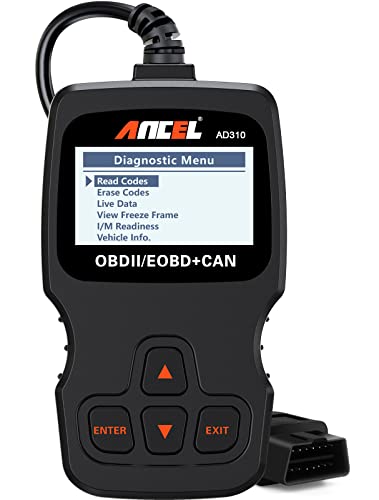 ANCEL AD310Best simple reader
 thinkcar 673BTBest bidirectional
Why most readers fit most newer cars
Since 1996, cars sold in the US have been required to carry a standard OBD2 port, usually under the dashboard on the driver's side. The port, the plug shape and the basic emissions codes follow a common standard. That is why a simple reader can plug into a wide range of vehicles and show you why the check engine light is on.
The listings for the products on our spec sheet follow this pattern. The BlueDriver Pro says it is compatible with all gas-powered vehicles made in 1996 or newer that were sold in North America. The THINKCAR 673BT says it works on vehicles from 1996 and up with an OBDII interface, across 96+ brands and 10,000+ models.
So the plug is rarely the problem. The real question is what the reader can see once it is connected.
Where compatibility runs out
Some vehicles sit outside the standard, and a reader cannot fix that. Check these cases before you buy:
- Cars built before 1996 often use an older OBD1 connector. The ANCEL AD310 listing says it supports only the OBDII interface, and that an OBDI car cannot be diagnosed even with an OBDII adapter.
- Diesels and some imports may follow different rules or protocols. The BlueDriver listing specifically mentions gas-powered vehicles, so read the fine print if you drive a diesel.
- Cars sold outside North America can differ. Check the tool's stated market coverage.
- Hybrids, electric vehicles and heavy trucks may not report in the way a basic engine reader expects. Look for the exact model on the maker's compatibility list.
- Protocol support matters. The AD310 listing names CAN, KWP2000, J1850 VPW, J1850 PWM and ISO9141 as supported, which is the kind of detail worth looking for.
Plugging in is not the same as seeing everything
Even on a fully compatible car, readers differ in which systems they can talk to. A basic reader covers the engine and emissions. A better one adds ABS, airbag (SRS) and transmission codes. A full-system tool goes further, with body, tire pressure and battery systems.
This is the most common reason a reader seems not to work. It connects, reads the engine fine, then shows nothing for a brake or airbag warning light. The tool is not broken. It just does not cover that module.
Our best code reader for cars page lays these tiers out side by side. The table below shows how three products from that page differ, using their listed specs.
| Tool | Systems covered | Connection | ABS/SRS | Transmission |
|---|---|---|---|---|
| ANCEL AD310 | Engine only | Wired | No | No |
| BlueDriver Pro | Engine + ABS/SRS + Transmission | Bluetooth | Yes | Yes |
| THINKCAR 673BT | Full system | Bluetooth | Yes | Yes |
Brand coverage and extra features
Beyond the basics, some features depend on the make. Enhanced codes for ABS, airbags and transmissions are often written by each carmaker, so a tool may cover one brand deeply and another only partly.
The BlueDriver listing names strong support for GM, Ford, Stellantis (RAM, Jeep, Chrysler), Toyota, Honda, Nissan, Mazda, Subaru, Hyundai, Mercedes-Benz, BMW and VW. The THINKCAR listing notes that available reset and maintenance services vary by make and model, and suggests confirming compatibility with your VIN before you buy.
That is a good rule for any bidirectional tool. Features like oil resets, electronic parking brake resets or battery matching are not the same on every car. If one specific service is your reason for buying, check that service for your exact make, model and year.
How to check a reader before you buy
A few minutes of checking saves a return. Work through these steps:
- Confirm your car's model year and market. If it is 1996 or newer and US-market, you are likely fine for basic engine codes.
- Find the warning light you most want to understand. Engine light only? A basic reader is enough. ABS, airbag or transmission light? Look for those systems by name.
- Look for your make in the tool's compatibility list, or enter your VIN on the maker's page if it offers that.
- Check the connection type. Wired handhelds work on their own, while Bluetooth tools need a phone or tablet.
- Read the update policy. The THINKCAR 673BT lists lifetime free updates, which matters if you expect to own newer cars later.
- Look for smog-related features if you need them. Live data, freeze frame and I/M readiness are listed for all three tools in the table above.
Using a reader safely
A code reader is low risk, but a few habits keep you out of trouble. Never read data on a screen while driving. Use a passenger, or pull over in a safe spot. Park on level ground with the parking brake on before you turn the key.
Do not run an engine in a closed garage, because exhaust gas is dangerous. Keep hands, cables and loose clothing away from the belt and fan when the engine runs.
Be careful with bidirectional tests and resets. These send commands to the car, such as running a fuel pump or bleeding the brakes. Follow the service procedure for your vehicle, and have a pro handle airbag work. Also remember that clearing codes can reset readiness monitors, so do not clear codes right before a smog check.
Frequently asked questions
Can I use one reader on several cars in my household?
Usually yes, as long as every car is covered by the tool. Bluetooth dongles and handhelds both move easily between vehicles. Check each car's year, fuel type and the systems you want to read.
Why does my reader connect but show no codes?
There may be no stored codes. It could also mean the problem is in a system the tool does not cover, like ABS or airbags. A weak connection or a blown fuse for the port can also cause this.
Do I need a full-system scanner for a check engine light?
Not usually. An engine-only reader covers emissions and engine codes, which is what triggers most check engine lights. Choose a wider tool if you also want ABS, airbag or transmission codes.
Will a reader damage my car?
A reader that only reads codes is unlikely to cause harm. Be more careful with tools that clear codes, run tests or perform resets, and follow the correct procedure.