Will a Cooling System Pressure Test Show a Blown Head Gasket?
Sometimes. A cooling system pressure test can reveal a head gasket leak if the gasket leaks coolant outside the engine, or into a cylinder or the oil passages while the system is under pressure. It can also miss one, because some gaskets only leak when the engine is hot and running, so a passing test does not fully clear the gasket.
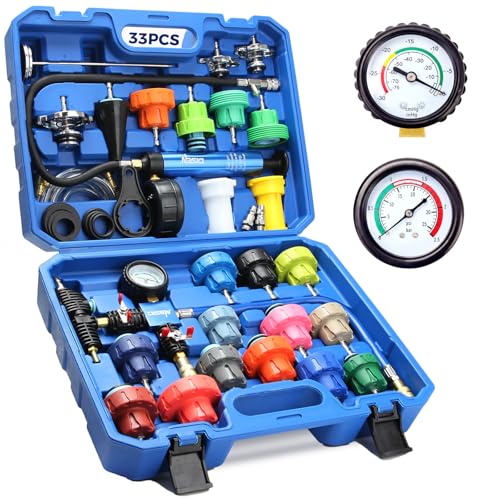 DISEN DS-33LQYZKJZTJBest overall
 Orion Motor Tech RCPDual-scale 35 psi gauge
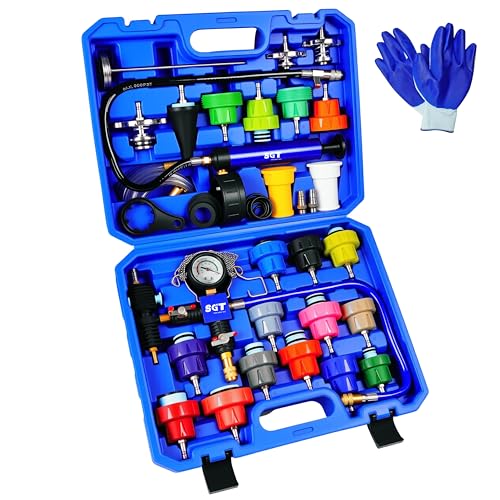 SGT SUPER GARAGE TOOLS SGT-Q295-BLUEListed pressure and vacuum ranges
What a pressure test can and cannot tell you
A cooling system pressure tester is a hand pump with a gauge. It attaches to the radiator or coolant reservoir neck and lets you load the system to a set pressure while the engine is off. If the system is sealed, the needle holds steady. If something leaks, the needle falls.
That makes it very good at one job: telling you that the system is losing pressure. It is less direct at telling you where. A head gasket is one of several places pressure can escape, along with hoses, the radiator, the heater core, the water pump, and the cap itself.
So the test is best seen as a strong clue, not a verdict. A falling needle with no visible drip means you have an internal leak or a hidden one, and the head gasket is a prime suspect. A steady needle makes a gasket leak less likely, but it does not rule one out.
When the test points to a head gasket
A head gasket sits between the engine block and cylinder head. It seals combustion pressure, coolant passages, and oil passages. When it fails, coolant can escape in a few different ways, and each one shows up differently on a pressure test.
Here are the patterns that most often point to the gasket:
- The gauge drops steadily, but you cannot find any drip, wet hose, or puddle under the car.
- Coolant seeps from the seam between the block and head. This is an external gasket leak and is the easiest to spot.
- With the spark plugs out, you see coolant, steam, or a wet plug hole after pressurizing. This suggests coolant is entering a cylinder.
- Pressurizing the system pushes coolant into the oil, which you may notice later as milky or light brown residue on the dipstick or under the oil fill cap.
| What you see | Likely meaning | Next step |
|---|---|---|
| Gauge holds steady | No leak at test pressure | Try a hot test or a combustion leak test |
| Gauge falls, drip visible | External leak such as a hose, radiator, or pump | Fix the visible leak first and retest |
| Gauge falls, no drip | Hidden or internal leak, possibly the gasket | Check plug holes, oil, and exhaust |
| Coolant at block and head seam | External head gasket leak | Plan a gasket repair after confirming |
Why a gasket can pass a cold test
Many gasket failures are not constant. A small breach may seal tightly when the engine is cold and the metal is at rest. Once the engine heats up and combustion pressure builds, the gap opens and coolant is pushed out, or exhaust gas is pushed into the coolant.
Combustion pressure is much higher than the pressure a hand pump puts on the cooling system. That is why a test with the engine off can miss a leak that shows up on the road, with bubbles in the coolant, overheating, or white exhaust smoke.
If you suspect a gasket and the cold test passes, repeat the test with the engine warm (but see the safety notes below), or follow up with a combustion leak test, which checks the coolant for exhaust gases. Using two methods together gives a much clearer picture than either one alone.
How to run a pressure test step by step
Always start with a cold engine. Then work through these steps in order:
- Check the coolant level and top it off if needed.
- Pick the adapter that fits your radiator or reservoir neck and seat it fully.
- Attach the pump and raise pressure slowly to the rating printed on your radiator cap or listed in your service manual. Do not go above it.
- Watch the gauge for several minutes. A steady needle means the system is sealed at that pressure.
- Look and listen for drips, hissing, or wet spots on hoses, the radiator, the water pump, and the engine seam.
- Release pressure slowly using the tester's valve before removing it.
Choosing a tester that can do the job
Kit choice matters more than it seems. If the adapter does not fit your neck, you cannot seal the system. If the gauge does not reach the test pressure your cap calls for, you cannot load the system enough to show a leak. Our best cooling system pressure tester page compares adapter counts, pressure limits, and extras side by side.
As an example, the DISEN 33-piece kit lists 23 adapters, vacuum refill, and a carrying case, and its listing names head gaskets among the parts you can check. The Orion Motor Tech 19-piece kit lists 15 adapters and a gauge that reads psi and bar up to 35 psi (2.5 bar). The SGT 33-piece kit lists 23 adapters with a 0 to 35 psi pressure range and a 0 to 30 inHg vacuum range.
A vacuum refill tool is a useful extra if you do end up repairing a leak. It pulls air out of the system before you add coolant, which helps prevent air pockets. If you want to see how kits stack up before you buy, our cooling system pressure tester comparison lists which ones include it.
Safety notes
A cooling system under pressure can cause serious burns. Never open a radiator cap or reservoir cap on a hot engine. Let the engine cool fully before attaching a tester, and release pressure slowly before you disconnect it.
Wear safety glasses and gloves. Coolant can spray when a connection lets go. Keep hands, clothing, and hair clear of the fan and belts, and disconnect the battery or keep the key out of the ignition if you are working near the fan.
Do not exceed the pressure rating on the cap. Too much pressure can split hoses or damage a radiator or heater core, which turns a diagnosis into a new repair. Coolant is toxic to pets and people, so clean up spills right away.
If you pull spark plugs to look for coolant in a cylinder, make sure the engine is cool, and keep ignition and fuel systems disabled while you work.
Frequently asked questions
Can you pressure test a cooling system at home?
Yes. A hand-pump tester and the right adapter are all you need for a basic check on a cold engine. Follow the pressure rating on your cap and watch the gauge for a few minutes.
How long should the gauge hold steady?
Watch it for several minutes. A good system should hold its pressure with no noticeable drop. Check your service manual for the exact time and pressure it expects.
Does a steady gauge mean the head gasket is fine?
Not always. A gasket can seal when cold and leak only under heat and combustion pressure. A combustion leak test or a hot recheck can help confirm.
What other signs suggest a bad head gasket?
Common signs include unexplained coolant loss, overheating, white exhaust smoke, bubbles in the coolant reservoir, and milky residue in the engine oil.
Can a bad radiator cap cause a pressure loss?
Yes. A worn cap can fail to hold pressure, so test the cap too before blaming the engine. Many kits include a cap test connector for this.