Why Your Spark Plug Socket Is Not Grabbing the Plug
Most of the time, a spark plug socket that will not grab the plug is the wrong size, too thick for the plug tube, blocked by debris in the well, or missing a working magnet or rubber insert. Stop and check the plug size first, then look down the well with a light before you push harder. Forcing a socket can crack the ceramic or damage the plug seat.
 DURATECH DT401280Best overall
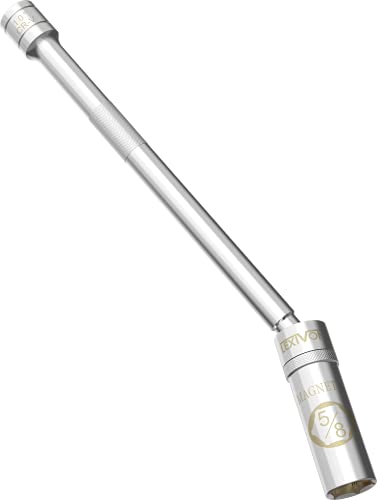 LEXIVON LX-122Lifetime warranty listed
 QWORK CA8329Two sizes in one pack
The short list of likely causes
When a socket will not seat on the plug, or seats but will not lift the plug out, one of a handful of things is going on. Working through them in order saves time and protects the plug and the cylinder head.
Most of these problems come down to fit. Plugs come in a few hex sizes, and the tube they sit in can be narrow. Add dirt, oil, or a boot that did not come out with the coil, and a socket that looks right on paper will still refuse to go on.
- The socket size does not match the plug hex (14mm, 16mm, or 5/8 in).
- The socket walls are too thick for a narrow plug tube.
- Debris, oil, or a chunk of old boot sits in the well around the plug.
- The rubber insert or magnet is worn, dirty, or missing, so the socket cannot hold the plug.
- The plug is not fully visible or reachable because of a stuck coil boot or an angled well.
- The socket is not fully seated, or the ratchet is tilted, so the swivel joint binds.
Check the size first
Spark plug sockets come in 14mm, 16mm and 5/8 in. The 5/8 in size and 16mm are very close, so they are often treated as the standard size for many passenger cars, while 14mm is the smaller size. Confirm the size in your owner's manual before you buy or try another socket.
A socket that is too large will slide over the hex without biting. A socket that is too small will sit on top of the hex and never drop down. Either way, do not hammer it on or twist hard. A wrong fit can round the hex or damage the plug seat.
If you own a two-size pack, try the other size once, gently. Some listings, such as a 14mm and 16mm swivel pair, include both sizes for exactly this reason. Our best spark plug socket comparison lists the size for every product, so you can match it to your plug before you order.
Clear the well and check the tube
If the size is right but the socket stops short, something is in the way. Debris, a bit of old boot, or oil pooled in the well can keep the socket from dropping down onto the plug. A narrow plug tube can also stop a socket with thick walls from going in at all.
Look into the well with a flashlight. Use compressed air or a small vacuum with a thin nozzle to clear loose dirt, and wear eye protection while you do it. Dirt blown into an open cylinder is the bigger risk, so clear the well before you loosen the plug, not after.
If you see a rubber ring or a piece of boot stuck in the well, a thin probe can often lift it out. Go slowly and keep metal tools away from the plug's ceramic and the plug threads.
Thin wall, insert, and magnet: why they matter
A thin wall socket is made for tight plug tubes. Several of the products on our comparison page list a thin wall design, including the 14mm DURATECH model, the 5/8 in LEXIVON, and the QWORK, ecocstm and Salior 14mm and 16mm pairs. If your standard socket will not fit down the tube, a thin wall model is the first thing to look at.
Holding power comes from the insert. A rubber insert grips the ceramic and centers the socket. The GearWrench 5/8 in socket and the DURATECH both list one. A magnetic core holds the plug through the lift. Many listings include one, and the ecocstm listing describes a 10mm deep magnetic ring.
That same listing warns that excessive force can break the delicate internal magnetic ring. If the plug is not seating in the socket, a damaged or dirty insert may be the reason. Check it for cracks, oil, or missing pieces.
Step-by-step: getting the socket to grab
Work through these steps in order. Do not skip ahead to force.
- Make sure the engine is cool and the battery or ignition is off.
- Remove the coil or boot completely and confirm nothing is left in the well.
- Clean around the plug with compressed air while wearing eye protection.
- Compare the plug hex to the socket size by eye, and confirm the size in your manual.
- Drop the socket straight down and turn it slightly until the hex lines up. It should sit fully, with no gap.
- Check that the insert or magnet is clean and intact.
- Keep the ratchet in line with the plug, then pull the plug straight up and out.
| What you notice | Likely cause | What to try |
|---|---|---|
| Socket slides on but spins freely | Socket too large | Confirm size, try the next size |
| Socket sits on top of the hex | Socket too small | Confirm size, do not force it |
| Socket will not go down the tube | Walls too thick or debris | Clear the well, try thin wall |
| Socket fits but plug stays behind | Weak insert or magnet | Clean or replace the socket |
| Socket tilts or binds | Swivel joint at an angle | Keep ratchet in line with the plug |
Choosing a socket that holds on
If the socket you own is the problem, pick one that suits your plug and your engine bay. Length matters for deep wells. Among the models that list it, total length runs from 2.56 in to 12 in, and the DURATECH is the longest at 12 in. For shallow or straight wells, a short socket is easier to control.
A swivel joint helps with angled plugs, though it can bind if the ratchet is not lined up with the plug. All the ranked products use a 3/8 in drive, so check that it matches your ratchet or extension.
For detail on length, swivel, insert, and wall design side by side, see our spark plug socket comparison.
Safety notes
Let the engine cool before you start. A hot cylinder head can burn your hand and can also make plugs harder to remove.
Disconnect the battery or switch off the ignition before pulling coils. Do not touch a coil or plug wire with the engine running.
Wear eye protection when you use compressed air. Never force a socket with a hammer or an oversized breaker bar, because a cracked plug can drop pieces into the cylinder.
Frequently asked questions
Can I use a regular deep socket instead of a spark plug socket?
Usually not. A regular socket has no insert or magnet to hold the plug, and its walls may be too thick for the tube. A plug can fall into the engine bay or crack the ceramic.
Is a 12-point or 6-point socket better?
A 12-point socket slips onto the hex faster. A 6-point socket uses the classic hex pattern. Either can work if the size is right.
Should I use an extension with my spark plug socket?
It can help with deep wells, but keep the ratchet in line with the plug. A tilted extension can make the swivel joint bind and the socket slip.
What if the plug will not turn once the socket is on?
Stop and check that the socket is fully seated. Do not add a cheater bar. Let the engine cool, check that the plug is not seized, and get advice if it still will not move.