Why Won't My Home Garage Air Compressor Turn On?
Most garage compressors that won't start have a simple problem: no power at the outlet, a tripped breaker or reset button, or a tank that is still holding pressure. Check those first, with the unit unplugged while you inspect it. If the motor hums but won't spin, or nothing changes after the basic checks, the pressure switch, check valve, or start capacitor is the likely culprit.
 Klutch 203001005001Best overall
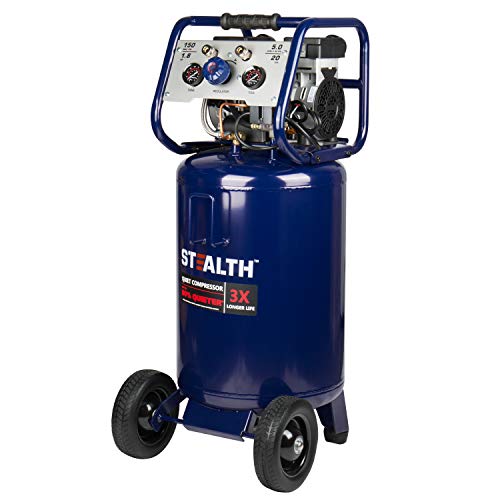 Stealth SAQ-12018
 ECOMAX 0210673ACompact pancake with hose
Start with the quick checks
Before you assume the compressor is broken, rule out the easy causes. These take a few minutes, need no tools, and solve a large share of no-start problems.
Work through them in order. Each step narrows down whether the problem is the power supply, the compressor's built-in protection, or the compressor itself.
- Confirm the power switch or auto/off knob is in the on or auto position.
- Plug a lamp or phone charger into the same outlet to see if it has power.
- Check your breaker panel for a tripped breaker and reset it fully (push to off, then on).
- Press the GFCI reset button on the outlet, if it has one.
- Look for a small red or black reset button on the motor housing and press it once the motor has cooled.
- Open the tank drain slightly to see if the tank is still full of air.
Power supply problems
A garage outlet is often shared with lights, a freezer, or a garage door opener. Compressor motors pull a surge of current at startup, so a circuit that handles everything else can still trip when the compressor tries to start.
Extension cords are another common cause. A long or thin cord causes a voltage drop, and the motor may hum, struggle, or trip the breaker instead of starting. Plug the compressor directly into the wall if you can. If you must use a cord, choose a short, heavy-duty one rated for the compressor's current draw. The nameplate on your compressor lists its voltage and amperage, so check it against the cord's rating.
A GFCI outlet can also trip from the startup surge or from moisture in a damp garage. If it trips again right away, stop and have an electrician look at the circuit. Do not bypass a breaker or GFCI, and do not swap in a larger breaker to make the problem go away. The wire size has to match the breaker.
Thermal overload and the pressure switch
Most compressors have a thermal overload protector. If the motor gets too hot, it shuts off to protect itself. This is common after long runs, in a hot garage, or when airflow around the motor is blocked. Let the unit cool for 20 to 30 minutes, press the reset button, and try again. If it keeps tripping, the cause is usually a weak power supply, a dirty or blocked cooling area, or a motor that is wearing out.
The pressure switch tells the motor when to start and stop. If the tank pressure is below the cut-in point, the switch should close and start the motor. A worn switch, burned contacts, or a stuck lever can leave the compressor dead even when the tank is empty. Switch problems often show up as a compressor that works only when you wiggle the knob, or that never starts at all.
Some compressors also have a small unloader valve on the switch. It releases trapped air from the pump head when the motor stops, so the motor can restart without fighting pressure. If it sticks closed, the motor may hum and trip the breaker.
When the motor hums but won't run
A humming sound with no rotation points to a startup problem. The usual suspects are trapped pressure in the pump head, a failed check valve, or a bad start capacitor.
The check valve sits between the pump and the tank. It should let air into the tank but not back out. If it leaks, air flows backward into the pump head and the motor can't turn against it. Listen for a steady hiss from the unloader after shutoff. A hiss that never stops often means a leaking check valve.
A start capacitor stores energy to give the motor its first push. When it fails, the motor hums and may trip the overload. Capacitors can hold a charge even when unplugged, so leave this repair to someone qualified.
Symptom and likely cause at a glance
Use this table to match what you see and hear with the most likely cause. It is a general guide, so your model's manual always takes priority.
| What you notice | Likely cause | What to try |
|---|---|---|
| Completely silent, no click | No outlet power, tripped breaker or GFCI | Test the outlet, reset breaker and GFCI |
| Silent, motor feels hot | Thermal overload tripped | Cool down, press reset, improve airflow |
| Hums, does not spin | Trapped pressure, bad check valve, weak capacitor | Drain the tank, check for leaks, call a pro for capacitor |
| Breaker trips on start | Overloaded circuit, long extension cord, motor fault | Use a dedicated outlet, shorten the cord |
| Won't start but tank is empty | Faulty pressure switch | Inspect the switch, replace if damaged |
| Starts, then stops quickly | Overheating or low voltage | Check ventilation and power supply |
Safety notes before you open anything
Always unplug the compressor before inspecting the motor, switch, or wiring. Release tank pressure by opening the drain valve and pulling the safety valve ring gently until the tank is empty. A pressurized tank can cause serious injury.
Wear safety glasses when draining the tank or checking fittings, since debris and water can spray out. Compressors are loud, so wear hearing protection when the unit is running. Do not modify a pressure switch or safety valve. If a repair involves wiring inside the motor or panel, hire a qualified technician or electrician.
Avoiding the problem next time
Drain the tank after each use so moisture does not rust the inside or clog the switch and valves. Keep the motor and vents free of dust, and give the unit space to breathe in a hot garage.
If your compressor keeps struggling, it may simply be the wrong size for your garage or tools. Our guide to the best air compressor for home garage compares published specifications so you can match motor size, tank size, and voltage to your circuit. If you plan to run more tools or do bigger jobs, the best air compressor for home shop page covers larger options.
Leaks at hoses and connections can also make a compressor cycle more than it should, which adds heat and wear. See our page on the best air compressor fittings to choose parts that seal well and fit your hose.
Frequently asked questions
Why does my compressor click but not start?
A click with no motor movement often means a weak start capacitor, low voltage from a long extension cord, or trapped pressure in the pump head. Unplug it, drain the tank, and try again on a short direct connection.
Can a full tank prevent the compressor from starting?
Yes, if the tank is above the cut-in pressure, the pressure switch will not call for the motor to run. That is normal. Use some air or open the drain and it should start again.
How long should I wait after the overload trips?
Give the motor at least 20 to 30 minutes to cool, then press the reset button. If it trips again soon after, look for a power or airflow problem rather than resetting it repeatedly.
Is it worth repairing an older compressor?
Cheap fixes like a reset, a new cord, or a switch can be worthwhile. If the motor, pump, or tank is failing, replacing the unit is usually the safer choice, especially if the tank is rusted.