Why Is Welding Aluminum So Hard? Causes and Fixes
Welding aluminum is hard because it conducts heat quickly, melts with almost no color change, and wears a tough oxide skin that melts at a much higher temperature than the metal underneath. Each of these problems has a fix: clean the surface, use pure argon, add enough heat, and feed the soft wire with a spool gun or use AC TIG. Once you know what is going wrong, the process becomes predictable.
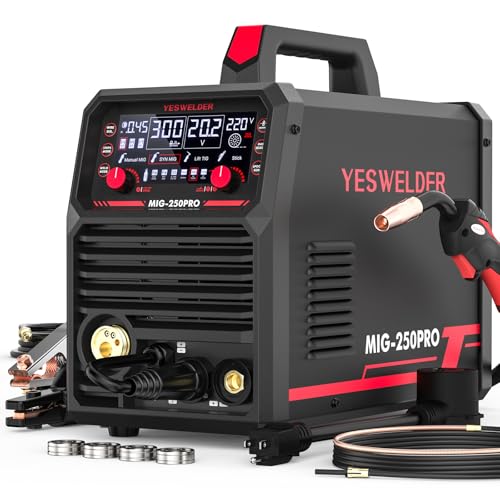 YESWELDER MIG-250DS PROBest overall
 BILT HARD WLD-1603Lightest
 ARCCAPTAIN MIG200Best finishing controls
The four things that make aluminum different
Steel is forgiving. It glows as it heats, it holds heat where you put it, and it tolerates a bit of dirt. Aluminum does none of these things, and that is why habits learned on steel often fail on it.
Most of the trouble comes down to four traits. Understanding them is the fastest way to stop guessing and start fixing.
- Oxide skin: aluminum forms a thin, hard oxide layer almost instantly. The oxide melts at a far higher temperature than the metal under it, so it can block the weld pool.
- Fast heat loss: aluminum conducts heat well, so heat spreads away from the joint. You need more heat to start, then less as the part warms up.
- No warning before melting: the metal does not glow or change color much before it collapses into a puddle, so burn-through catches beginners off guard.
- Soft filler wire: aluminum wire bends and tangles easily, which causes feeding problems in a standard MIG setup.
The oxide layer and why cleaning matters
The oxide skin is the main reason aluminum feels so different. As a general guide, the oxide melts at roughly three times the temperature of the aluminum under it. If you try to melt through it, the base metal can turn liquid and sag before the surface skin gives way.
The oxide also traps moisture and contamination. When that gets into the weld pool, it shows up as porosity, which looks like tiny holes or a sooty, gray weld.
The fix is simple prep. Use a stainless steel brush that you only use on aluminum, and brush right before you weld, since the oxide returns quickly. Wipe off oil and grease first with a suitable solvent, and let it dry completely. Our best welding for aluminum page lists the same basics: pure argon gas, a clean surface, and a stainless brush used just before welding.
Heat: too little at the start, too much later
Because aluminum pulls heat away from the weld, a cold part can seem to refuse to melt. You raise the settings, and then a minute later the part has soaked up heat and the same settings burn a hole through it.
This is why aluminum calls for more amperage than steel of the same thickness, along with a plan for managing heat as you go. The machines on our comparison page offer 200 to 250A, which gives you headroom for thicker aluminum.
A few habits help with heat control:
- Start on a clean, dry scrap piece of the same thickness to find your settings.
- Move at a steady, fairly quick travel speed. Lingering invites burn-through.
- Reduce settings or let the part cool for longer welds, since the metal gets hotter as you go.
- Use features such as crater fill and burn-back adjustment if your machine has them, so you finish cleanly instead of leaving a cracked crater.
Why AC is used for TIG welding aluminum
If you have heard that aluminum needs AC, this is the oxide problem again. With TIG welding, alternating current switches direction many times a second. In the half of the cycle where the electrode is positive, the arc breaks up the oxide skin. In the other half, the electrode is negative, and the arc puts more heat into the work for penetration.
That mix of cleaning and penetration is why AC TIG gives the cleanest, most controlled aluminum welds. The trade-off is that you need an AC-capable TIG machine and more skill, because you control the torch, the filler rod and often a foot pedal.
One thing to check when shopping: many multi-process welders offer lift TIG or HF TIG, but that does not tell you whether they can run AC. On our comparison page, none of the machines lists AC TIG. They reach aluminum through MIG with a spool gun instead.
Soft wire and the spool gun fix
Aluminum MIG wire is soft. Pushed through a long cable from a standard wire feeder, it can kink, jam or bird-nest at the drive rolls. A spool gun solves this by mounting a small spool of wire on the gun itself, so the wire only travels a short distance.
Several welders in our data support this route. The YESWELDER MIG-250DS PRO lists spool gun MIG with .035 and .045 in aluminum wire. The BILT HARD WLD-1603 also lists .035 and .045 in aluminum wire. The ARCCAPTAIN MIG200 lists .035 and .040 in aluminum wire and a spool gun connector as optional. The FEMEROL MIG 250PRO says it offers two ways to weld aluminum: a teflon wire feed tube or a spool gun.
Note that the spool gun is often sold separately. Check the listing before you buy so you know whether it is included. You will also need pure argon, not the argon and CO2 mix used for steel.
Choosing your route
Both main methods work. Your choice depends on the thickness you weld, how clean you need the result to look, and how much practice time you have.
The table below summarizes the trade-offs in general terms.
Whichever route you pick, set your machine up for aluminum before you strike an arc. That means the right wire size, the right gas, and drive rolls that suit soft wire.
| Route | Strengths | Watch out for |
|---|---|---|
| MIG with spool gun | Easier to learn, good for thicker aluminum, faster | Spool gun may be extra, welds look less refined than TIG |
| AC TIG | Cleanest and most controlled welds, good on thin parts | Needs an AC TIG machine, more skill, slower |
| MIG with teflon liner | Works on some machines without a spool gun | Soft wire can still tangle on longer cable runs |
Safety notes
Aluminum welding is bright and fast, so protect yourself properly. Wear a welding helmet with the correct shade, gloves and non-flammable clothing. The arc can burn your skin and eyes, and aluminum arcs are very bright.
Work with good ventilation, especially when cleaning with solvents, because solvent vapors and arc heat should never meet. Let the solvent dry fully before welding. Keep the work area clear of anything flammable.
Check that your power supply matches the machine. Several machines here accept 110V or 220V, and the ARCCAPTAIN listing warns not to switch voltage while the screen is on. Secure gas cylinders upright, and wear hearing protection if you are grinding or brushing nearby. If you want to compare machines that suit this work, start with our aluminum welder comparison.
Frequently asked questions
Can I weld aluminum with a flux core wire?
Not in the usual way. Aluminum is normally welded with solid aluminum wire and pure argon gas, either with MIG or TIG. Flux core wire made for steel is not a substitute.
Why does my aluminum weld look black and sooty?
Sooty welds usually point to contamination or poor gas coverage. Re-clean the metal with a stainless brush, check that you are using pure argon, and make sure there are no drafts blowing the gas away.
Does thin aluminum make it harder?
Yes. Thin sheet gives you less margin before burn-through, so you need steady travel speed and careful heat control. AC TIG is often favored for thin parts because of its fine control.
Do I need to preheat aluminum?
Sometimes, on thicker parts, because the metal draws heat away fast. Preheat gently and keep it modest, and never heat a part that still has solvent or oil on it.