Why Is My Track Saw Not Cutting Straight? Causes and Fixes
Most crooked cuts come from a rail that is dirty, shifting or not fully engaged with the saw base, or from a dull or wrong blade that wanders under load. Burn marks usually mean the blade is dull, gummed with resin, or moving through the wood too slowly. Work through the rail, base, blade and feed speed in that order and you will usually find the cause.
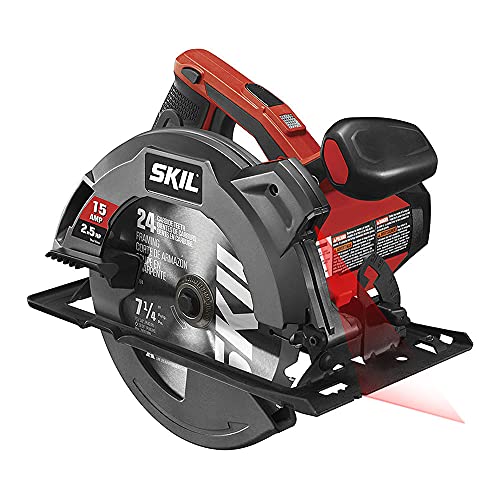 Skil 5280-01Best overall
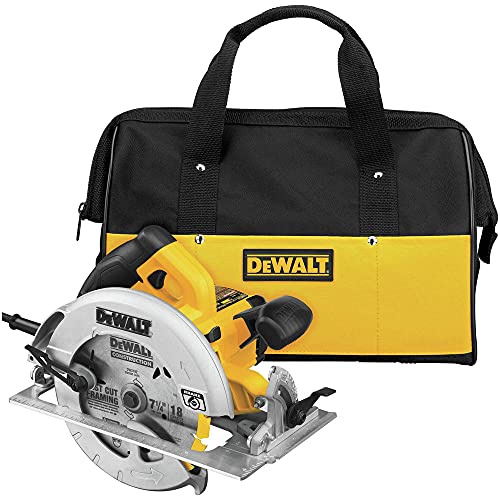 DEWALT DWE575SBBrake and widest bevel
 Skil 5080-01Lightest of the top five
Start with the quick checks
Before you adjust anything, rule out the simple causes. A surprising number of straightness problems come from small things that are easy to miss, and each takes under a minute to check.
Run through this list with the saw unplugged or the battery removed:
- Wipe the rail grooves and the underside of the rail so no dust, resin or chips are trapped.
- Check that the saw base sits flat in the rail channel and does not rock side to side.
- Look at the blade for chipped teeth, baked-on pitch or a warped plate.
- Confirm the rail is clamped or gripping the board and cannot slide.
- Make sure the offcut side is supported so it cannot drop or pinch the blade.
Rail and base problems
A track saw is only as straight as its rail. If a cut wanders, the saw is often moving relative to the rail, or the rail is moving relative to the board.
If the defect shows up only at the start or end of the cut, the saw base probably was not fully seated in the rail before the blade touched the wood. Seat the saw first, then start the motor. At the end, keep the base on the rail until the blade has fully stopped.
Most track saws have adjustable guides or gibs that control how snugly the base fits the rail. If there is side-to-side play, the saw can drift slightly even when you push in a straight line. Adjust the fit according to your owner's manual until the saw slides smoothly with no wobble.
Also check how the rail meets the board. Rail strips that grip with rubber need a clean, flat surface. If the board is dusty or the rail edge is lifted by debris, the rail can creep. Clamps are a good backup on slick or finished panels.
If you join two rails to make a longer cut, check the joint with a straightedge. A small step or gap at the connector shows up as a kink in the cut.
Blade problems that bend the cut
A dull blade needs more push to cut, and that extra force can make the saw twist or ride up against the rail. Thin blades also flex more when they are dull or when you force the feed.
Match the blade to the work. A higher tooth count gives a finer finish on sheet goods and veneered panels. A lower tooth count clears chips faster in thick solid wood. A blade in the wrong class for the material tends to chatter, wander or burn.
Resin buildup matters too. Pitch on the teeth and plate adds friction and heat, which causes drift as well as burning. Clean the blade with a blade cleaner or a resin remover and a soft brush, then check whether the cut improves.
Finally, confirm the blade is seated properly on the arbor, the right way round, and the arbor nut is tight. A loose or badly seated blade can wobble and leave a wavy kerf.
Why your track saw burns wood
Burning is friction heat. The blade rubs the wood instead of slicing it. That points to one of three things: a dull or gummed blade, a feed that is too slow, or a blade that is not tracking cleanly in its own kerf.
Dense hardwoods and fruitwoods such as cherry and maple are known for scorching, but even pine can burn if the blade is dirty. If burning appears at the start of the cut and fades, check how fast the motor reaches speed. If it appears at the end, the offcut may be closing on the blade and pinching it.
Many track saws let you set blade speed. A lower speed suits plastics and some laminates, while a high speed suits wood. If you cut hardwood on a low setting, the teeth can rub more than they cut.
Use the table below to match what you see with the likely cause.
| What you see | Likely cause | What to try |
|---|---|---|
| Cut drifts away from the line along its length | Rail shifting or play in the base | Clean the rail, clamp it, adjust the base fit |
| Bad edge only at start or end | Base not seated on the rail | Seat the saw before starting, stay on the rail until the blade stops |
| Wavy or rough kerf | Dull, dirty or wrong blade | Clean or replace the blade, match tooth count to the material |
| Burn marks along the cut | Resin, dull teeth, slow feed | Clean the blade, feed at a steady pace, check the speed setting |
| Burn marks near the end of the cut | Offcut pinching the blade | Support both sides so the kerf stays open |
| Visible step in the cut | Misaligned rail joint | Straighten the connector with a straightedge |
Technique and setup habits
Feed rate is the habit that fixes the most problems. Push at a steady pace that lets the blade cut freely. If the motor sounds like it is bogging, slow down a little. If the wood smells hot, you are probably going too slowly or the blade needs attention.
Set the depth so the blade extends only a little below the material. A blade buried deep in the cut has more teeth rubbing in the wood and throws chips less easily. Support the panel on a foam board or sacrificial sheet so it stays flat and the blade does not hit the bench.
Make a shallow scoring pass first on veneered or melamine panels if your saw has a scoring setting, then follow with the full-depth cut. Keep your body to one side of the blade line and let the saw do the work, rather than leaning on the handle.
When the saw itself is the limit
Sometimes the tool is not the right match for the job. Our best track saw page explains that a true track saw plunges into the material and rides a guide rail, and that the top-ranked saws there are handheld circular saws with no plunge action. If you are running a circular saw against a clamped straightedge, expect more play in the base than a dedicated rail system gives you.
Weight and power also affect control. On that page, the reviewed saws run from 6.95 lb to 11.4 lb, and a lighter saw is easier to guide but may have less motor power. A few examples from the published specifications:
- Skil 5280-01: 15 A, 5300 rpm, 8.7 lb, with a laser guide and dust blower.
- DEWALT DWE575SB: 15 A, 5200 rpm, 8.8 lb, with an electric brake and a 57° bevel.
- Skil 5080-01: 13 A, 5300 rpm, 6.95 lb, the lightest of the five saws reviewed in detail.
Safety notes
Unplug a corded saw or remove the battery before you touch the blade, adjust the base or clean the rail. Wear eye protection and hearing protection, and use a dust mask or dust extraction, because fine sawdust from panels and hardwood is unhealthy to breathe.
Never defeat or wedge the blade guard. Clamp the workpiece so it cannot shift, keep both hands on the saw, and keep your hands out of the line of the blade. If you are cutting metal, use a saw and blade made for it. Our best hand saw for cutting metal page is a good place to start, since a wood blade overheats and can fail on steel.
Frequently asked questions
Can a bent rail cause crooked cuts?
Yes. A rail that is bent, chipped or twisted will carry that error into the cut. Lay it on a flat surface and check it against a known straightedge.
Does a longer rail make cuts less accurate?
Not by itself, but every connector adds a possible misalignment. If you join sections, check the joint before you cut.
Should I replace the blade or just clean it?
Clean it first. If the teeth are chipped, rounded or still burn after cleaning, replace the blade.
Why does the cut tear out even when it is straight?
Tear-out is usually a blade or support issue. Use a fine-tooth blade, keep the splinter guard in good shape, and support the material right next to the cut.